

The Importance of CFO Services in Planning Your Next Stage of Business Growth
Your business seems busy, yet the bank balance looks tight after payroll. Now a larger contract has come in, but you will need more manpower to deliver it in time. The wages and supplier bills may arrive sooner than the customer’s payment. Moments like this are where the importance of CFO services becomes clear.
This puts you in a difficult position because you don’t want to lose a good opportunity, but you also don’t want to bear costs the business may struggle to pay. Expert support can help with a decision like this, although you first need to know if the advice will be worth the fee.
A CFO, or Chief Financial Officer, helps you check how much cash the plan needs, when money should come in, and what could happen if payment takes longer than expected. Keep reading to learn how this support can help you make a safer hiring or expansion decision and decide if the fee makes sense for your business.
First, Ask What Growth Should Give You
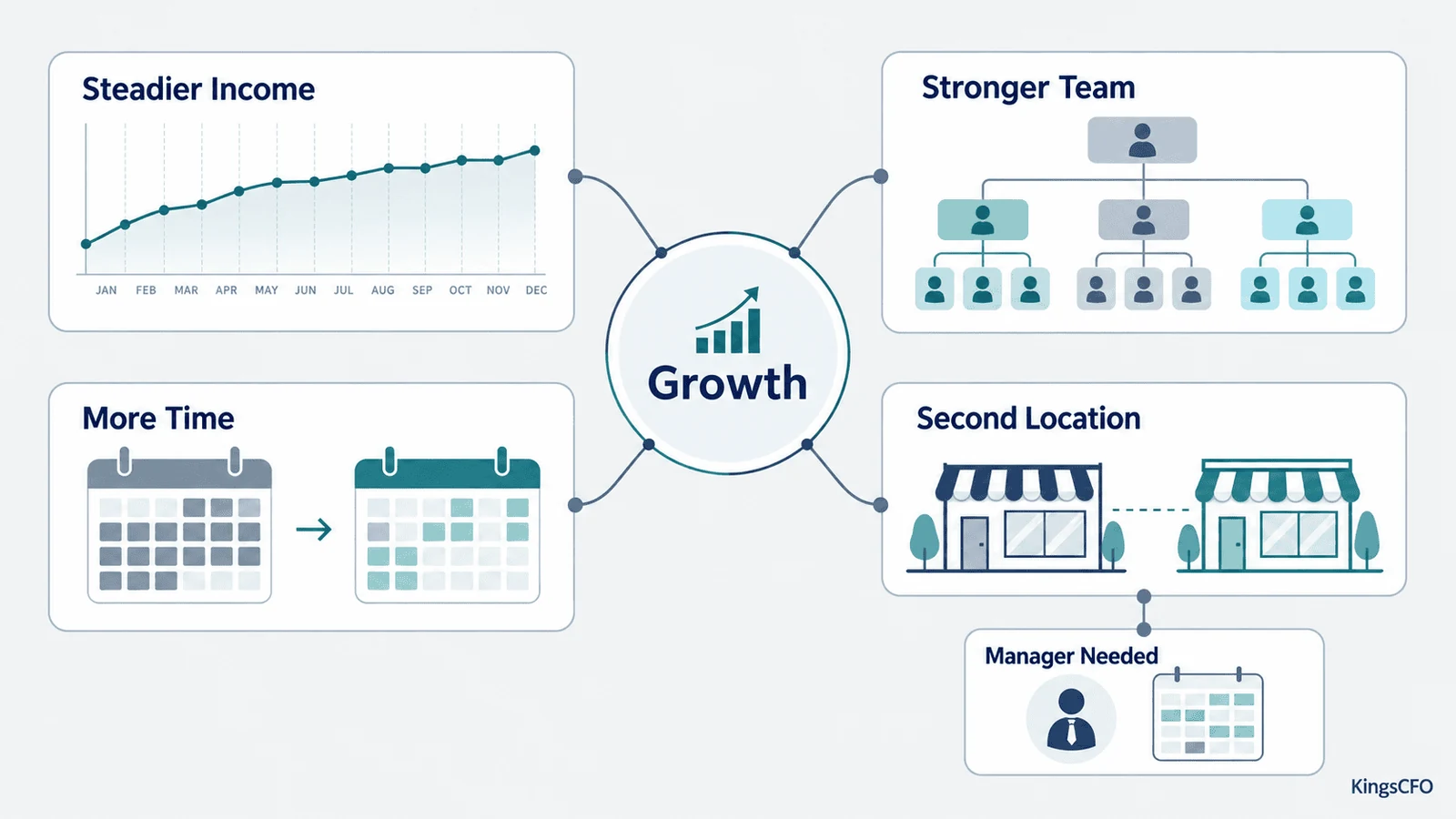
You may want more sales, but what would you like those sales to do for you? Perhaps you want a steadier income, a stronger management team or more time away from daily work.
Our CFO explained that a growth plan should begin with what the owner wants. Say for example, you want to open a second location, because it may bring in more customers, but someone must manage its staff, suppliers and daily problems. If your goal is more time away from work, the plan also needs someone else to run that location.
Timing can change the advice too. If you want to step back within a year, ask when the business could afford a manager for the new location. Our finance experts I casually interviewed also considered how much money the owner could commit, because that affects when the plan could start.
KingsCFO builds financial systems, help businesses meet their tax and reporting duties, and provide CFO-level insight. Our CFO services in Dubai include planning and decision support, starting with what you want the business to achieve.
Before looking at the numbers, write down what you want growth to give you. That answer gives the financial plan a purpose.
The Deal Looks Profitable, but Can You Pay for the Work?
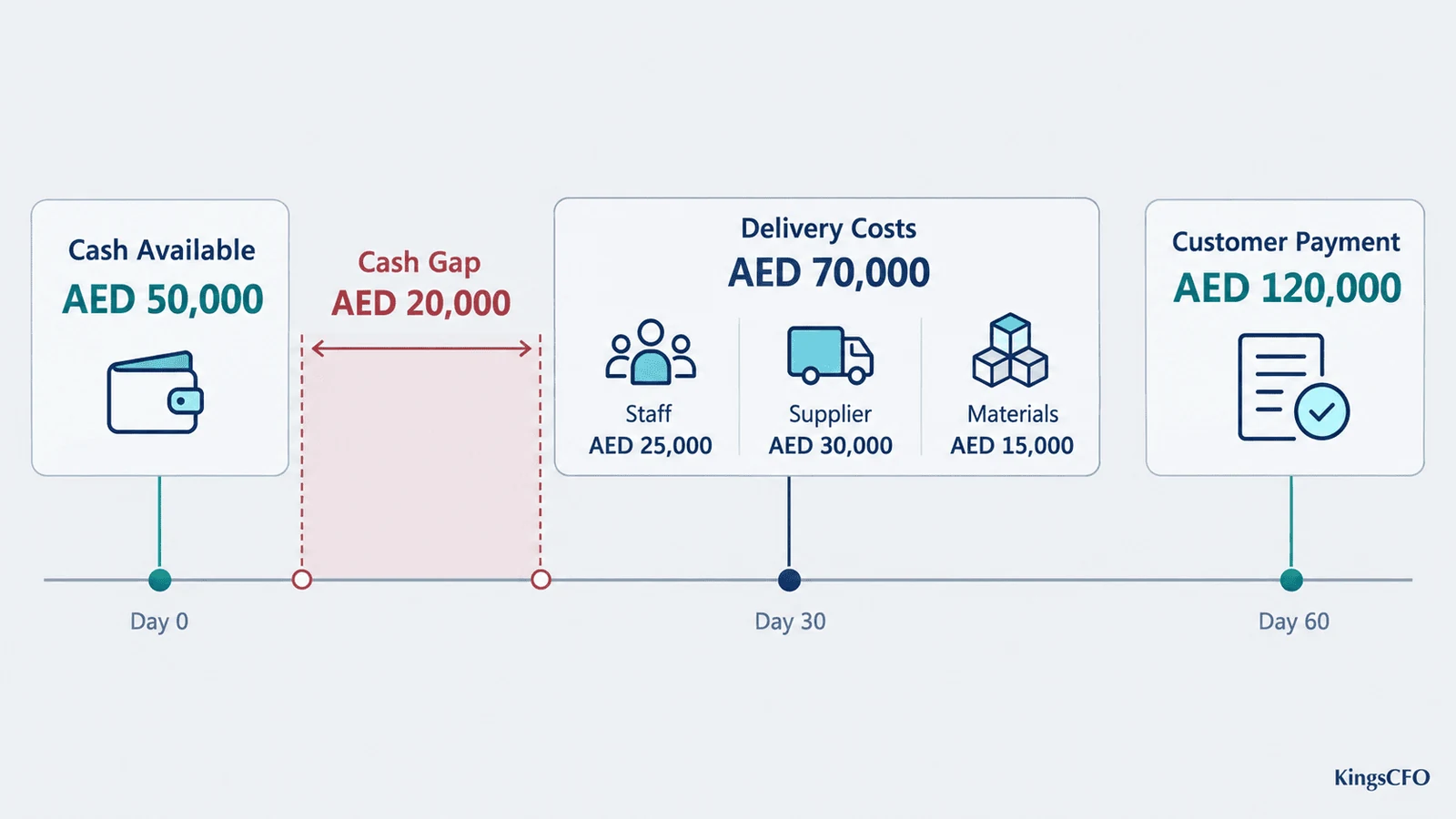
A contract may earn money overall, but you still need cash to deliver it. Some contracts also ask for an ISO certificate first, so check the full ISO certification cost before you commit. So check both what the customer will pay and when that payment will arrive.
Imagine a contract worth AED 120,000. Delivery will cost AED 70,000, and you must pay those costs before your customer pays in 60 days. You have AED 50,000 set aside for the job, which leaves a AED 20,000 cash gap.
The contract has AED 50,000 left after delivery costs, but that is not the final profit. The business still has rent, wages and other bills. These figures are only an example, yet they show why a good sale can leave you needing cash now. Spotting a gap like this early is a large part of the importance of CFO services.
Cash coming in and going out was where our CFO began when we discussed growth. From there, he looked one month, six months and a year ahead. I found that longer view useful because a job can earn money later while a supplier needs payment today.
In the Federal Reserve Banks’ 2025 survey of US small firms, 51% reported uneven cash flow. The survey cannot tell you when your own customer will pay, and its results do not describe UAE businesses. Your payment dates are the figures that matter for this decision.
List the bills due before your first customer payment. Those dates give you a starting point for a cash forecast, a plan of the money you expect to receive and pay over the coming weeks or months.
The Importance of CFO Services: 4 Growth Decisions to Test Before You Commit
A CFO can check the numbers behind a plan and ask what might change. You can then choose a step that fits your goal and the money your business has available.
Will This Job Earn Enough After You Deliver It?

The contract price tells you what you may receive, but you also need to count what the work will cost. Include materials, staff time and any outside help.
Supplier prices may have risen since you gave the quote. If so, you might need to change the price or scope before accepting the job. You could also decide that it still makes sense with less money left over.
Our financial advisory and growth support can help you examine costs and pricing. Before you agree to larger work, check what you expect to keep after delivering it.
Can You Cover the Costs Until the Customer Pays?
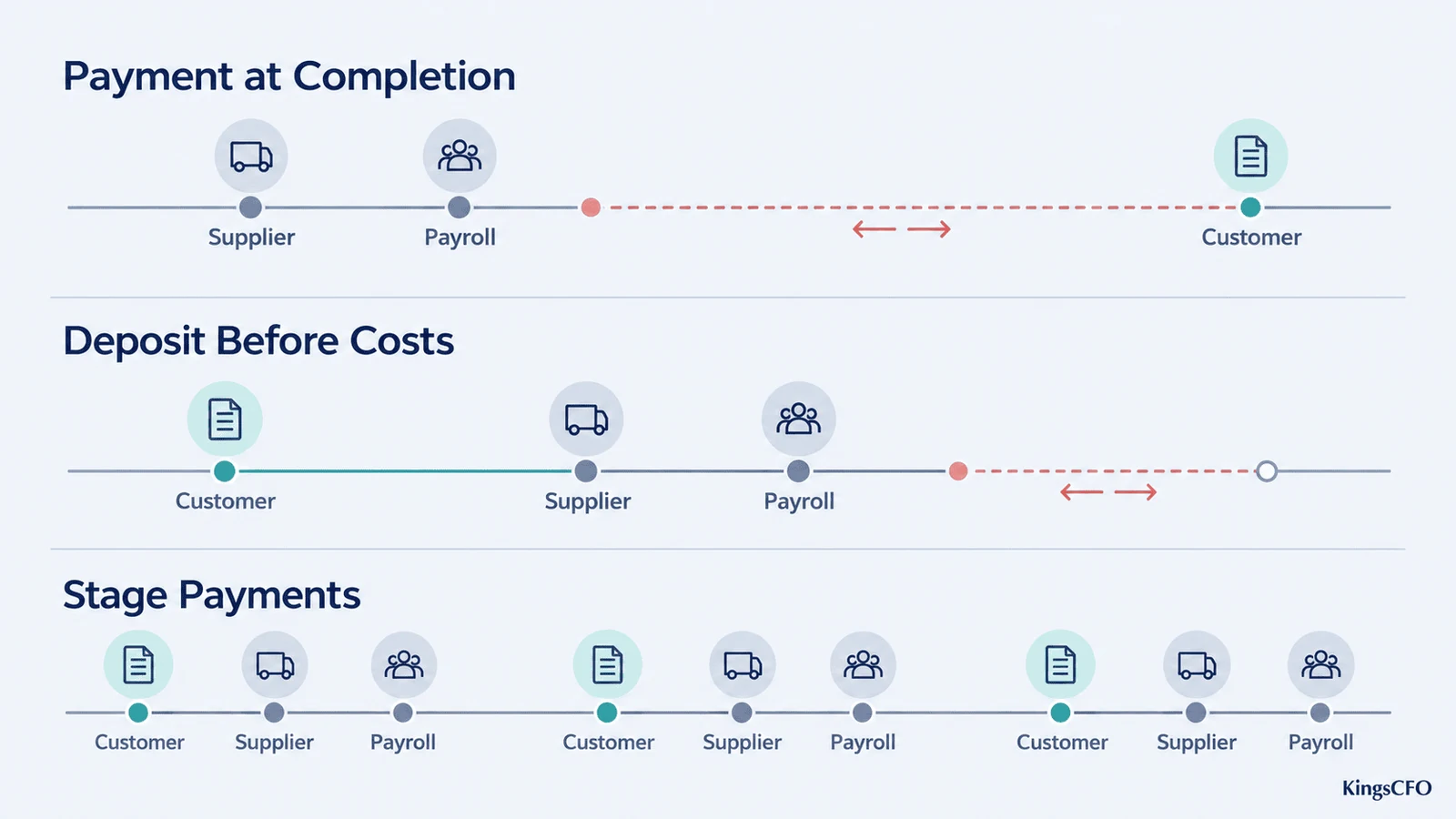
The cash forecast shows you when bills fall due. Now you can use it to test changes to the contract.
For example, a customer deposit could help if it arrives before you pay the supplier. A deposit paid after that bill would leave you with the same immediate problem. You could also split customer payments across stages of the job or discuss different supplier terms.
Put each option into the forecast and check the dates again. A change helps only if the money arrives when you need it.
Will a New Hire Still Fit If Sales Start Slowly?

Another employee may help you deliver more work, but their salary continues after the first contract ends. So what happens if the next job takes longer to arrive?
A CFO can check the hire against the sales you expect and against a slower month. That may give you confidence to hire now, or it may show that temporary help would suit the work better. You could also wait until another contract is more certain.
The decision becomes clearer when you can see how the salary affects cash in both months.
Would You Still Open if the New Location Took Longer to Earn?
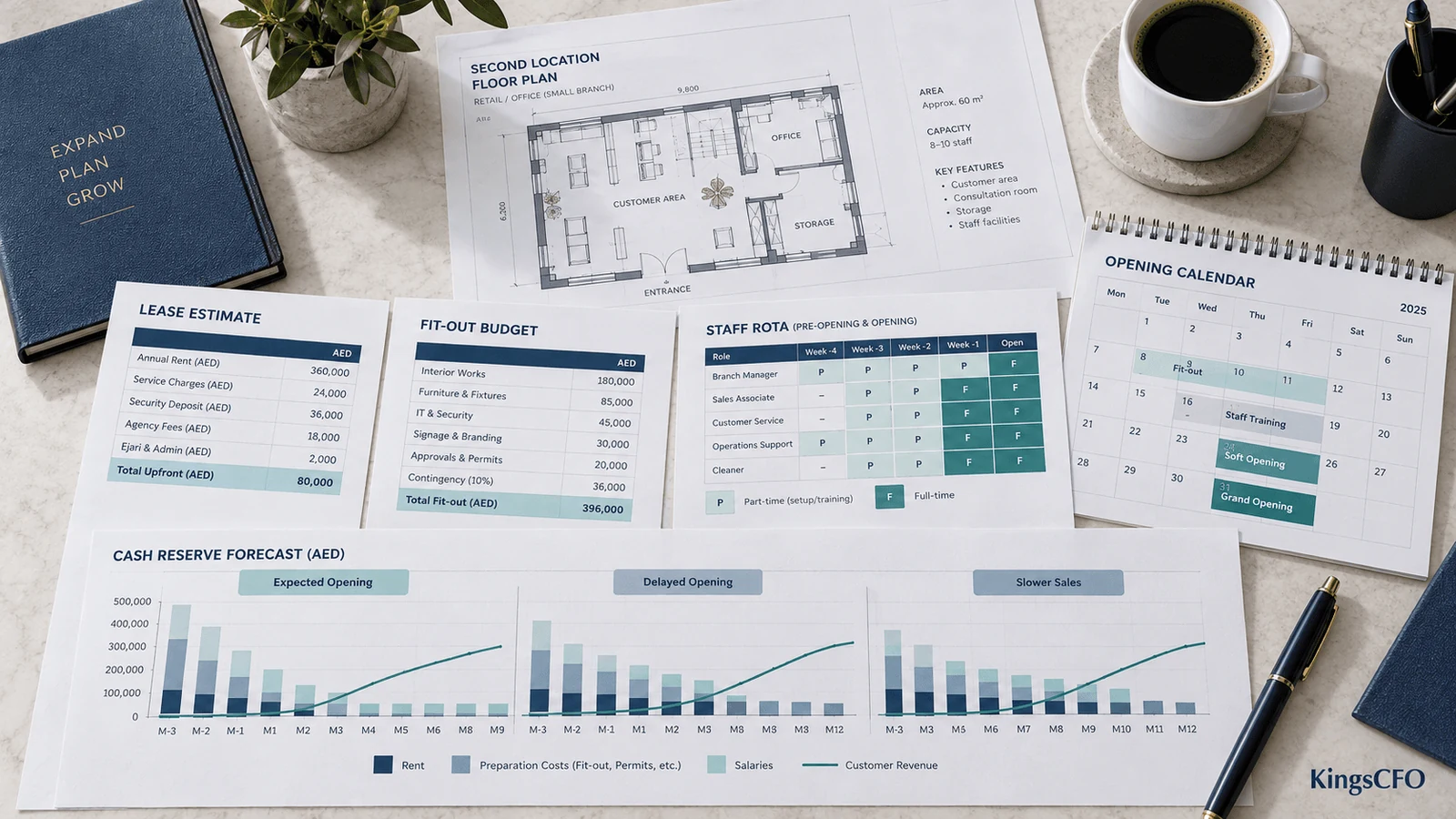
A second location may need rent, work to prepare the space and staff before customers start coming in regularly. Your plan should include those costs and allow for a slower start.
If the business can cover that wait, you may be ready to open. But if cash becomes tight, you could choose a smaller space, delay a hire or build more reserves first. Funding may also help if you know the size of the gap and how you would repay it.
Decide how long you are willing to cover the new location’s bills before sales pick up. Then check if the business has enough cash to carry that wait.
Can You Trust the Figures Behind the Forecast?
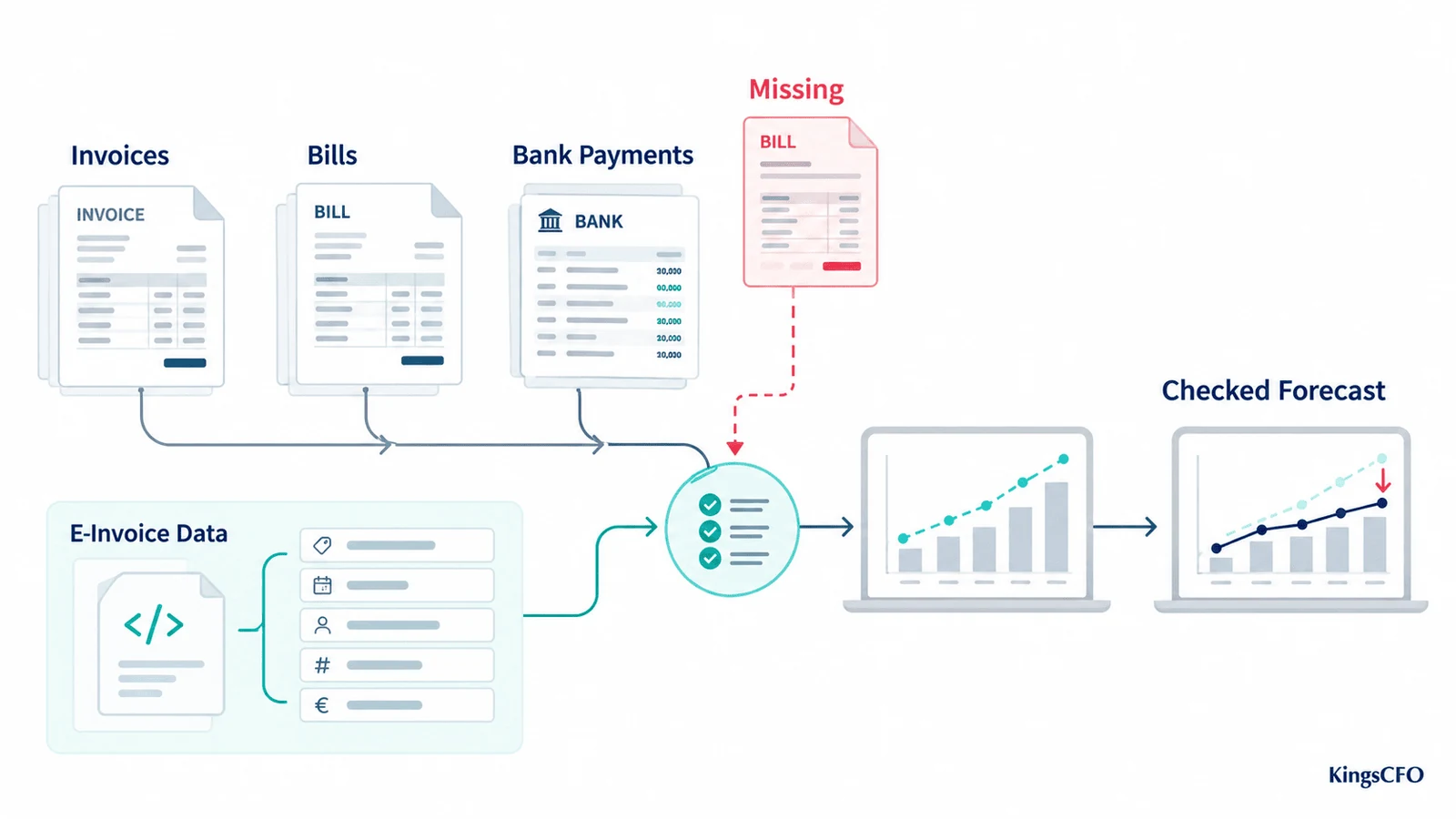
A forecast depends on the records behind it. If a supplier bill is missing, the forecast may say you can afford a hire even though that payment is already due.
A financial system helps your team record invoices, bills and bank payments, then check that the figures match. KingsCFO builds these systems alongside its CFO work because owners need sound records for their decisions and tax duties. If your figures need attention first, our accounting and compliance services explain that work.
Software can help sort those records and bring them into a report, but someone still needs to check them. While reading the Federal Reserve Banks’ 2026 survey, I found that 46% of the US firms surveyed used AI. Among those users, 46% named accuracy as a challenge. The survey did not test CFO forecasts, but that accuracy concern made me ask who checks the figures before an owner uses them to approve a hire.
The UAE’s move towards electronic invoicing makes good records timely, too. Under the UAE Ministry of Finance’s e-invoicing programme, an e-invoice contains data in a set electronic format. An emailed PDF or image alone does not count. As the programme rolls out, check how your business creates invoices and records the payments against them.
Before relying on any forecast, check when your team last updated the accounts and which customer payments remain outstanding.
When Would CFO Services Earn Their Fee?
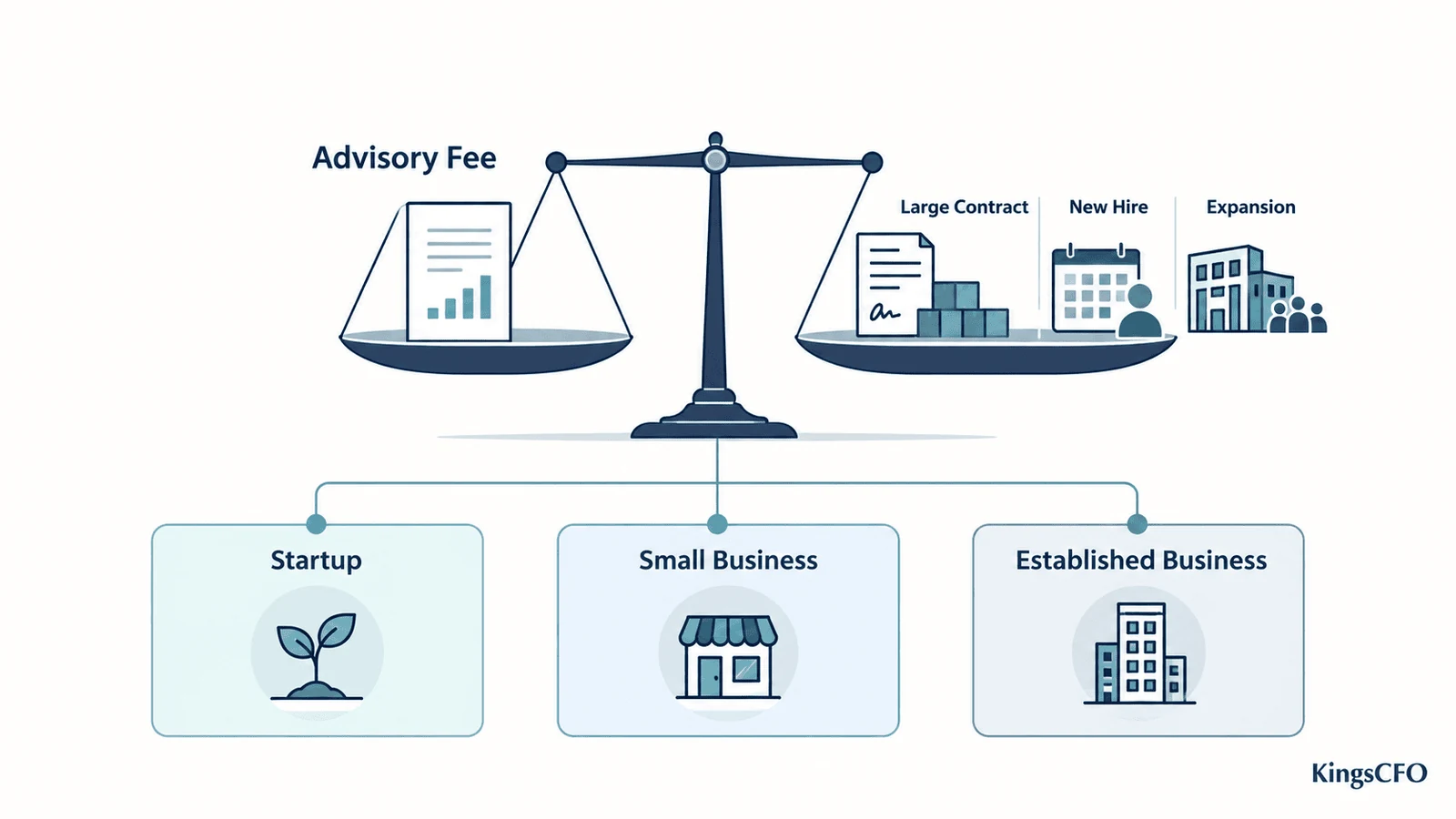
You may already have an accountant and still need help with a hire or expansion. Your accountant may offer advice too, so start with the decision you face and the help you need to make it.
There is no single revenue figure that tells every owner when to hire a CFO. A startup may need to find out how long its cash can support the next stage. An established business may need to check a larger contract or another location.
CFO services for startups should fit the choices a founder faces now. Likewise, if you are looking for a CFO for a small business, the work should fit the decisions and budget you have today. You can compare the types of support on our services overview.
If you are asking why hire a CFO, think about the cost of the choice in front of you. Advice may be worth paying for when it helps you test a commitment you will carry for months. That is where the importance of CFO services shows up for a growing business.
Ask What You Will Receive Before Agreeing to the Fee
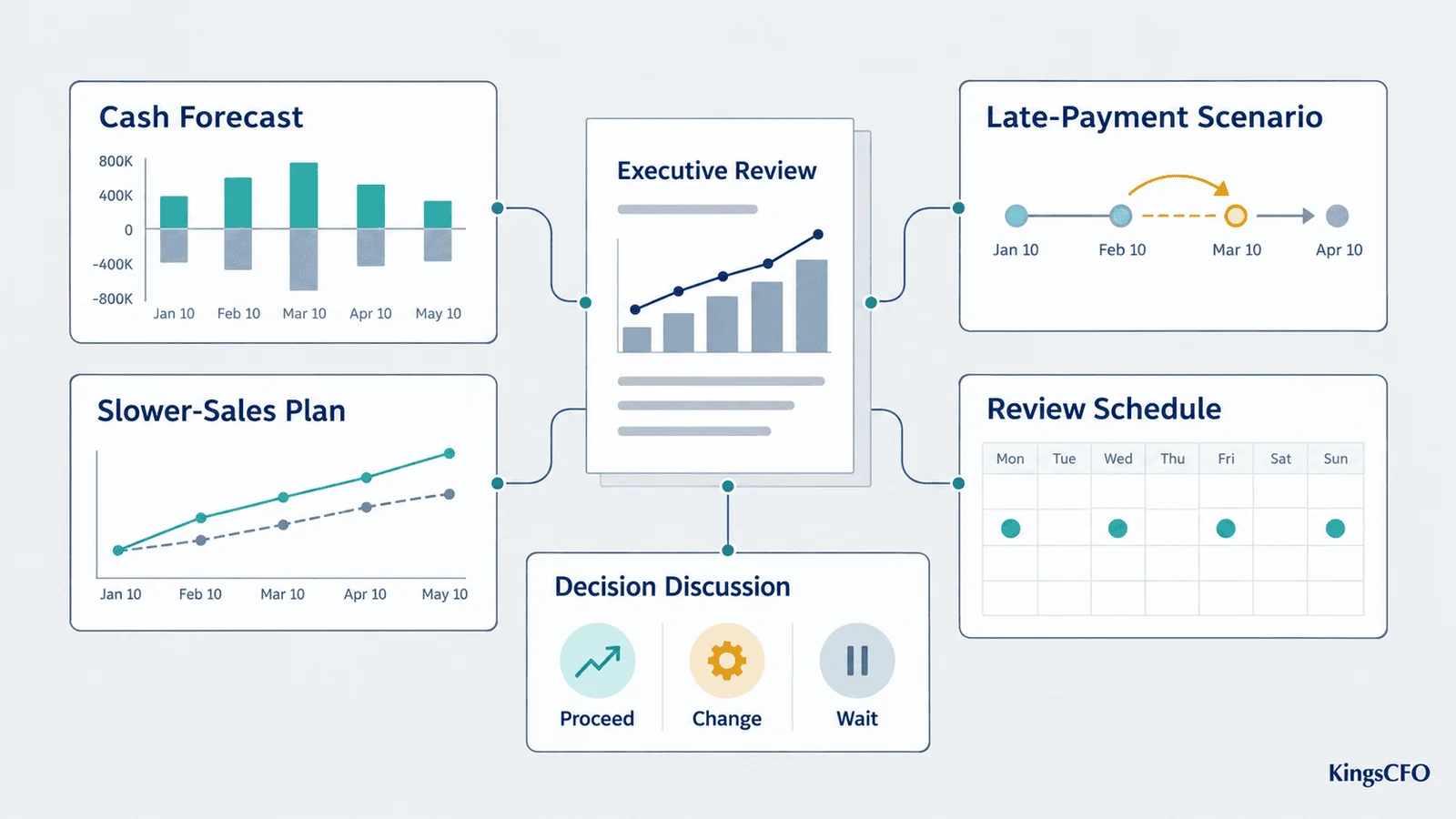
Once you know why you need help, find out what the provider will do. Will someone prepare a cash forecast and explain the payment dates behind it? Can they show how the plan changes if a customer pays late or opening costs rise?
Also ask who will discuss the results with you and how often you will review the plan. You should leave those conversations knowing what the figures suggest and what still needs checking. You can read about KingsCFO before deciding who to speak with.
The benefits of CFO services should be visible in the work you receive. A dated cash forecast, a slower-sales plan and a clear discussion of your choices give you something useful to act on. If you have a question about what the fee includes, send it to our team before booking.
Put Your Next Decision on the Table
Bring the contract, hire or expansion you have in mind, along with its expected costs and payment dates. Explain what you want it to achieve and what still worries you.
A CFO can use those details to test the plan with you. Then you can decide to move ahead, change the terms or give the business more time. Seeing your own plan tested this way is the clearest way to judge the importance of CFO services for your business. If you would like to discuss your next step with our team, you can book a CFO call.
FAQs
Can a startup need CFO support before it has steady revenue?
Yes,a startup may need help checking how long its cash can support its plans. The work and fee should fit its stage and the decision it faces.
Will a CFO replace my accountant?
Usually, no. Accurate accounts remain important, and many accountants offer advice. Ask the provider which accounting tasks and CFO tasks they will handle.
Do I need a full-time CFO?
That depends on how often you need help and how complex the work is. Part-time or outside support may suit a business that needs regular advice without a full-time hire.
What should I bring to the first conversation?
Bring the decision you need to make, recent financial reports if you have them, expected customer payments and upcoming costs. Say so if the figures are incomplete.
How can I tell if the fee is worth it?
Ask what the provider will help you decide and what you will receive for the fee. You should understand the work included before you agree to the cost.