
Financial Audit Checklist: 10 Proven Steps for Dubai SMEs
The audit date is close, but “the books are almost ready” does not tell you much. Can your team explain the bank balance, find the invoice behind a large cost, and show where last year’s figures came from?
You want to hand over figures your team can explain, with the right records close at hand. If something is still wrong or missing, you also want to know about it early enough to act.
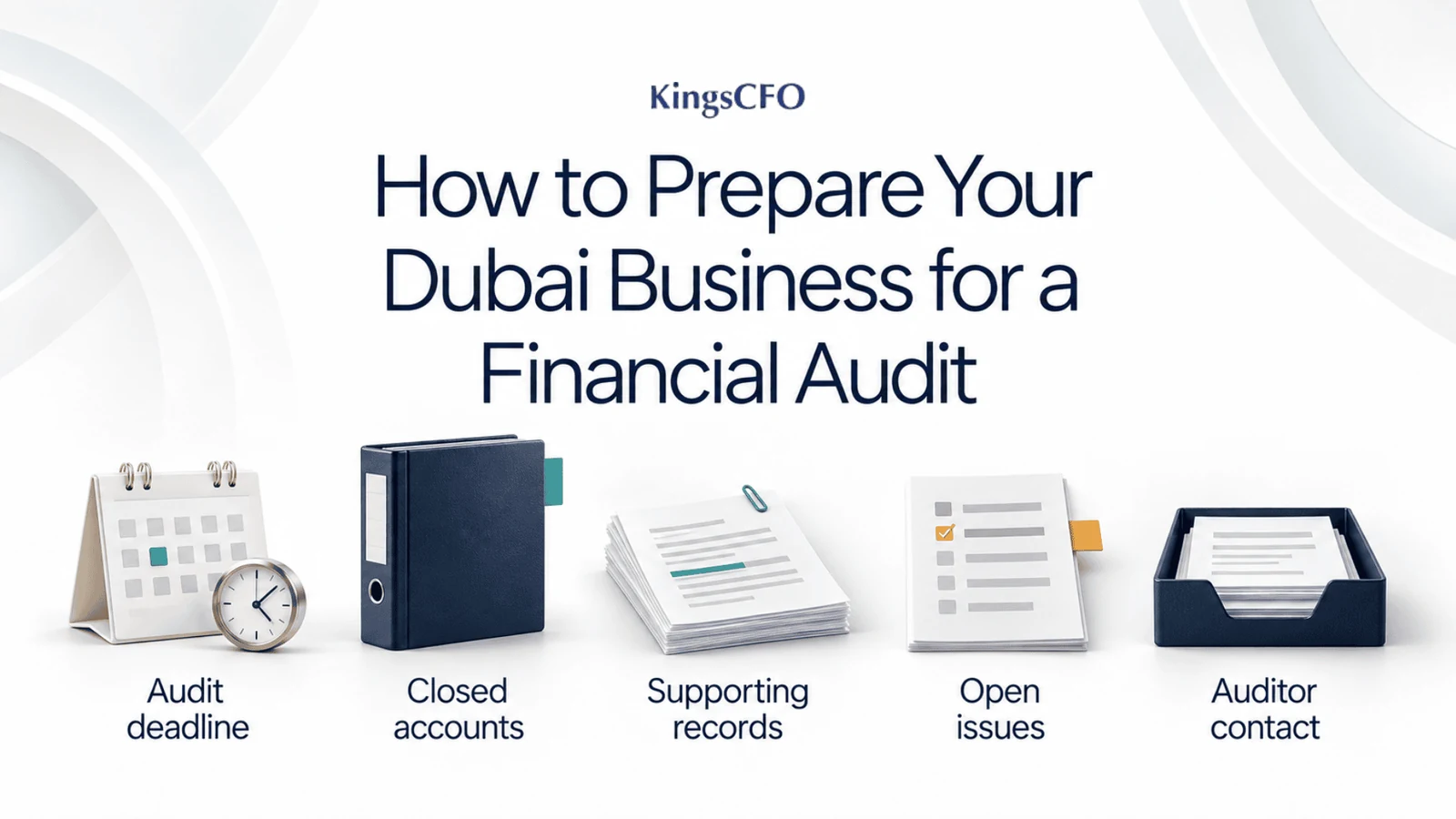
Start by confirming the deadline, then check the accounts, their supporting records, and the issues still open. Keep reading to see how to make those checks and handle the auditor’s first request.
Start Your Financial Audit Preparation With Five Answers
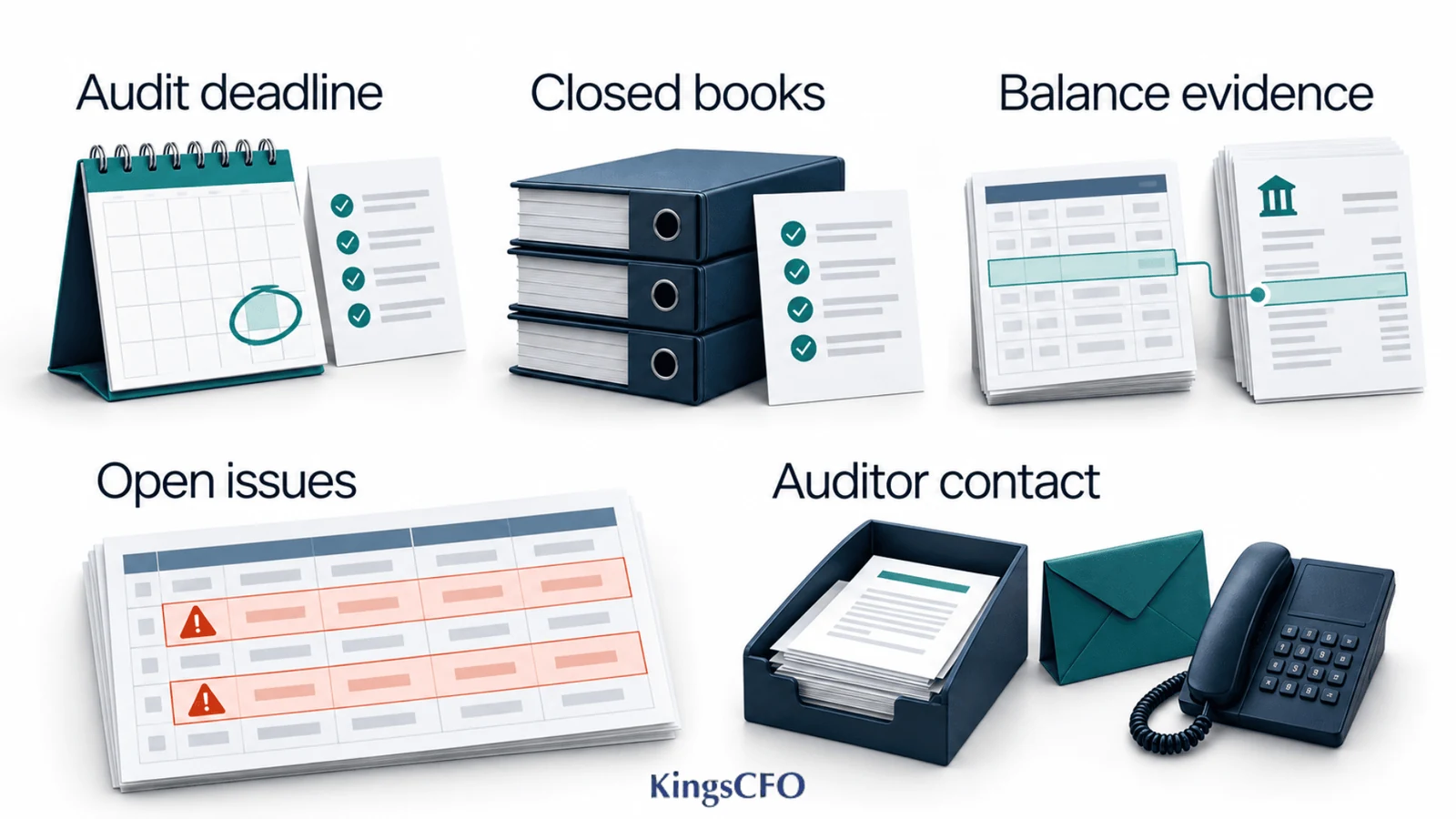
You do not need to redo the accounting work, but you do need to know where it stands. So start your financial audit preparation by asking these five questions to whoever manages your books.
- Why does your business need this audit, and when is the report due? Check your legal form, licensing authority, and any lender or shareholder request.
- Have we closed the year-end accounts? Ask for the latest trial balance, which lists the account totals, and the draft financial statements.
- Can your team support the main balances? Bank accounts, customer debts, supplier bills, inventory, and equipment all need records behind them.
- What is still missing or unresolved? Ask for a short list that names the problem, the person handling it, and the next step.
- Who will manage the auditor’s requests? Give the auditor one contact, even if your business only has a bookkeeper or an outsourced adviser.
These answers give you a practical starting point for audit preparation. Keep the list of open issues nearby as you work through the next steps.
Check Which Audit Requirement Applies to Your Dubai Business
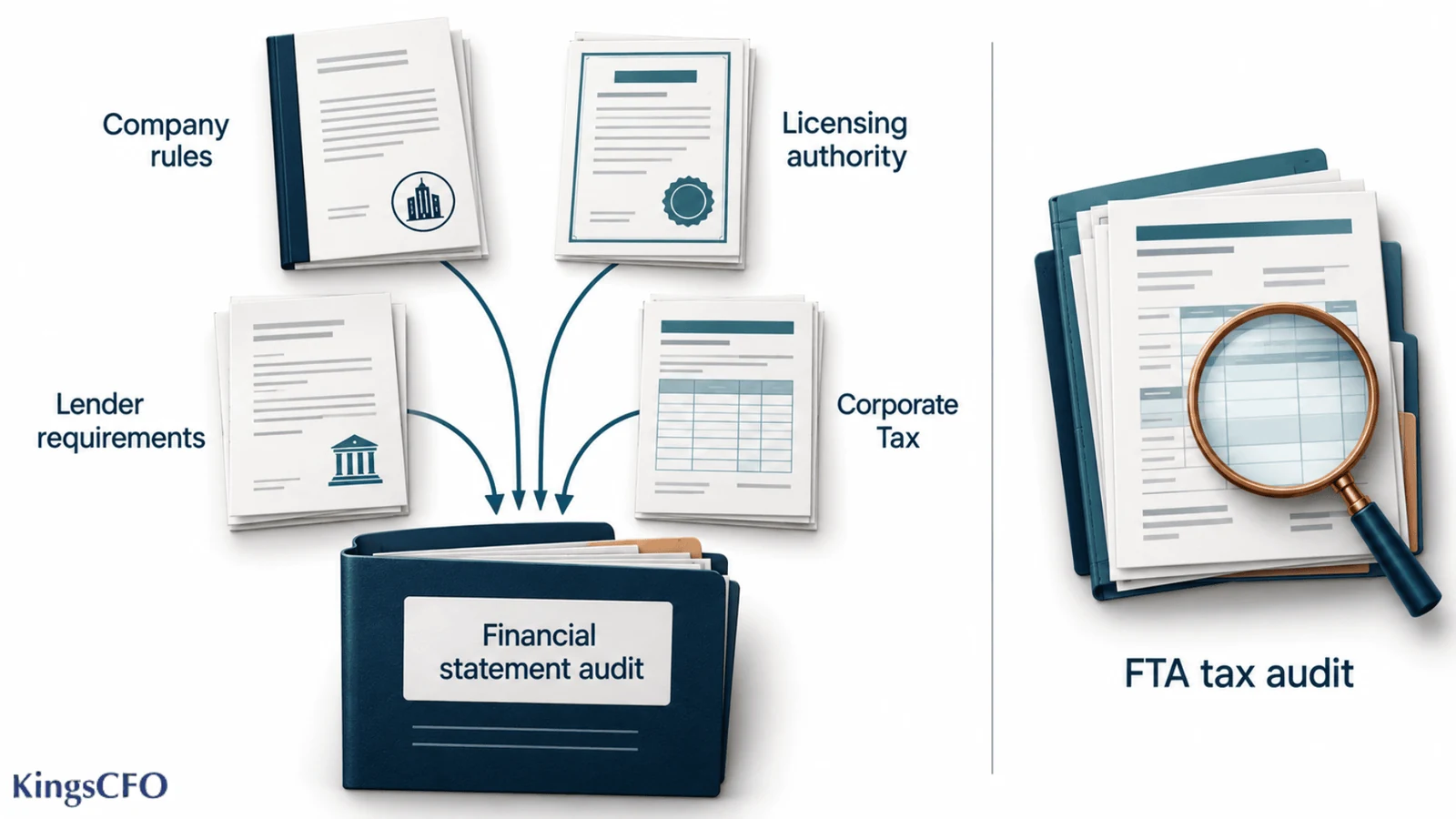
First, find out what kind of audit someone has asked for. An independent financial auditor checks your financial statements and the records behind them. The Federal Tax Authority, or FTA, may also conduct a tax audit that focuses on your tax obligations. A certification audit is different again, because ISO certification bodies check your management system rather than your accounts. Both depend on sound records, but the purpose and the people carrying out the work differ.
Ask your accountant which rule or agreement requires your financial statement audit. Your legal form, free zone, bank loan, or shareholder agreement may each matter. Write down the year under review, deadline, and who needs the final report.
While checking the UAE rules, I found an AED 50 million figure in Ministerial Decision No. 84 of 2025. At first, I wondered if this meant smaller companies never needed audited accounts. But the decision, signed by Minister of State for Financial Affairs Mohamed bin Hadi Al Hussaini, sets a Corporate Tax requirement.
It covers a taxable person outside a tax group whose revenue exceeds AED 50 million in the relevant tax period. The decision separately requires audited statements from a Qualifying Free Zone Person, which is a defined Corporate Tax status. Tax groups follow a separate audited statement rule. The decision applies to tax periods beginning on or after 1 January 2025.
That threshold does not cancel an audit requirement that comes from another rule or agreement. Ask your accountant to identify the requirement for your company before you plan the work.
Agree on the Auditor, Dates, and First Request List
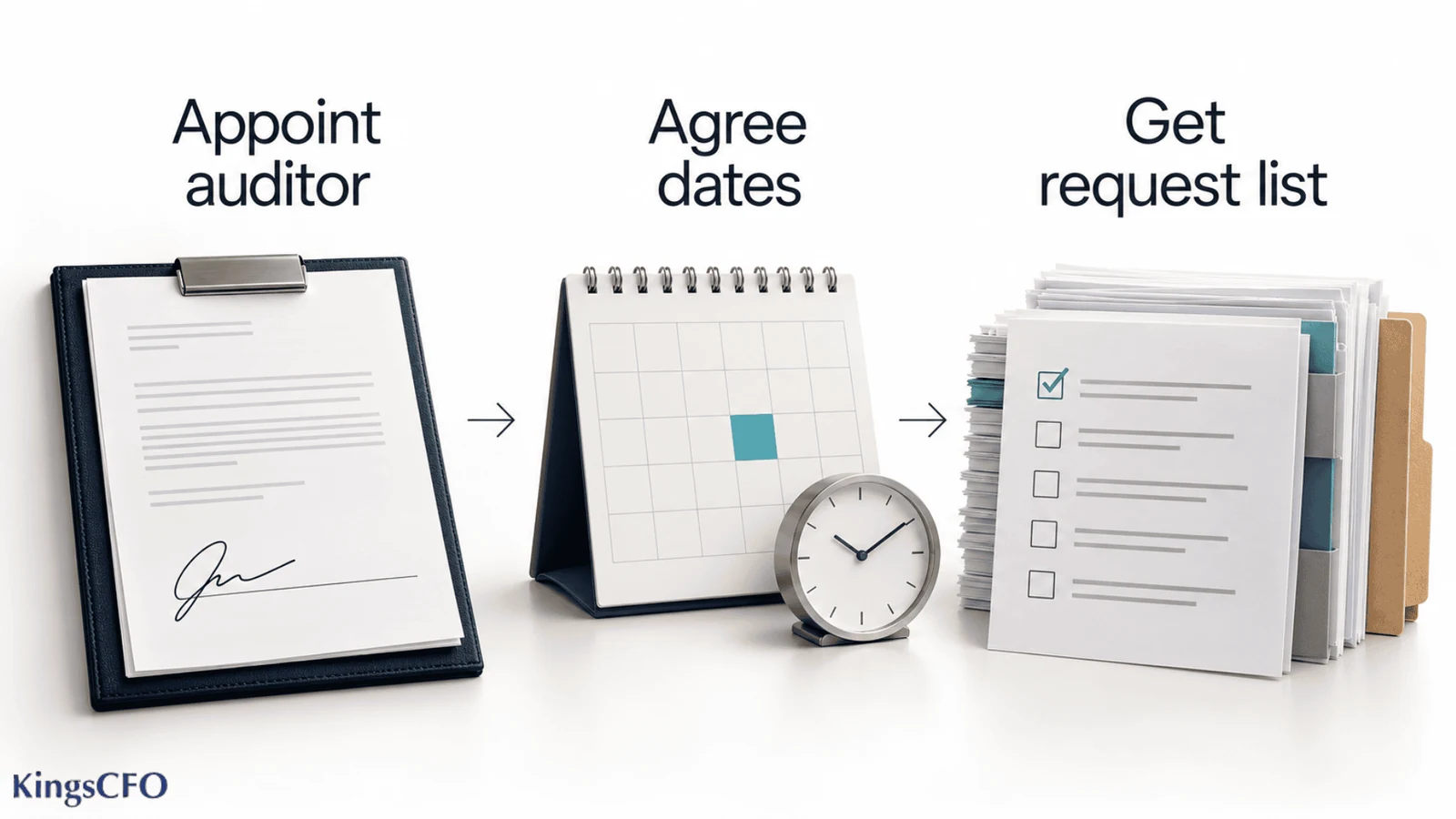
Once you know why you need audited accounts, confirm who will carry out the audit. Ask your licensing authority or adviser if the auditor needs a particular approval for your company. Hold a short call to agree on the period, report deadline, and when the auditor expects to begin reviewing records.
Use the weeks before fieldwork to close the books and resolve old differences. If the deadline is close, tell the auditor what remains open and agree on which records to send first.
Ask for the auditor’s document request list at the start. Auditors may call it a prepared-by-client list. Go through it with your bookkeeper, finance lead, or outsourced adviser, and clarify anything you do not recognise. That gives each person a task before requests start arriving one by one.
Close the Books, Then Check the Proof Behind Each Balance

Once your accountant closes the accounts for the year, you have a trial balance with totals for cash, customer debts, equipment, loans, and other items. The auditor will need to see how your team reached those totals.
A CFO on our team starts with the balance sheet, which shows what the company owns and owes, and asks how the team arrived at each important balance. That matters because the software can show a total even when a key invoice or schedule is missing.
For cash, the team compares the accounting balance with the bank statement. To explain unpaid customer invoices, it prepares a list showing who owes what. An asset register should explain equipment purchases, sales, and depreciation. Ask to see these records alongside the trial balance so you can spot any account that still lacks support.
The CFO also checks retained earnings, which means profits the business kept from previous years. Its opening figure should follow last year’s closing accounts, with later movements explained. If an earlier tax return shows a different amount, your team should find the reason. Changing an entry just to make the documents look alike can create a new problem.
These checks make your business financial structure clearer by showing what the company owns, owes, and still needs to explain. If the records need work, please refer to our finance and accounting services for the support we provide.
Find Out Why the Bank and Accounting Balances Differ
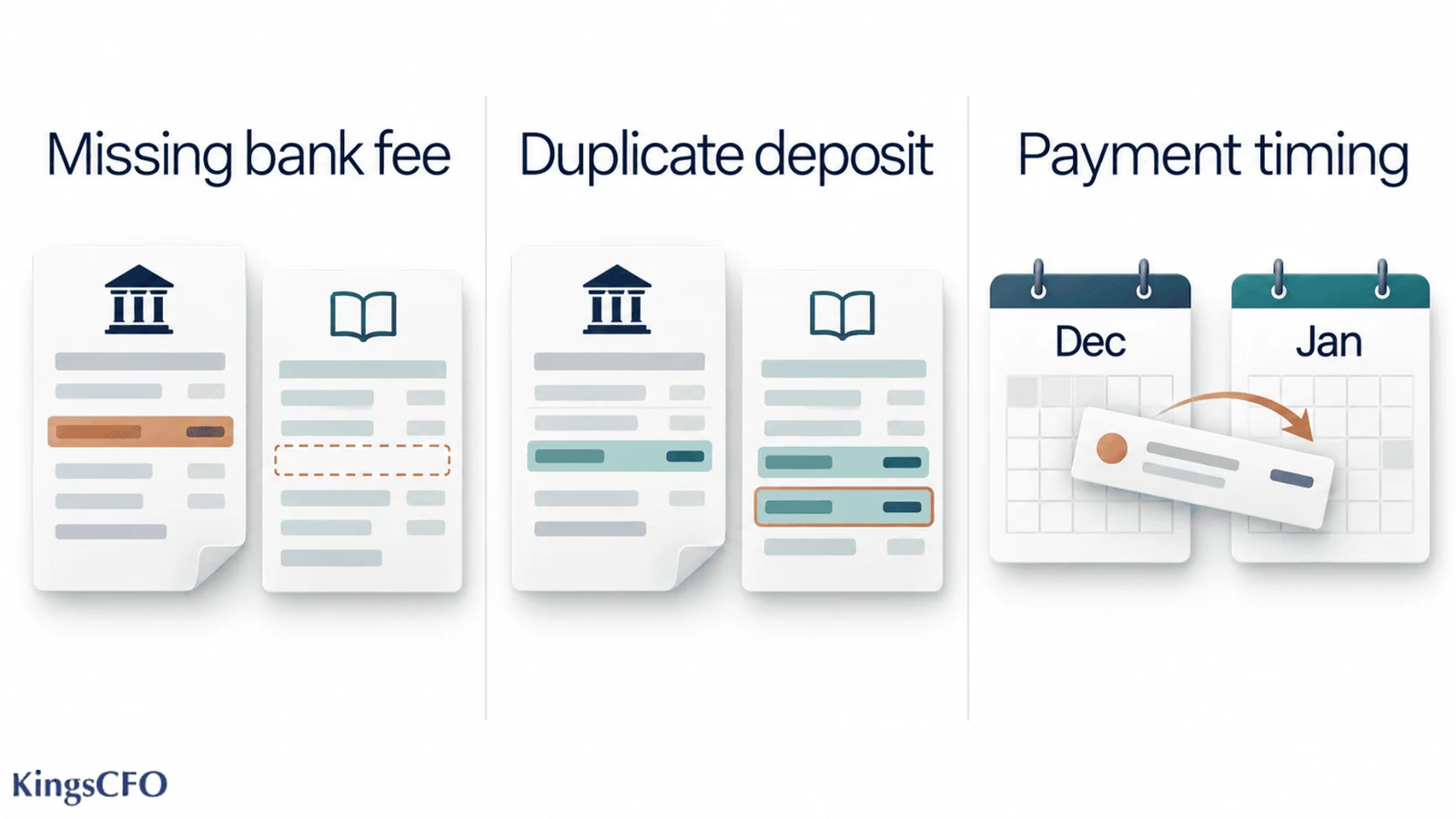
The cash figure in your accounts should connect to the bank’s record of money coming in and going out. If the two figures differ, your finance team prepares a bank reconciliation to explain each difference.
To find the reason, the team goes through the bank statement and the general ledger, which lists transactions in the accounting software. They look for entries that appear in only one place or appear twice.
A bank fee may be missing from the books, or someone may have entered a deposit twice. In those cases, the team checks the evidence and corrects the entry. A payment made near year end may reach the bank after the accounting date, so the reconciliation may only need to explain the timing. Your team should not add an entry simply to make the totals match.
The same question applies to other accounts. Can the team explain old customer debts, bills for goods received before year end, and differences between a stock count and the accounting record?
Month by month, these checks give you figures you can use to run the business. Our reporting and reconciliation support helps owners find gaps while there is time to deal with them.
Check Costs That Make Profit Look Better Than It Is

When profit rises unexpectedly, the reason may sit in the way someone recorded a cost. A purchase can appear in the books and still affect the wrong part of the financial statements.
A finance expert on our team saw this happen when an owner thought margins had improved. The expert noticed a jump in fixed asset additions, where the business records equipment and other long-term assets. Supplier receipts showed routine repairs and small replacement parts. Because the bookkeeper had recorded those costs as assets, they had stayed out of that period’s expenses.
The profit report looked encouraging until someone checked the purchases behind it. So if you see a sudden improvement in profit or a jump in equipment additions, have your team open a few large invoices and explain where they recorded the costs.
Routine servicing and a replacement that qualifies as an asset can receive different accounting treatment. Your team needs the details of the work to decide which applies. If the corrected profit changes a hiring or investment plan, a part-time CFO’s financial review can help you consider that decision using the right figures.
Explain the Gap Between Sales, Cash, and VAT
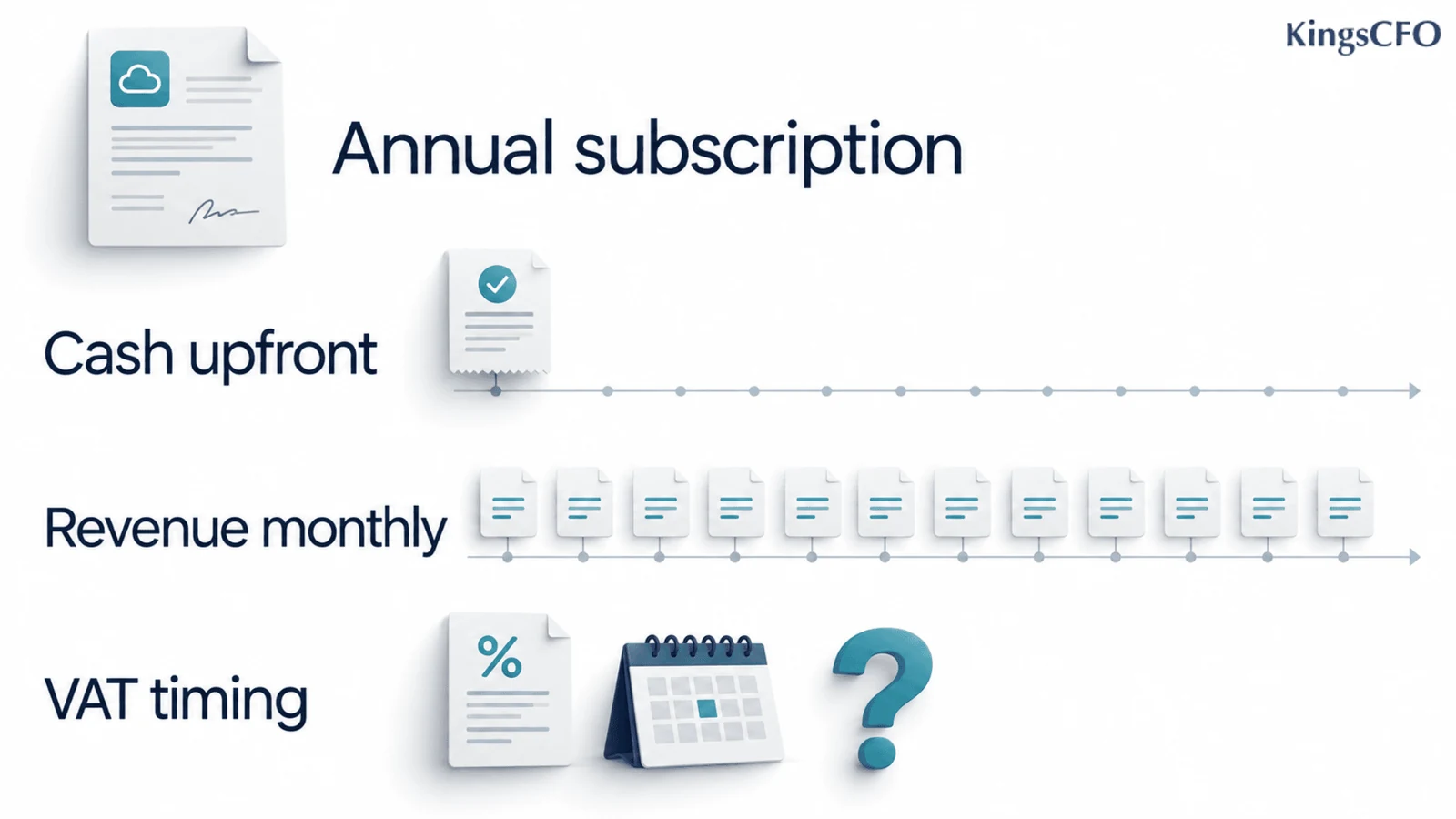
Your bank account, monthly sales report, and VAT return may show different amounts for the same customer contract. Before you assume someone made a mistake, ask what each figure measures.
Take a year-long software subscription. A customer pays the full amount in January, so the cash arrives at once. But the company still owes access for the rest of the year, and its accounts may show the revenue over the months it provides the service.
That raises another question. Can the VAT return show the full amount while the monthly sales report shows only part? I checked the FTA’s VAT guide, which explains that the VAT date of supply can depend on payment, the tax invoice, and the type of supply. Your team needs to check the contract and invoice dates before deciding what belongs in each period.
Ask for a short working paper that connects the contract, invoice, payment, VAT return, and revenue in the accounts. Your team can also use it to explain differences between the financial statements and the figures used for Corporate Tax.
These management accounting basics matter when you plan spending. A customer prepayment brings in cash, but the company may still owe months of service before it has earned the full revenue. Our guide on profit vs cash flow explains why those two figures often move apart.
Give the Auditor a File They Can Follow
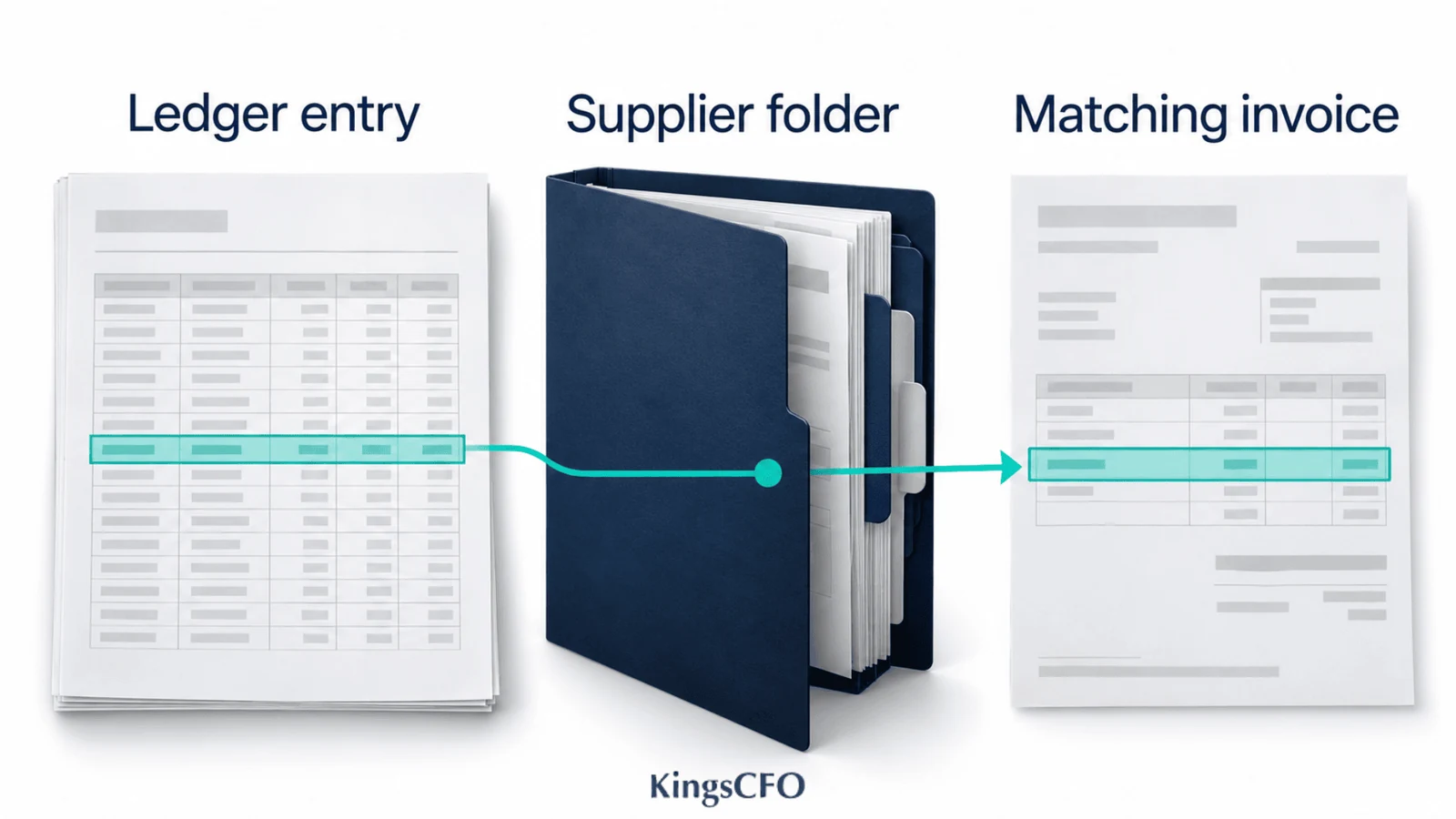
The auditor may pick an amount in your accounts and ask to see the records behind it. Your team needs to find the right document and show how it connects to that amount.
One client had kept every receipt, but spread them across dozens of desktop folders with no dates or supplier names in the file names. The auditor could not match the receipts to the expenses in the ledger, so the team had to pause and build an index by hand.
The client had the receipts, but nobody else could find the right one. Pick an expense in your own ledger and see if a colleague can find its invoice without asking the person who saved it.
Give each account schedule a clear name and link its entries to the relevant invoices, agreements, or payments. The exact folder layout matters less than making the path easy to follow.
| What the auditor may ask about | What your team can prepare |
|---|---|
| The accounts as a whole | Draft statements, trial balance, general ledger, and prior signed statements or audit report, if available |
| Cash | Bank statements and reconciliations |
| Sales and unpaid customers | Invoices, contracts, receipts, and a list of unpaid invoices by age |
| Supplier costs | Bills, payments, and a list of unpaid supplier amounts by age |
| Employees | Payroll reports and relevant employment records |
| Stock and equipment | Count sheets, asset register, purchase and disposal records |
| Tax | VAT records where relevant and Corporate Tax workings |
| Significant decisions | Loan agreements, approvals, and related-party details |
If you use a financial reporting system in the UAE, test the files it holds. The FTA’s Decision No. 4 of 2026 on accounting records requires electronic copies to include all pages and remain clear enough to read. It also requires access to the records when the FTA asks for them. Open a few saved invoices and contracts, because a missing page or a blurred scan can cause trouble even when the file has the right name.
Cloud accounting software can link an invoice to its ledger entry and show who changed a record. Give staff their own logins, then test the auditor’s access before sharing it. Let the auditor examine relevant records without unnecessary control over the system, including later-period or payroll information when needed.
This is part of the financial control approach we use with SMEs. Records help most when another person can find and follow them without reconstructing the year from scratch.
Handle a Missing Invoice Before It Holds Up the Audit
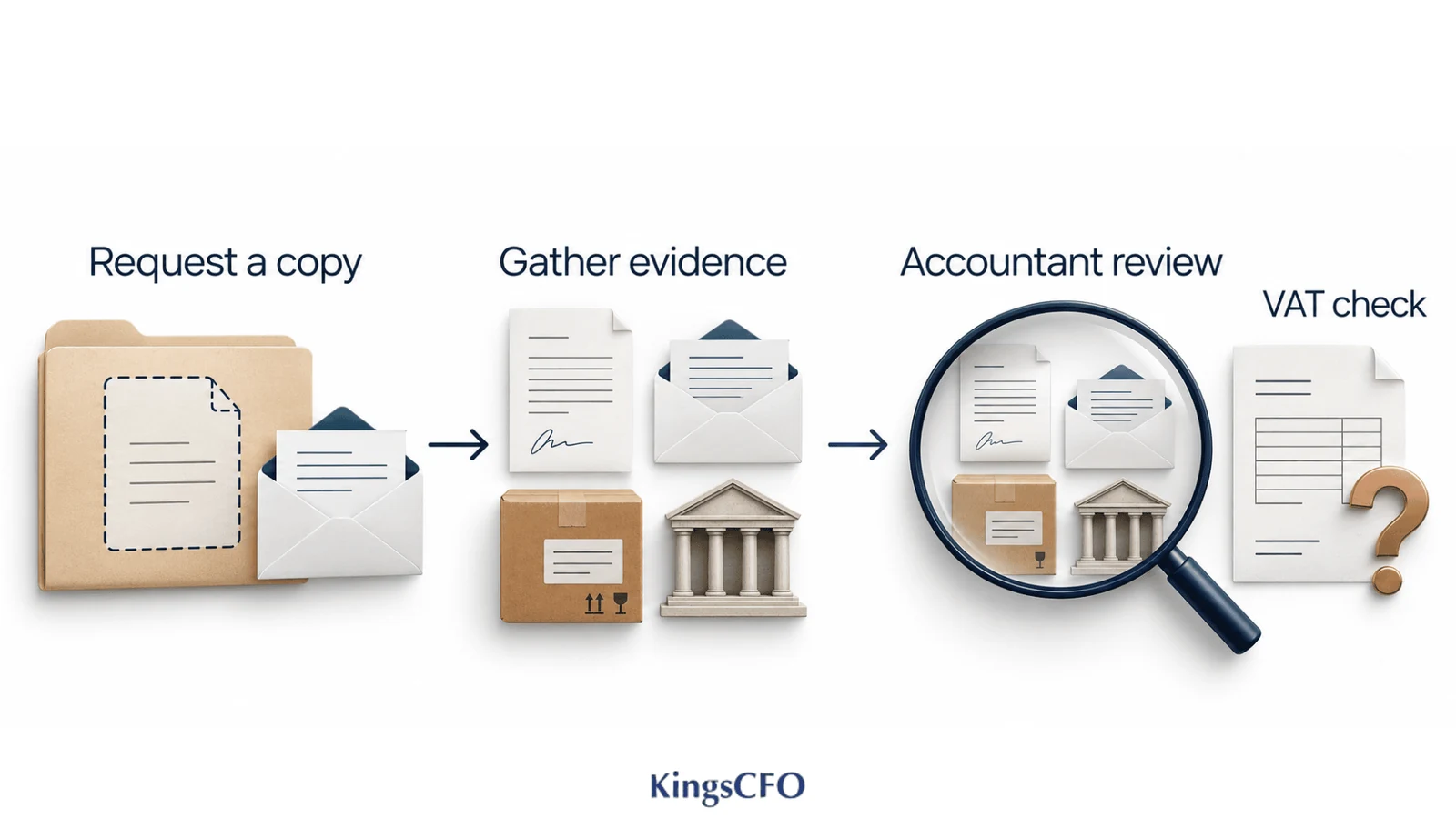
If you cannot find the invoice behind a large purchase, tell your finance lead now. Waiting until the auditor asks leaves less time to get a copy and check the entry.
Our finance team contacts the supplier or customer first. While waiting, it gathers the contract, email approvals, delivery details, and bank transfer record. Those documents help explain what happened, even if the original invoice remains missing.
A bank transfer supports the payment, but can it replace a tax invoice for a VAT claim? The FTA’s guidance on VAT recovery explains the evidence needed and the situations where other documents may apply. Because the answer depends on the transaction, ask your accountant to review the missing invoice before relying on a payment record alone.
If the team still cannot obtain a copy, give the auditor the records you found and explain the gap accurately. Then decide how your staff will save and check invoices next month so the same search does not happen again.
Keep Auditor Requests With One Finance Lead
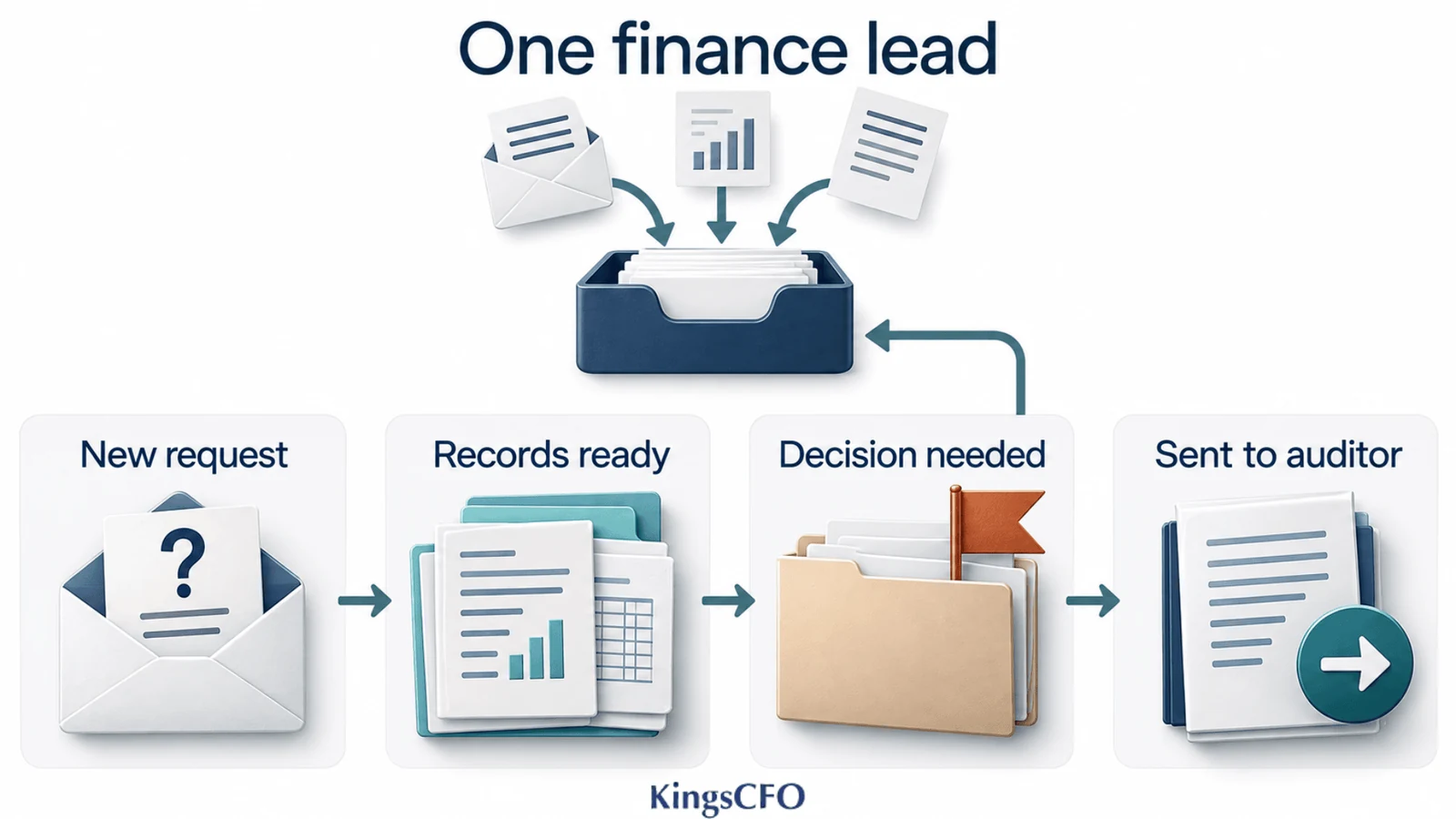
The first document list rarely ends the financial audit process. As the auditor reviews the accounts, more questions will follow. If each request goes to a different person, your team can lose track of what it has sent.
Have one person track each request, its due date, and the auditor’s follow-up. That person may be your bookkeeper, an outsourced adviser, or an internal finance lead. They can handle routine invoices and bank statements, while you step in when an answer needs your knowledge or decision.
For example, the auditor may ask about a large loan, a dispute, future funding, or a transaction with a sister company. Gather the agreement and any required approval, such as board minutes if your company’s rules called for them. If the question concerns the price charged between related businesses, ask your team to show how it assessed the terms, using outside prices where relevant. A signed agreement alone may not explain how it set the price.
Ask your team who approves large payments and who checks the entries afterward, because the auditor may ask how those decisions were controlled. Add last year’s audit findings to the tracker too, and show what changed. Our virtual CFO support for management decisions can help with questions that need an owner’s attention.
If the Audit Starts Soon, Work From the Open Issues
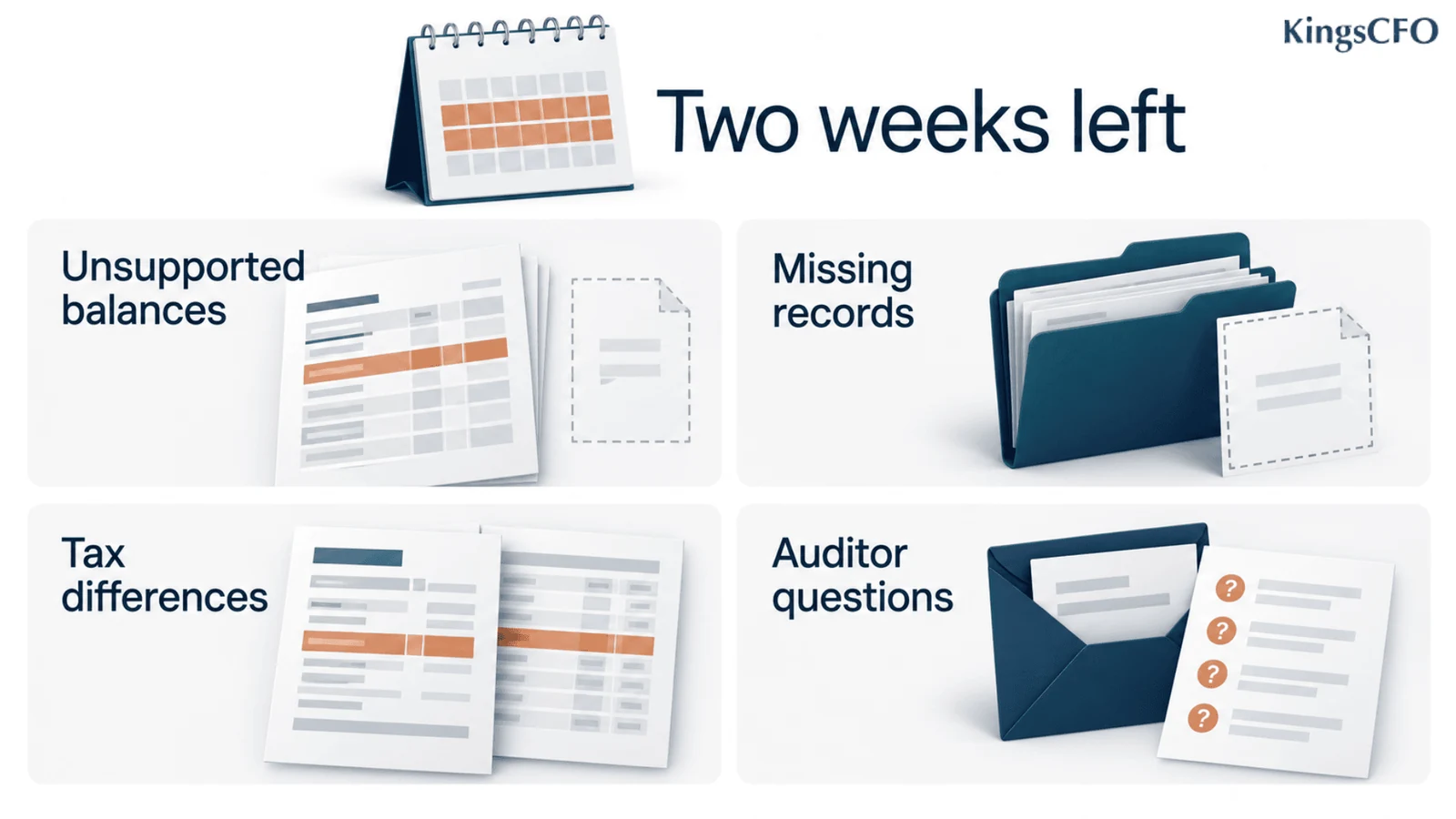
With two weeks left, ask whoever manages your books for one page showing the items that could still change the accounts or slow the auditor’s work.
Put unexplained balances, missing records, tax differences, and unanswered requests on that page. Give each item a person responsible and a next step. Start with the balances that lack support, then review sales, expenses, and tax workings.
Even after the balance sheet figures agree, the profit and loss report needs its own review. Your team still has to check sales and expenses, because a bank reconciliation alone will not finish the financial audit checklist.
If your team cannot resolve a significant issue before fieldwork, tell the auditor where it stands and show the records you have. When the auditor proposes an adjustment, ask your accountant to explain the evidence, the effect on the statements, and who will approve any change. If the auditor needs more proof, keep that request on the same tracker.
Make Next Year’s Financial Audit Easier
After the audit, look back at the questions that took the longest to answer. If a balance needed several days of investigation or nobody could find an approval, you have found a monthly process to improve.
Ask your team to reconcile bank accounts each month, review unpaid invoices and bills, update the asset register, and keep major contracts where others can find them. Those habits support the audit, and they also give you a firmer base for hiring, pricing, and spending decisions. If nobody on your team has time to run these checks, look at the virtual CFO benefits for SMEs to see what outside support covers.
As you improve the system, plan for the UAE’s move to structured e-invoicing. The FTA says a PDF or scan does not count as an e-invoice. Under the Ministry of Finance’s published timetable, businesses with annual revenue of AED 50 million or more must implement the system from 1 January 2027, and those below that amount from 1 July 2027. These invoicing rules are separate from the financial audit.
At KingsCFO, we provide outsourced finance and strategic CFO support for Dubai SMEs. We can help your team clean up the accounts, build the supporting records, and coordinate the requests, while an independent auditor carries out the audit and issues the opinion. If you need help with the gaps this audit has uncovered, please contact our finance team.
FAQs
Does every Dubai business need a financial audit?
No single rule covers every business. Ask your accountant to check your legal form, licensing authority, Corporate Tax position, and any requirement in a loan or shareholder agreement.
What if our accounts are not ready when the auditor is due to start?
Give the auditor a clear list of completed and open items. Agree on who will resolve each gap and when, and make changes to the accounts only when the records support them.
Should I give the auditor administrator access to our accounting software?
First agree on the records and functions the auditor needs, then test an account with suitable permissions. Give access to relevant later-period or payroll records when the audit calls for them.
Can KingsCFO perform the independent audit for us?
We can prepare records, reconcile accounts, and coordinate requests. An independent auditor performs the audit and issues the opinion.