

9 Practical Benefits of Hiring a Fractional CFO When Growth Gets Hard to Manage
Your business is growing, and your team needs help. You’re ready to hire, but last month’s profit cannot tell you if there will be enough cash for another salary when two clients pay late.
You want to give your team the support it needs and feel confident that payroll, bills, and your other plans can stay on track. A fractional CFO can help you see when cash is likely to come in, test the full cost of the hire, and choose a hiring date that makes sense for your business.
But is that help worth paying for at your stage? Keep reading to see nine practical benefits of hiring a fractional CFO, what it may cost in the UAE, and how to tell if your business needs one now.
What Is a Fractional CFO and What Do They Do?
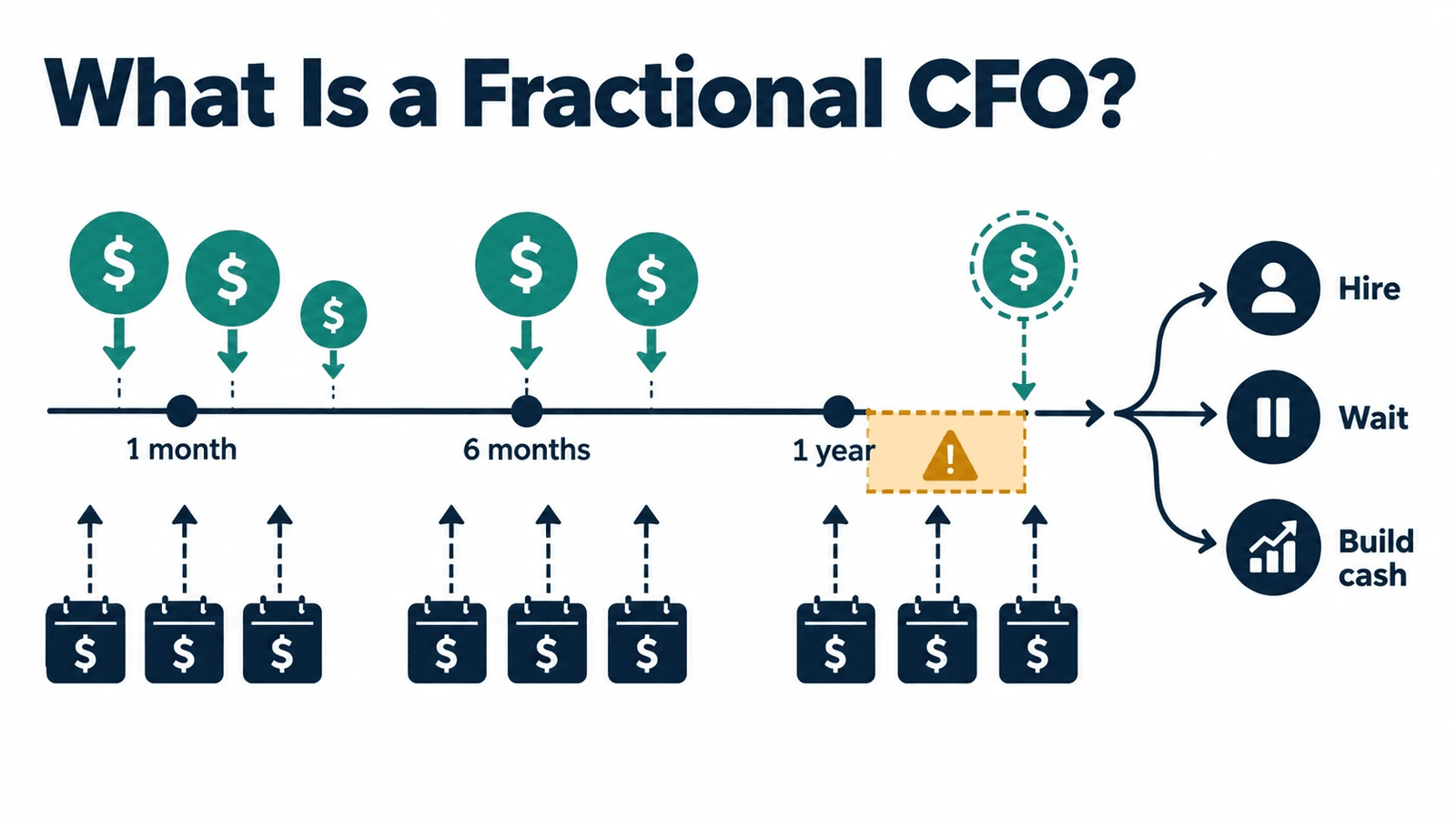
A fractional CFO is a finance leader who works with your business for an agreed amount of time or a defined piece of work. You might bring one in to help plan a hire, review cash, or test an expansion.
When I asked our CFO to explain strategic finance, he began with incoming and out going cash flow. He looks at next month, six months, and a year because a cost you take on today can affect the business for months.
He also looks beyond the next few weeks because a decision you make now can affect cash for months. How does it look next month, in six months, and in a year? If income falls below your plan, how long can the business keep paying its bills?
For your possible hire, that means checking customer payment dates, payroll dates, and the months after the person starts. With those figures in front of you, you can decide if it makes sense to hire now, wait, or build up some cash first.
This work needs reliable records. At KingsCFO, accounting, financial systems, compliance, and CFO services sit alongside each other because the plans you make depend on the numbers behind them.
The Benefits That Show Up in Your Business with a Fractional CFO
You do not have to judge these benefits in the abstract. Think about the decisions sitting on your desk today and the information you need to make them.
See a Cash Shortfall Before It Becomes Urgent
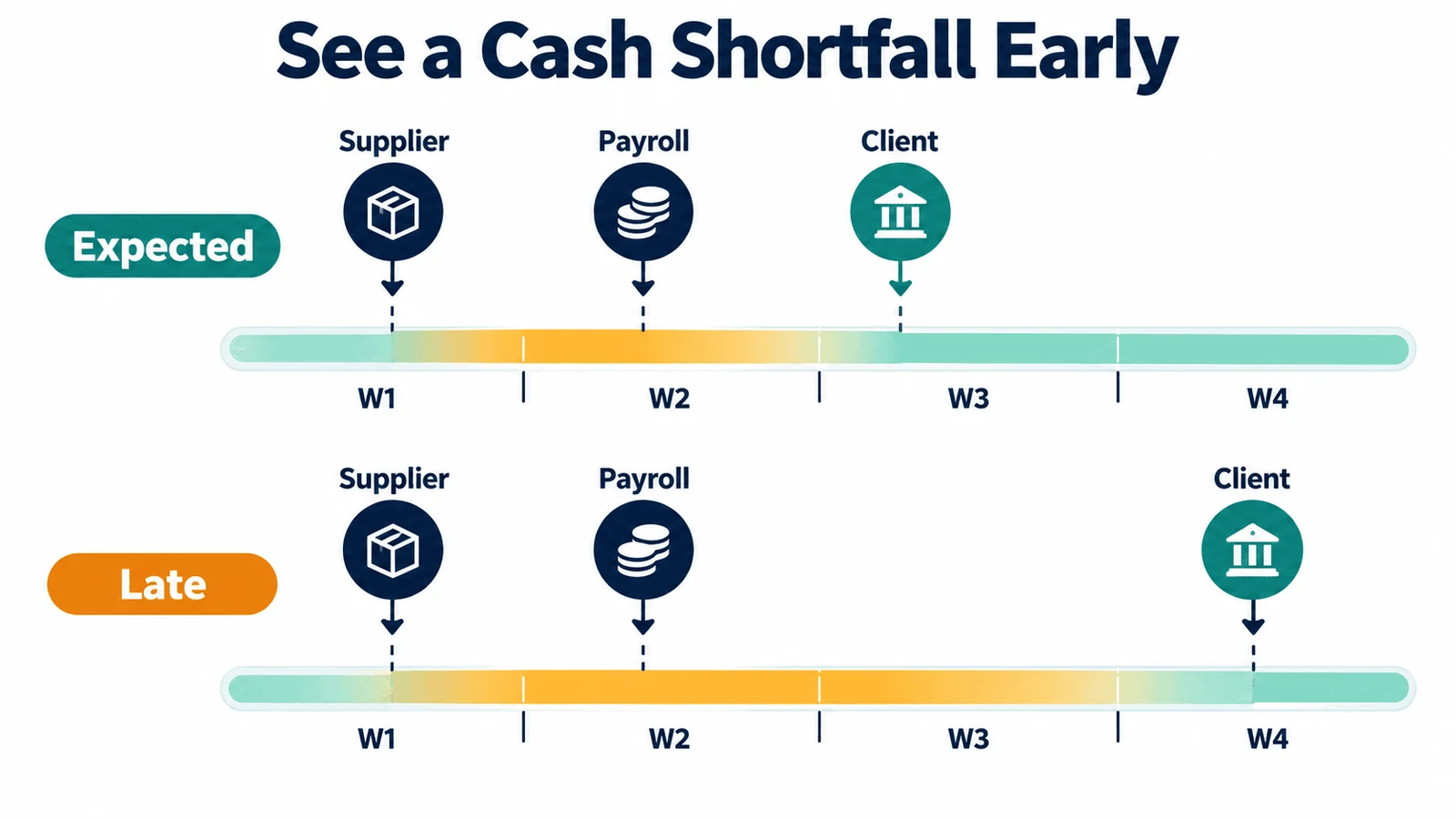
Suppose a client owes you money for a profitable project, but you need to pay your team and suppliers before the client’s next payment arrives. The project may be doing well overall while that particular week feels tight.
A cash forecast puts expected payments and bills on a calendar. Once you can see the dates together, you can spot a difficult week early and decide what to do. You may follow up on an invoice, move a purchase, or keep extra cash available.
A cash buffer is the money a business could use to cover its usual outgoings if income stopped. I read a JPMorgan Chase Institute study by Diana Farrell and Chris Wheat covering 597,000 U.S. small businesses. The median business had enough cash to cover 27 days of usual spending. If customer payments stopped, how many days could your business keep paying its bills? Your cash forecast can help you find out.
Find the week when your forecast shows the least cash. Then ask what would happen if a payment due that week arrived late.
Find Out Which Work Leaves You With Profit
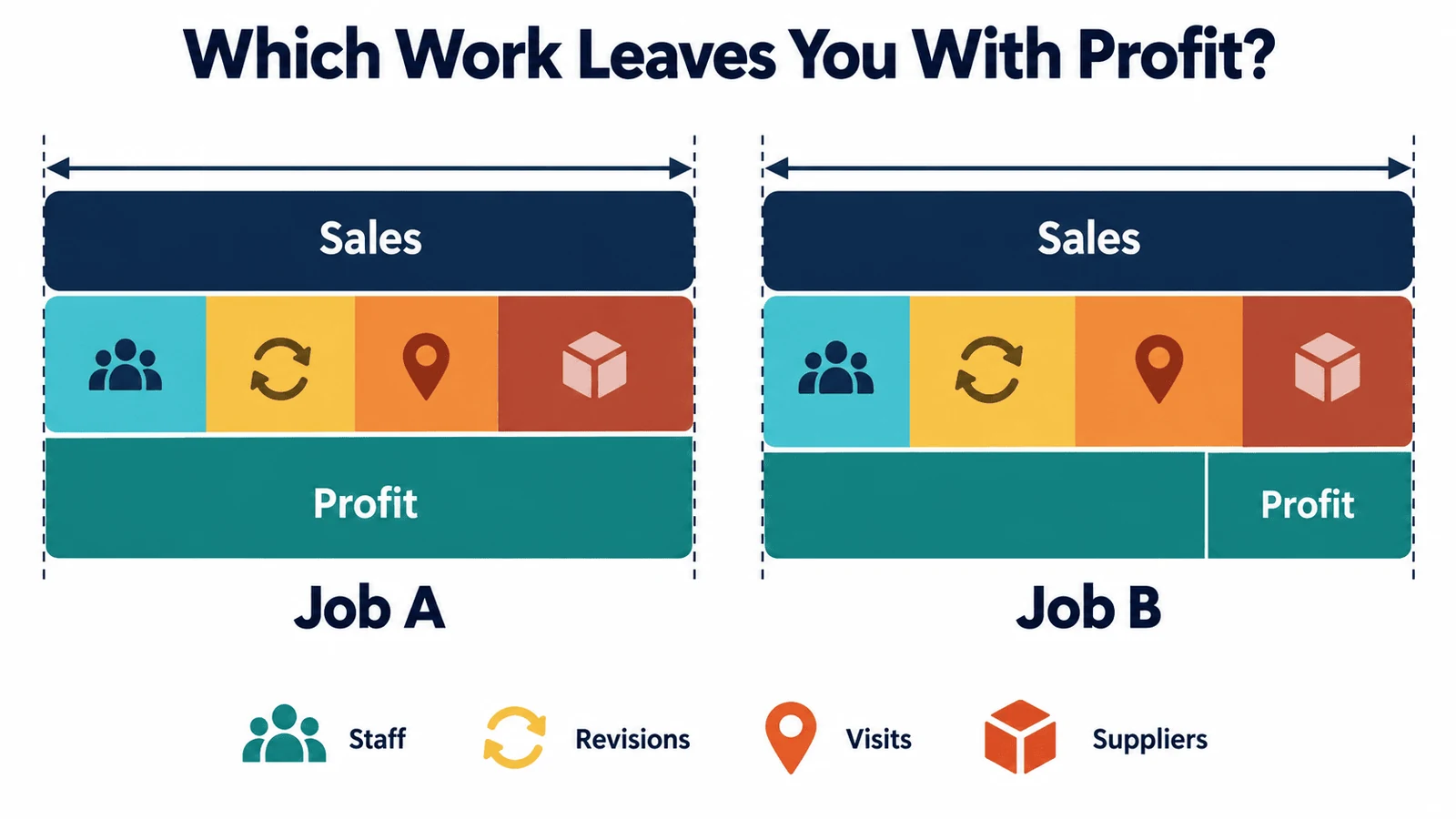
You may know which service brings in the most sales, but how much does it leave after your team delivers it?
A job can take extra visits, revisions, staff hours, or help from an outside supplier. Those costs are easy to miss if you only look at the price you charged.
With accurate records, a CFO can compare what each type of work earns with what it costs to deliver. If you do not track those costs yet, gathering them comes first. Once you have the full picture, you can decide if a price needs to change or if the work needs a better process.
Start with the service that keeps your team busiest and ask how much it earns after you count the time and money it takes to deliver.
Test a Big Move Before You Commit
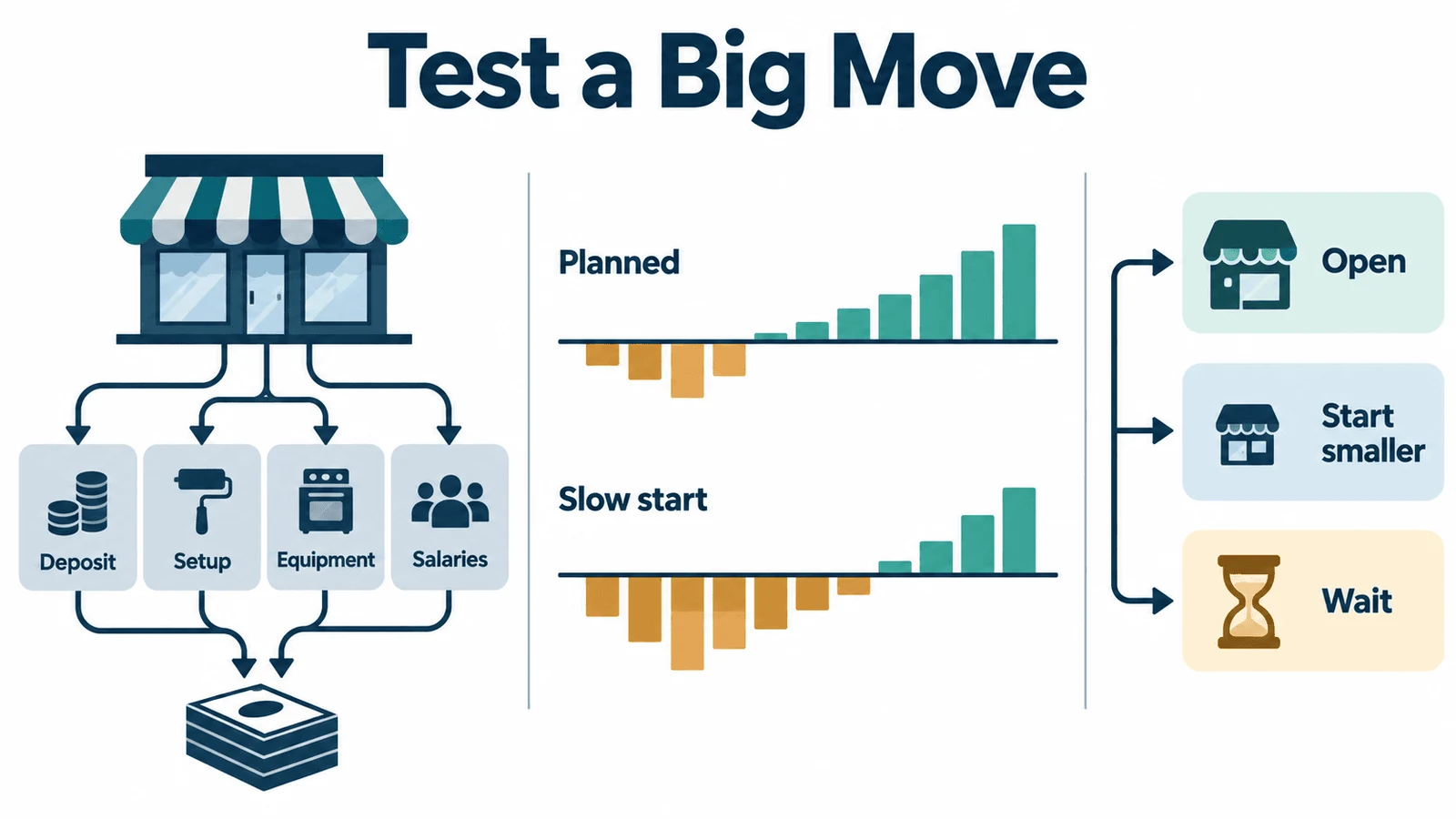
You may feel ready to open another location. Then you start adding up the deposit, setup work, equipment, and extra salaries. Much of that money could leave before the new location earns anything.
When I asked our CFO how he would judge a decision like this, he looked at the business’s stage and the risk involved. He also considered the work it would take, the size of the opportunity, and what the owner wants from it.
That last question stayed with me because an expansion also asks for your time and attention. You need to know what the business can afford and what you want to take on.
A CFO can help you see what happens if sales build as expected and if they take longer. You may then go ahead, begin on a smaller scale, or wait. Before signing anything, ask how much cash the slower start would need.
Know If You Can Carry a New Salary
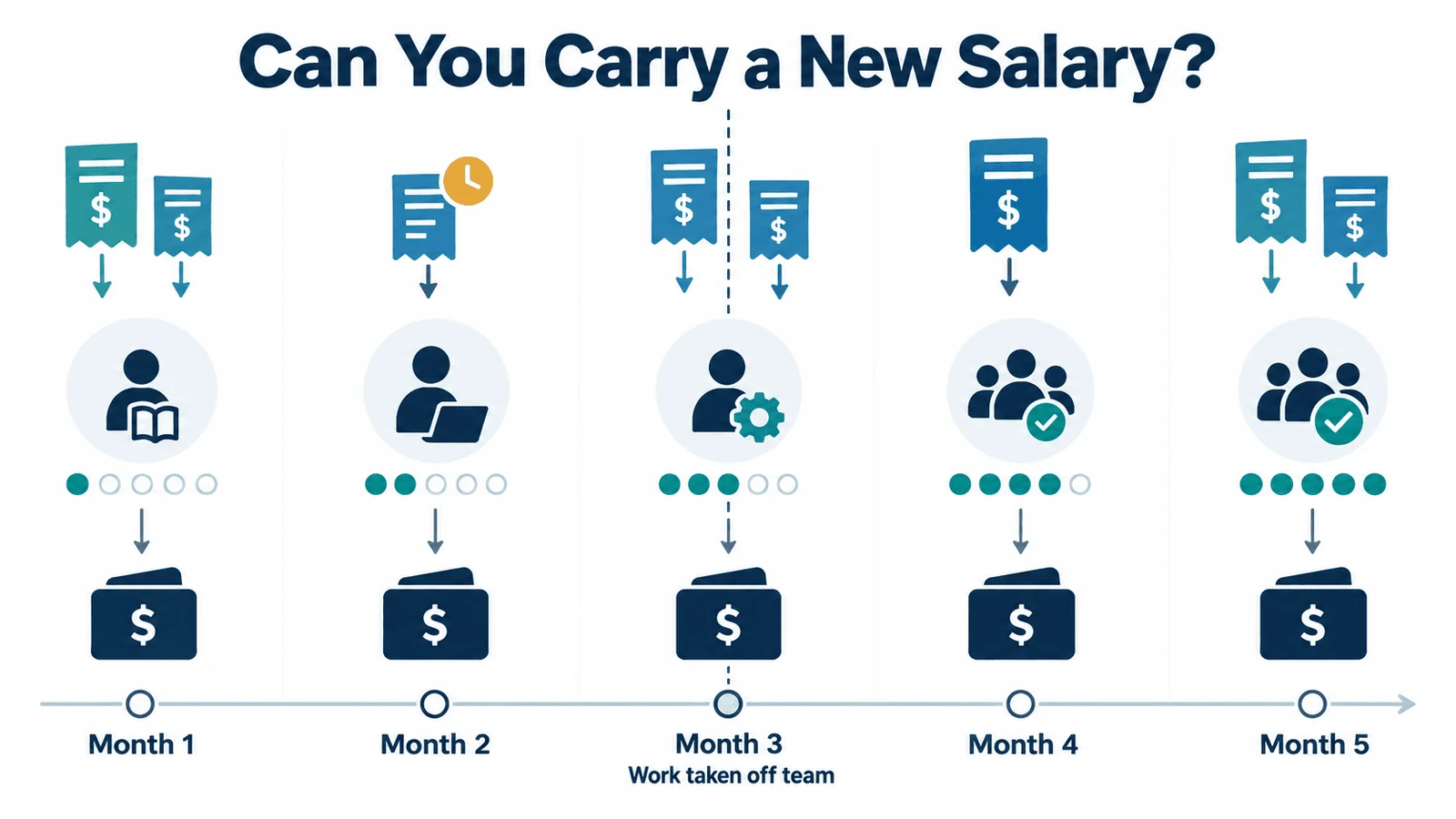
Seeing that you can meet the first payday is a good start, but a salary comes due again next month. The new person may also need time to learn the role before they can take on the work you hired them to do.
So when you test a hire, look at the early months and what comes after them. If the plan only works when one large client pays on time every month, you should see that risk before making an offer.
A fractional CFO can help put the full cost of the role into your forecast and compare it with expected work and cash. You may find that the business can hire now, or that a later start date would give you more room.
Write down what the new hire should take off your team’s plate after three months. That gives you a clearer way to judge the continuing cost.
Notice Problems Before They Reach Your Accounts
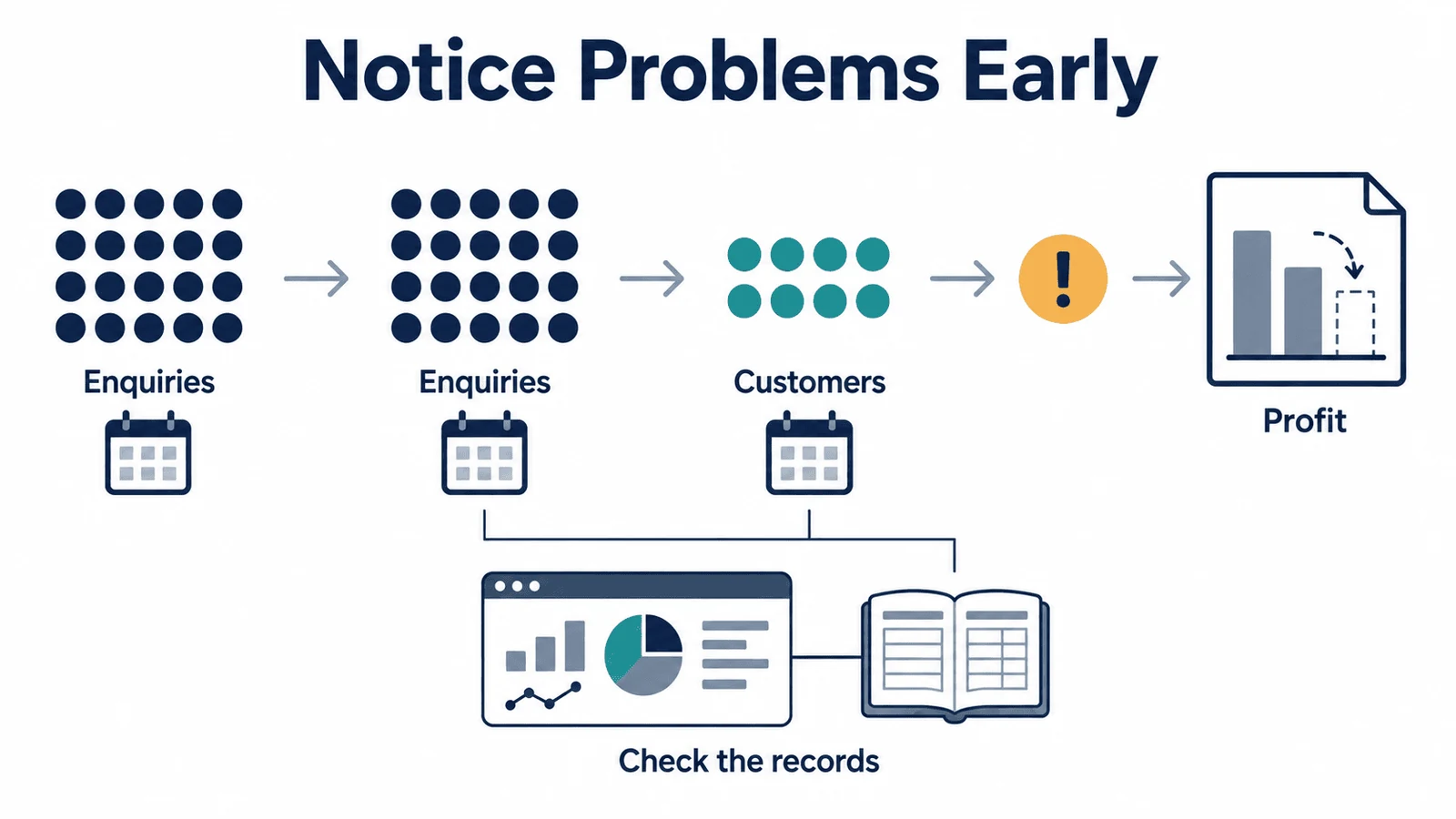
Your monthly accounts may show that profit fell, but the change could have started weeks earlier. By the time you see it in the accounts, you may already have felt that business was slowing down.
Our CFO told me he also watches leads, store visits, delivery costs, and how many enquiries turn into customers. I understood why when he explained the timing. If fewer enquiries become sales this month, you can investigate before the drop appears in your profit report.
For example, your team may receive the same number of enquiries, but fewer people decide to buy. If you notice that change early, you can look into it before spending more on marketing.
Accounting software, bank feeds, and dashboards can help bring those figures together. If your team uses AI to summarise a report, check its answer against your records before acting. The U.S. National Institute of Standards and Technology warns that generative AI can give confident but false answers.
Pick three figures you want to see before your next growth decision. Then make sure someone checks where each figure comes from and updates it regularly.
Explain What You Need Funding For
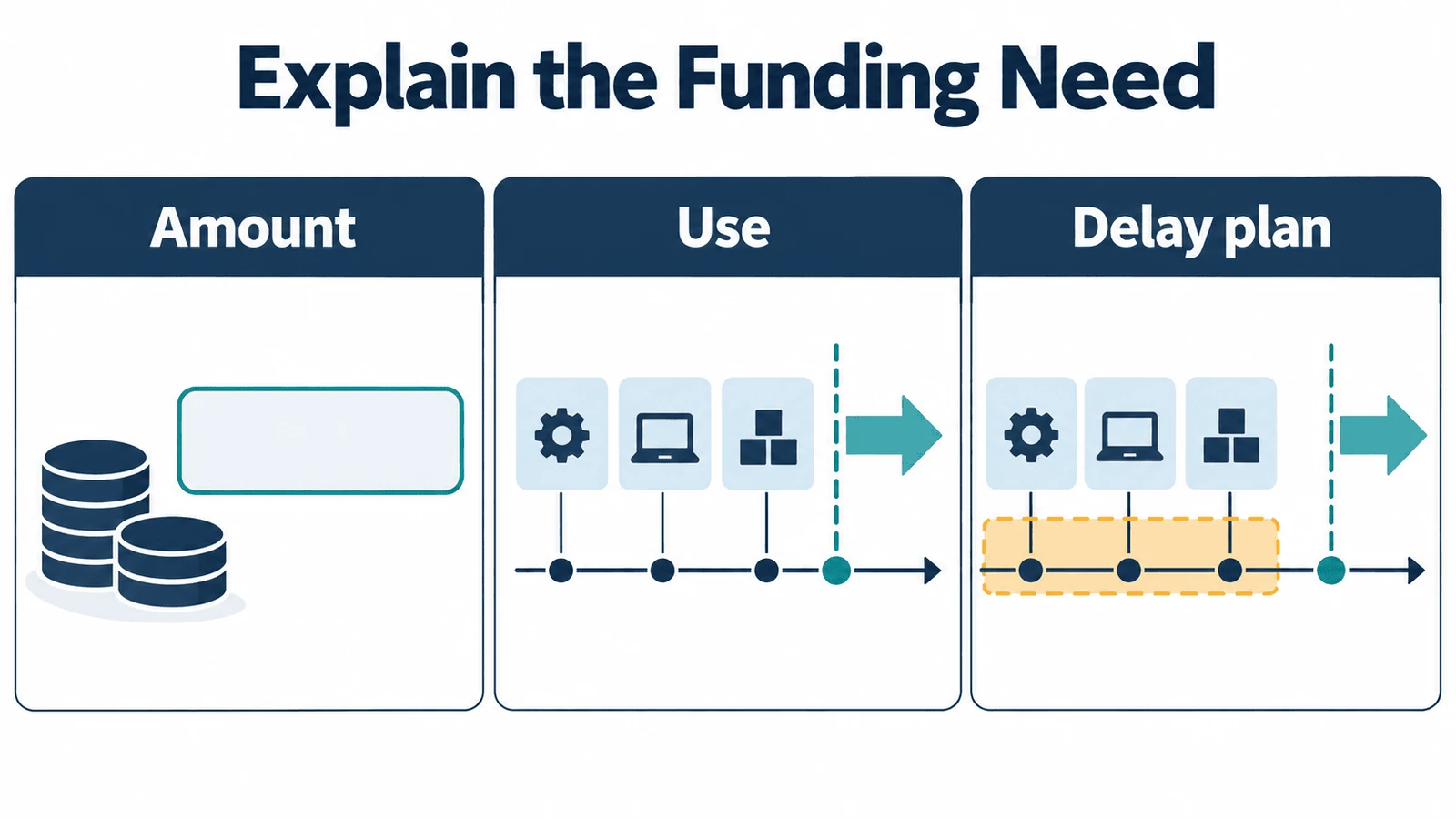
A lender or investor may ask how much money you need, and you might already have a figure in mind. They will also want to know what you plan to spend it on and how the business will manage if growth takes longer than expected.
A CFO can help put those answers into a forecast. You can see when the money would go out, when you expect income to follow, and what happens if the plan runs behind.
The forecast cannot promise funding, but it can help you decide how much to seek. It also gives you a clearer way to judge the terms you receive.
Before approaching a funder, try explaining your request in three short sentences. State how much you need, what you will use it for, and how you will manage a delay in expected sales.
Keep Track of Money as Your Team Grows
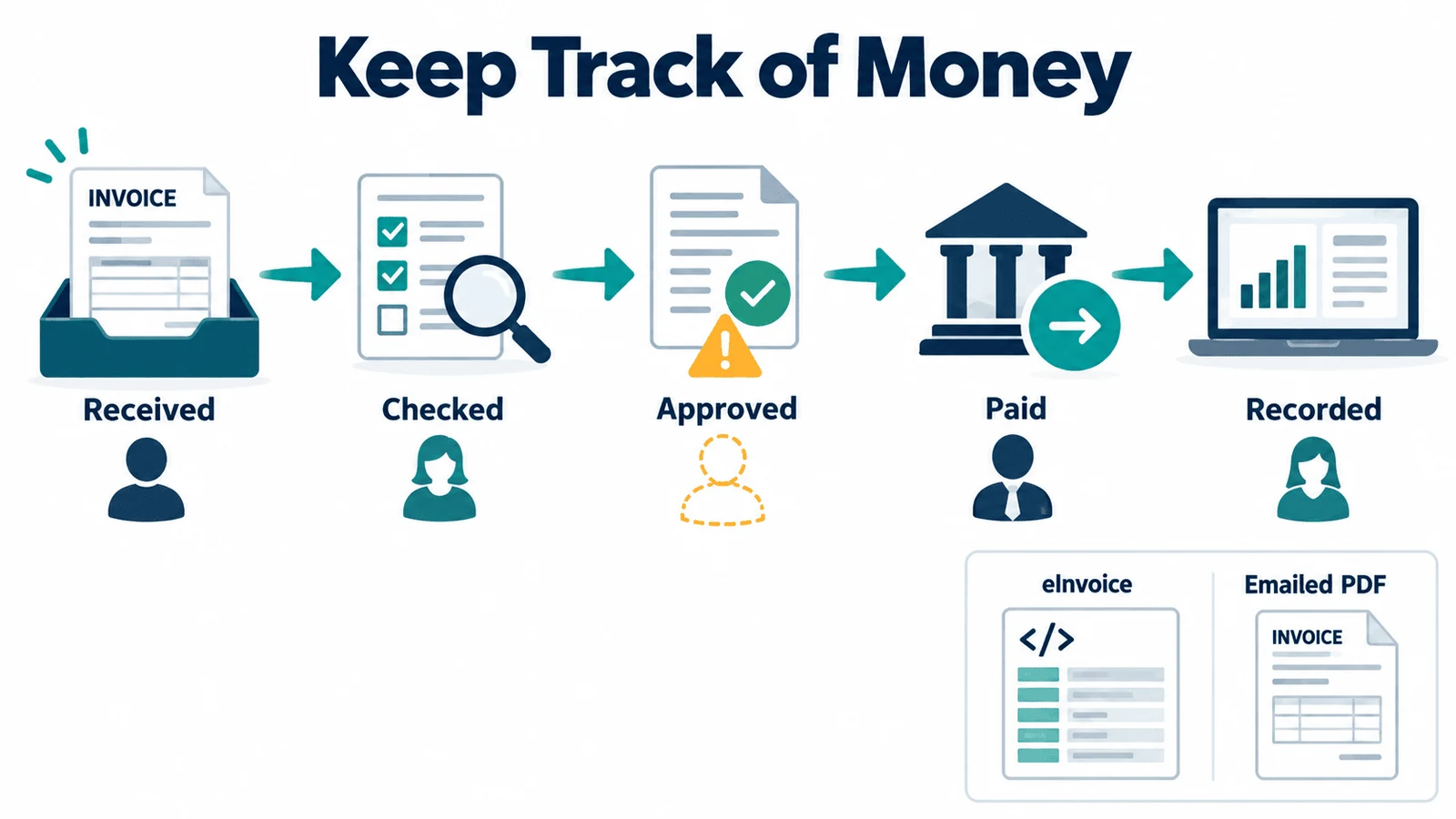
When you have a small team, you may remember who approved a purchase or which client still needs to pay. As more people join, those details become harder to manage from memory.
That is when it helps to look at how information moves through the business. Who approves spending? Who checks that an invoice is correct? When does someone tell you a payment is overdue?
Your CFO can help spot gaps, while your accountant, bookkeeper, and operations team help put better processes in place. You might set a spending limit that needs approval or arrange a regular review of unpaid invoices. Each task needs someone who owns it.
Your invoicing setup matters as requirements change too. The UAE Ministry of Finance’s eInvoicing guidance explains that an eInvoice uses structured data shared electronically. An emailed PDF does not meet that definition. Check how the programme applies to your business with the people who manage your systems and compliance.
For now, think of one money decision that still depends on someone remembering to update you. Who should own that update?
Stop Answering Every Finance Question Yourself
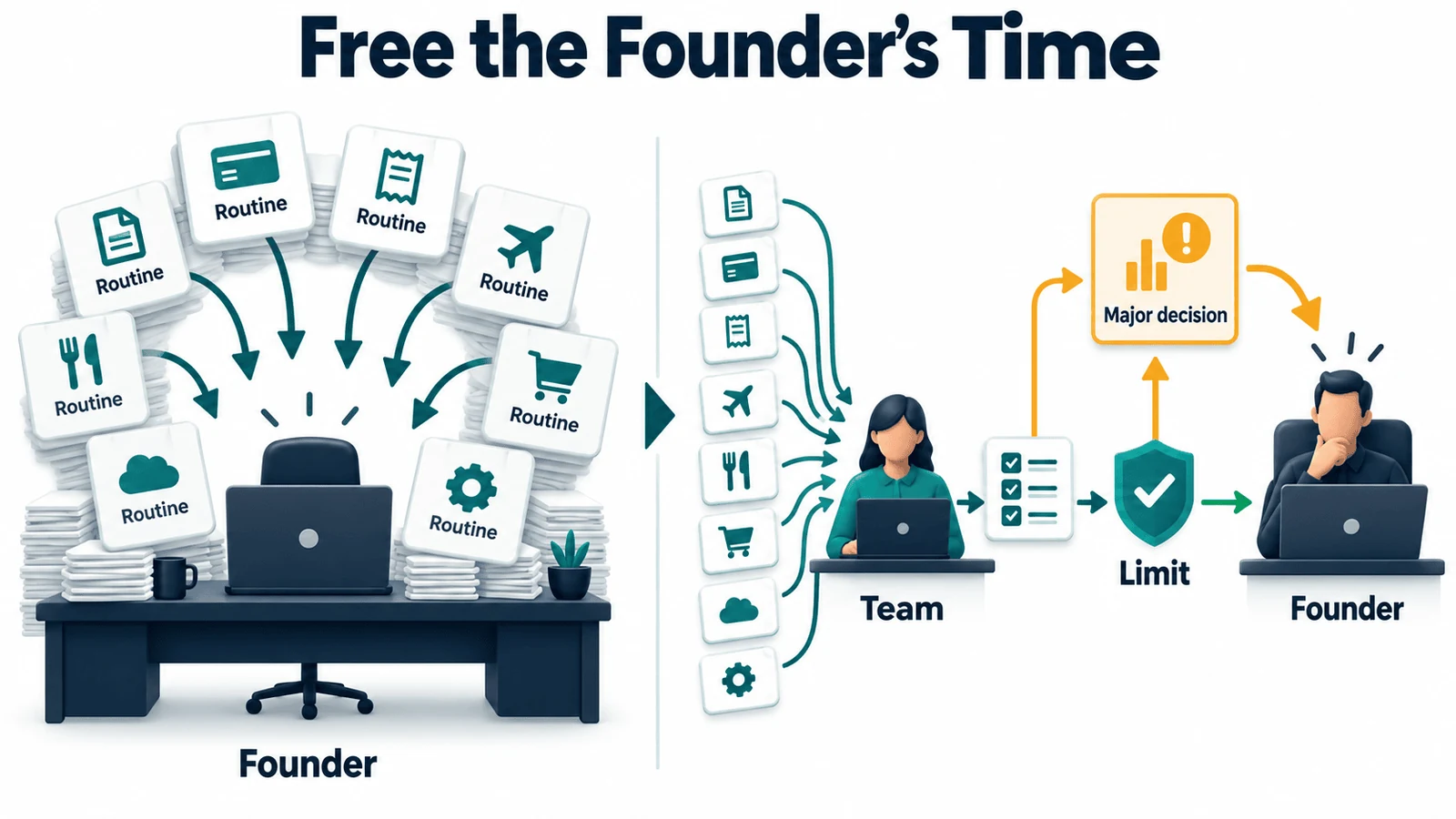
Perhaps your team has the reports, but people still wait for you to explain the figures, approve routine spending, or make every choice. That takes time away from the decisions only you can make.
Our CFO raised this when we discussed businesses that make a profit but struggle to move forward. Sometimes the founder keeps doing the same tasks because nobody else has a clear process to follow. He suggested turning repeated work into a process and training someone to take responsibility.
You can still keep the important calls while giving your team the information and limits they need for routine ones. Finance support can help you decide which figures they should watch and when a problem needs to come back to you.
Think about the last finance question that interrupted your day. If it comes up every week, could someone else handle the first step?
Pay for the Support You Need Now
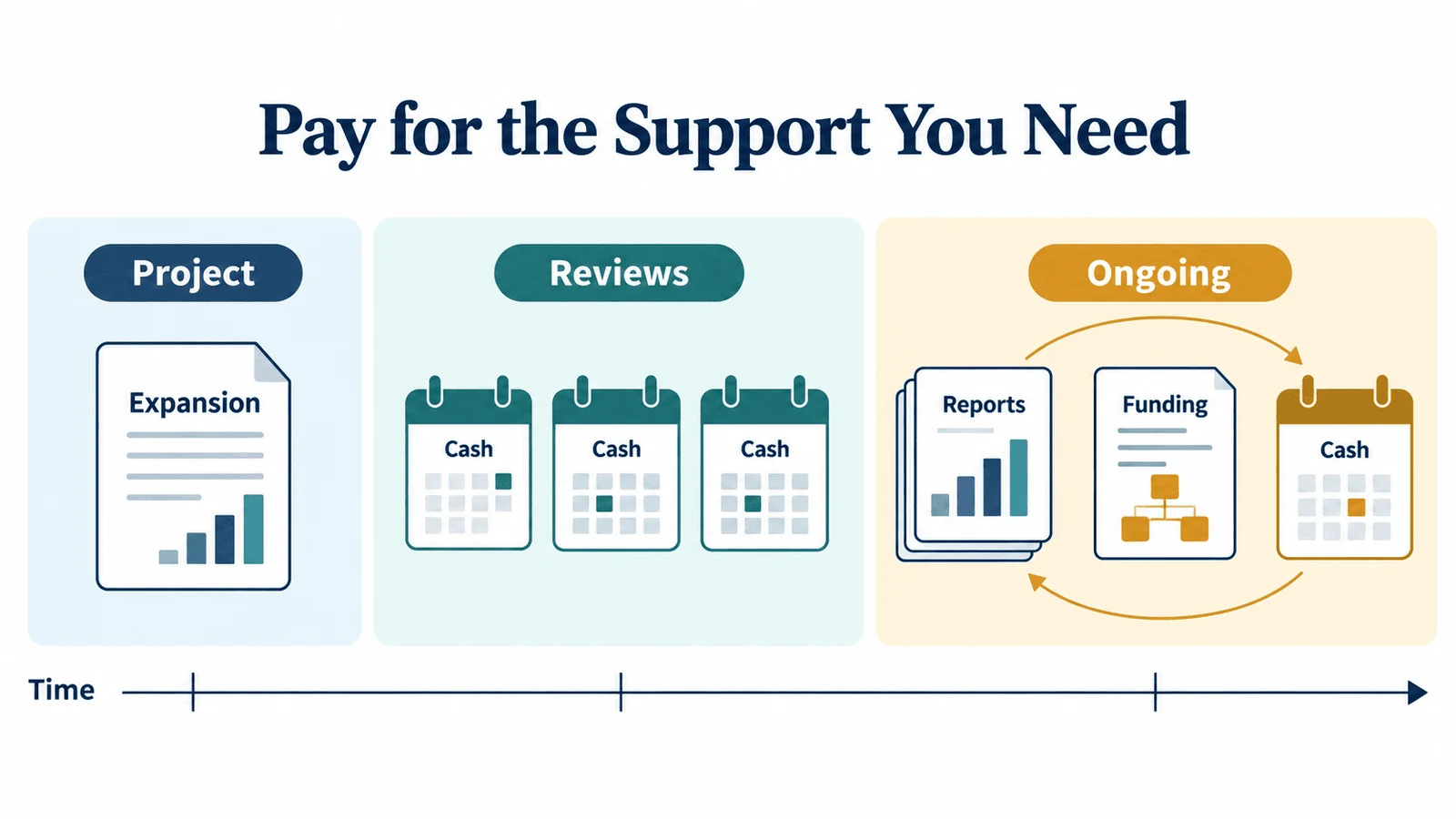
You may want help with a new location and regular cash reviews, but you may have no need for a CFO in the business every day.
A part-time arrangement lets you agree on the work and the time it needs. You might seek help for one decision or arrange ongoing reviews as the business grows. The details depend on the provider and your agreement.
Before hiring, ask who will do the work and when you can speak to them. Also ask how you can change the arrangement if your needs change. Those answers will tell you more than the word “fractional” on its own.
What Does a Fractional CFO Cost and What Are You Paying For?
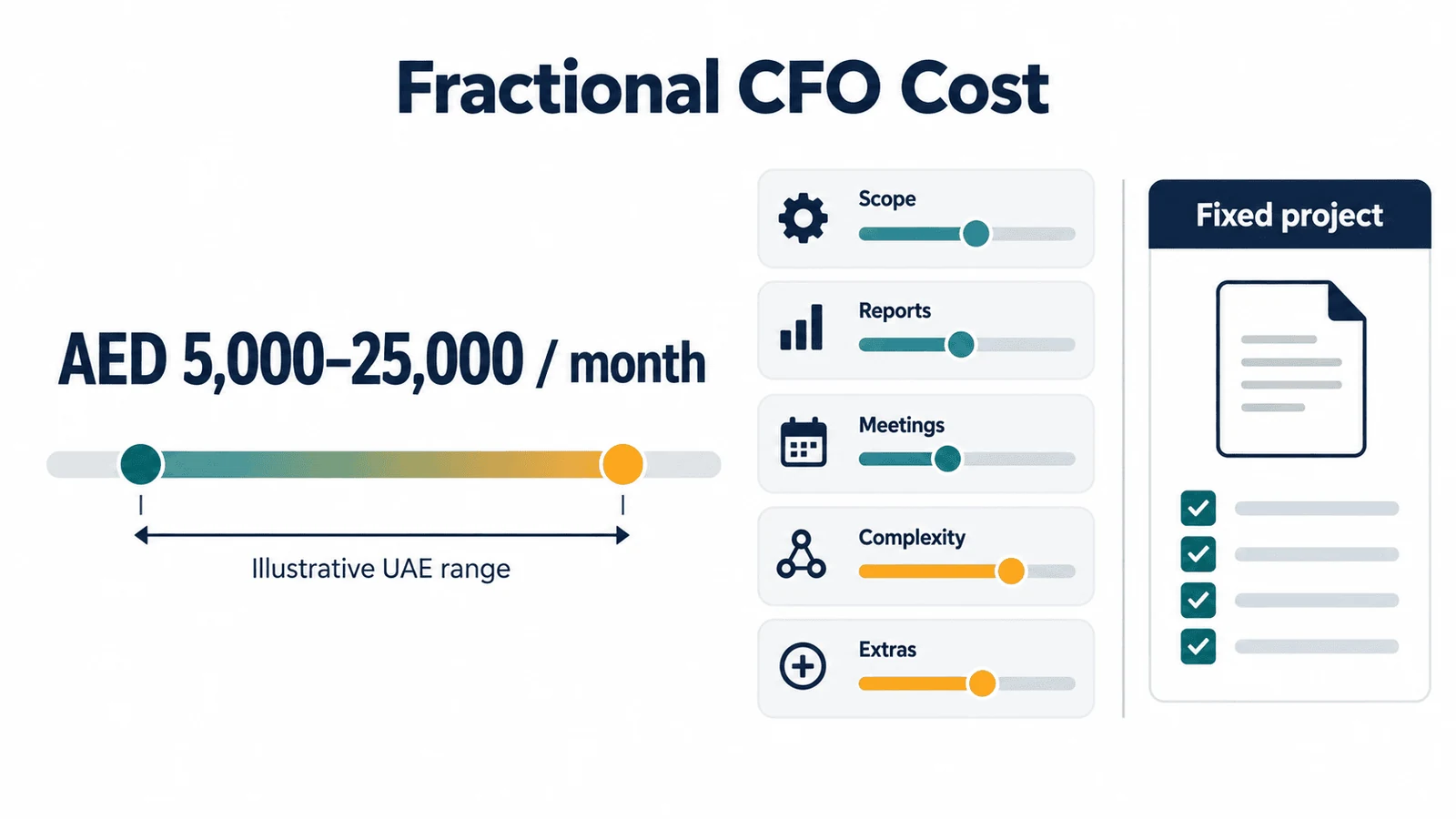
I know “it depends” is frustrating when you are trying to set a budget. As a rough starting point, allow AED 5,000 to AED 25,000 per month for ongoing fractional CFO support in the UAE.
A few regular meetings and a cash forecast may cost less than hands-on support with reporting, funding, and several business entities. A growing company with more involved needs may pay above that range.
You may also receive a fixed quote for one project, such as testing an expansion plan. In that case, ask what the finished work will include rather than comparing its price with a monthly fee.
When you request a quote, check what reports you will receive, who will prepare them, how often you can speak, and what costs extra. I would also ask what decisions their work will help you make in the first three months. That gives you a way to compare the fee with the help you need.
Do You Need a Part-Time CFO Yet?
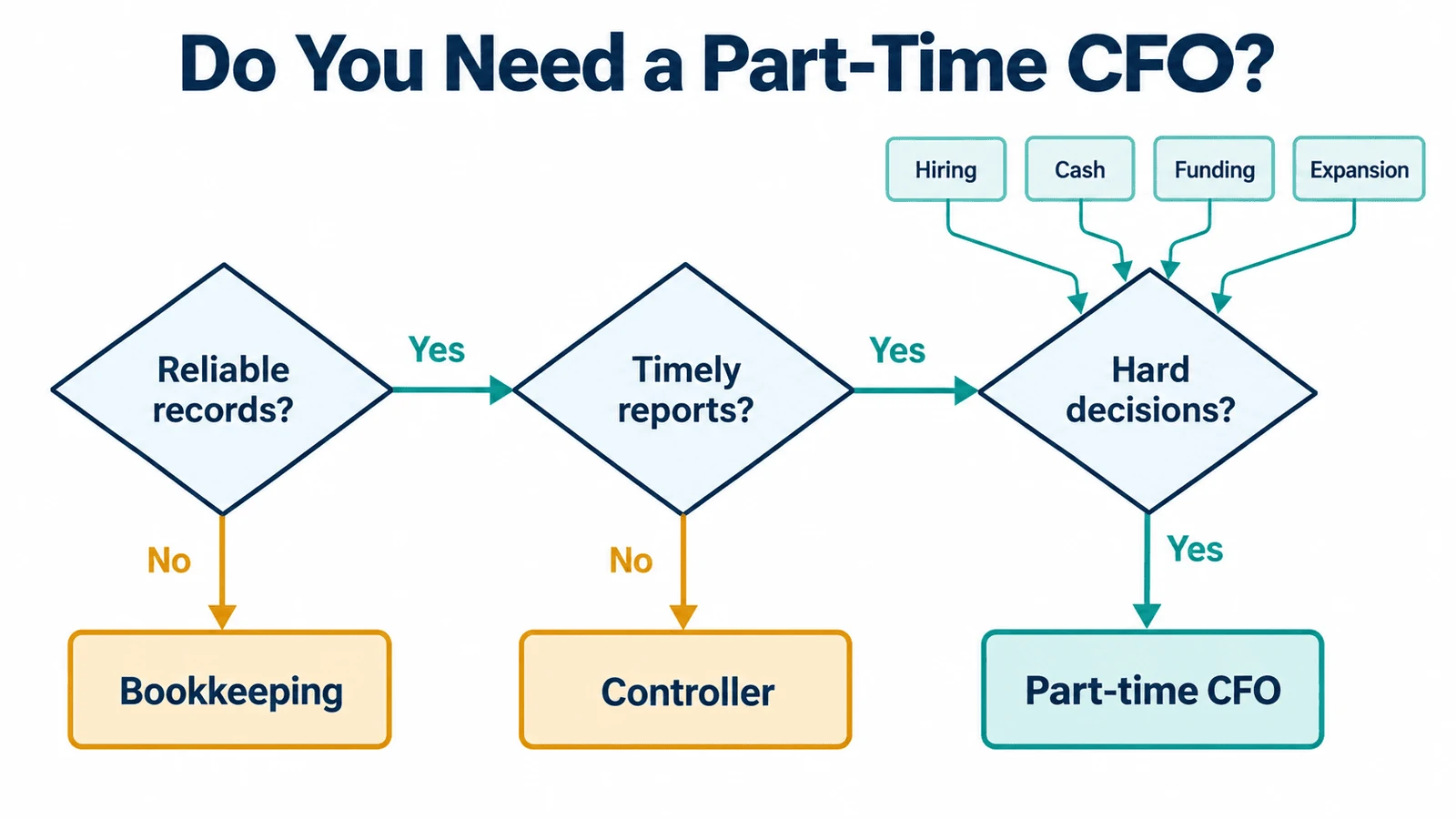
If transactions are missing or nobody has checked your accounts against your bank statements, start with bookkeeping or accounting support. A plan built on incomplete numbers will be hard to trust.
Your books may be current, but perhaps the reports arrive late or contain errors. In that case, you may need a controller. This is a senior accounting professional who helps keep records and reports accurate and timely.
If you trust the numbers but still struggle with hiring, cash, funding, or expansion decisions, a part-time CFO may fit. Later, a full-time CFO may make sense if you need senior finance leadership throughout the week.
You do not need to work out the job title first. Name the problem you want someone to solve. Is it the records, the reports, or what you should do next?
Questions to Ask Before You Hire
Bring one decision you are struggling with to the first conversation. That way, you can see how the person thinks through your problem instead of only hearing a list of services.
- What would you look at first? See if the answer connects to the decision you brought.
- What would I receive in the first three months? Ask how you would use it.
- Who would do the work, and how often could we speak? Know who will prepare the figures and discuss them.
- What would you need from our accountant or bookkeeper? Find out if your records are ready.
- How would we review the work? Agree on when you will check if the support still fits.
You can also read how KingsCFO approaches financial structure and growth for UAE businesses before that conversation.
Make Your Next Decision With Clearer Numbers
You may already know the decision you need to make, but still feel unsure about its cost, timing, or risk.
Start by writing down when the money must leave your account and what needs to happen for it to come back. If your records cannot answer those questions, begin there. If you have the numbers but need help judging the choice, a fractional CFO may be useful.
To discuss cash risks and your next step, you can book a financial risk assessment with KingsCFO.
FAQs
Is a fractional CFO the same as a part-time CFO?
The terms often describe similar arrangements, so ask what work the person will do, how often you can speak, and who will prepare your reports.
What do fractional CFO services usually include?
They may include cash forecasts, budgets, performance reviews, growth plans, and help preparing for funding discussions. Ask what your agreement includes.
How much does a fractional CFO cost?
You will need a quote for the work your business needs. Ask if the provider charges by project, agreed hours, or monthly support, and check what costs extra.
Can a fractional CFO work with my accountant or bookkeeper?
Yes. Your accountant or bookkeeper can maintain the records, while the CFO uses them to help plan decisions. Agree on who handles each task.
When does a startup need a fractional CFO?
A fractional CFO for startups can help when the founder has reliable records but needs regular support with cash, hiring, funding, or growth plans. If the books are incomplete, start there.
What if I only need help getting my accounts in order?
Begin with bookkeeping or accounting support. Once you can trust the records, you can decide if you also need help planning ahead.
Have a question about your own numbers? Get in touch with the KingsCFO team.