
9 Biggest Virtual CFO Benefits for SMEs in Dubai Tired of Cash Flow Surprises
Chasing customer payments, answering a bank’s request for accounts, and keeping up with UAE tax deadlines can pull a Dubai SME owner away from running the business. Even with an accountant, you may still need help deciding what to tackle first.
You want timely collections, clear profit figures, and someone who can help you manage the financial work before it piles up. A virtual CFO provides that guidance remotely through forecasts, regular reviews, and conversations with your team.
Read on to understand the virtual CFO benefits for SMEs in Dubai, see how the support works, and judge which benefits justify the fee for your business.
What Does a Virtual CFO Do?
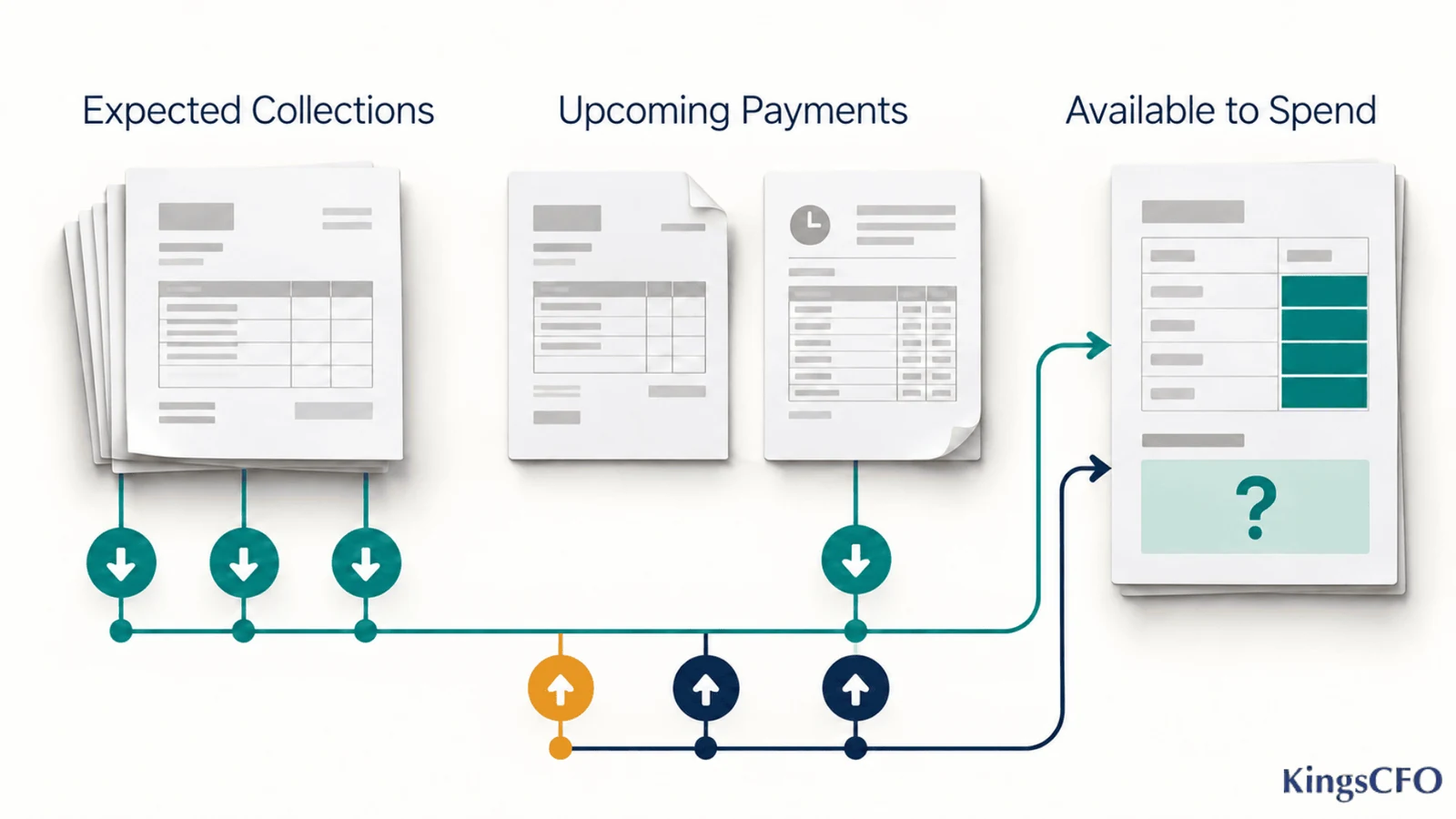
A virtual CFO helps you plan and manage your business finances through remote meetings, reports, and advice. They use your accounts and information from your team to forecast cash, review profit, and check the financial impact of your plans.
For example, last month’s sales report shows what customers bought, but it does not tell you on its own when they will pay. The CFO compares expected collections with upcoming bills so you can see how much cash remains available for other spending.
KingsCFO is a strategic financial advisory and outsourced finance firm based in Dubai, providing virtual and part-time CFO support to SMEs. Our virtual CFO services help owners plan ahead while their accountants continue keeping the records and handling their agreed work.
The finance guides I read covered forecasts and budgets, but they did not explain how a CFO helps an owner deal with problems such as late customer payments or rising costs. So I discussed those situations with the experts on our finance advisory team to understand how they help.
Here are nine virtual CFO benefits for SMEs that can help you manage cash, protect profit, and keep financial tasks under control.
1. Get Financial Guidance Before You Need a Full-Time CFO
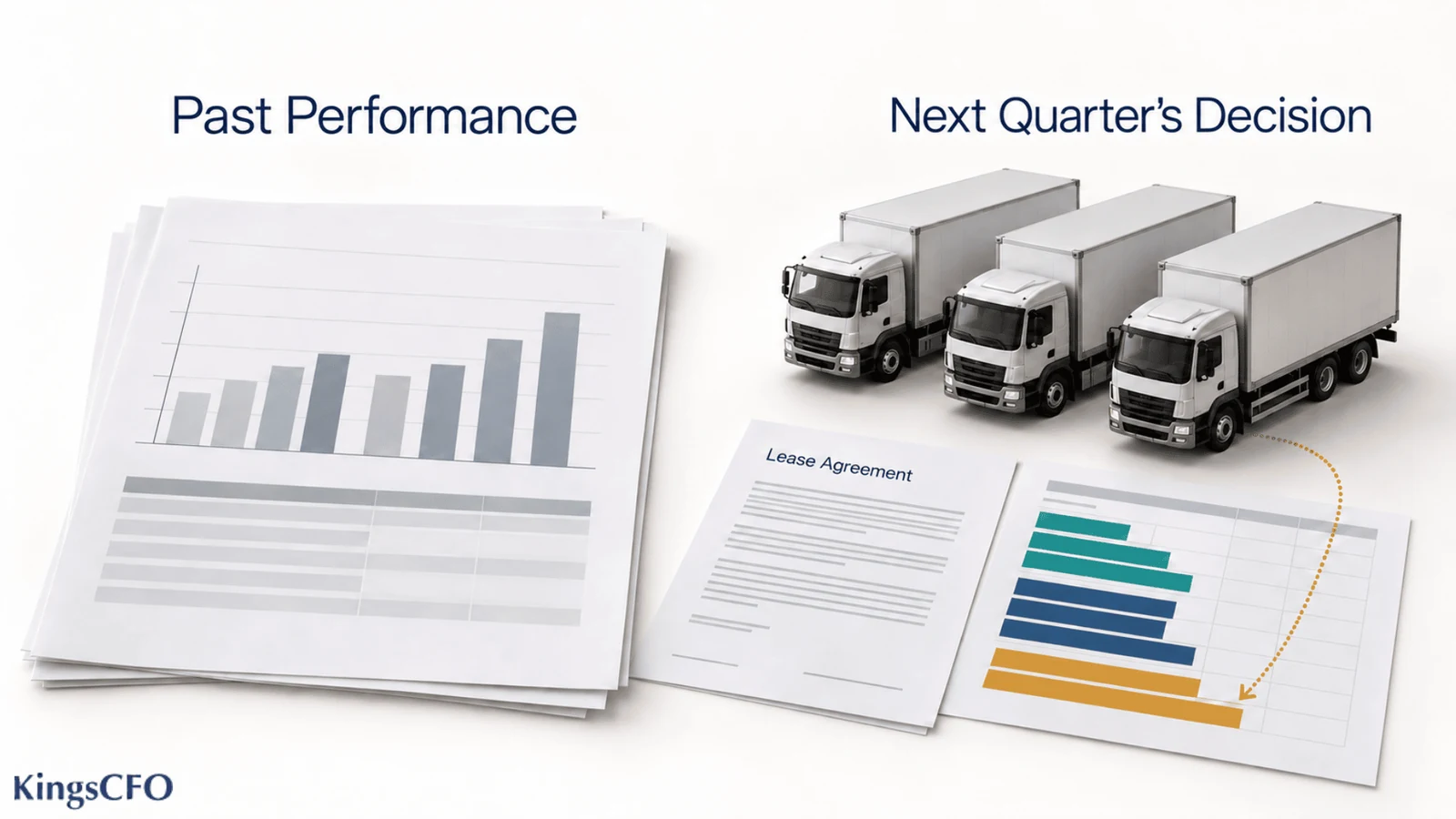
You may need someone to check a major expense or plan next quarter’s cash without needing a CFO every working day. Part-time virtual support gives you access to that guidance through an agreed amount of work, meetings, and availability.
That arrangement lets you keep your existing accounting support and add help with decisions that need a forecast or deeper analysis.
Our CFO described a logistics owner who already received accurate monthly profit and loss statements from a capable accountant. The reports confirmed a profit for the previous year, but the owner still needed help assessing if the business could lease three more trucks next quarter.
The question called for expected customer collections, existing payments, and new lease costs. Bringing those figures together would show how the trucks could affect cash for other commitments.
When reviewing our CFO support options, consider how often you need this help. Scheduled forecasts and financial reviews may suit a part-time arrangement, while daily financial leadership and ongoing team management may call for a full-time role.
The benefit comes from getting the level of involvement your business needs, with clear responsibilities behind the fee.
2. See a Cash Shortage Before Payroll Falls Due
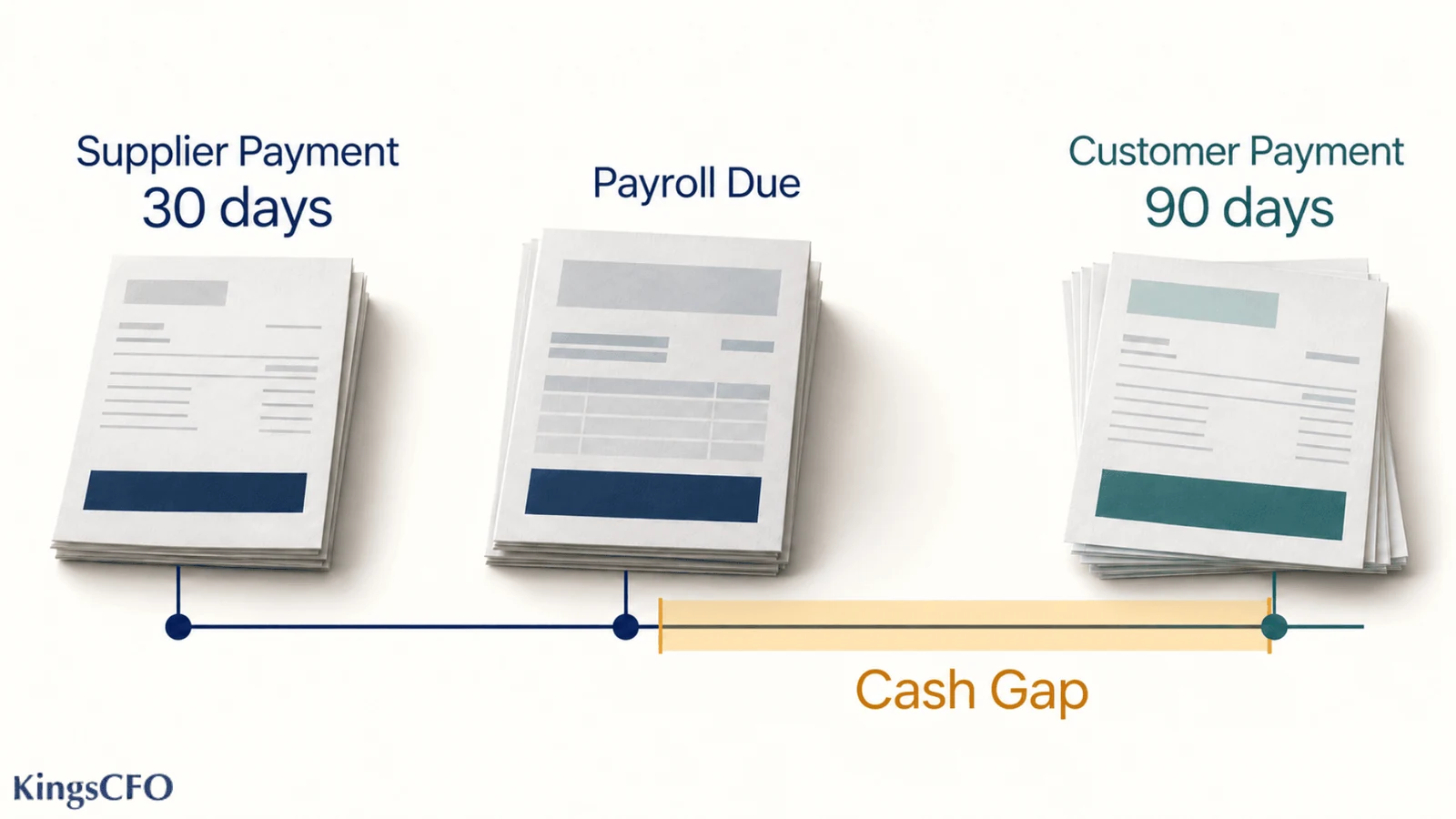
A cash forecast gives you time to respond when customer payments will arrive after wages or supplier bills fall due. Without that view, the shortage may only become clear when you need to make a payment.
The CFO checks the expected dates of money coming in and going out, then reviews unpaid invoices to understand which collections need attention. You can use that information to plan spending and address a payment gap before it grows.
Credit sales make this especially relevant. To understand the UAE context, I checked Atradius’s 2026 payment survey, where senior adviser Silvia Ungaro reports that surveyed businesses made an average of 47% of their business-to-business sales on credit.
Those businesses collect a substantial share of sales after invoicing, so the collection dates belong in the cash plan.
A distributor our CFO worked with showed how easily that timing can cause trouble. It reported a 20% net profit margin but repeatedly missed payroll because customers had 90 days to pay while suppliers expected payment within 30 days.
The CFO examined its accounts receivable ageing report, which lists unpaid invoices and how long customers have owed the money. They recommended enforcing 30-day payment terms and offering a small discount for early settlement, and operating cash flow turned positive within two months.
That case does not make 30-day terms the right choice for every business. Comparing your largest expected collections with the bills due next shows the gap you need to address, and any changes must fit your contracts and leave enough profit after discounts.
3. Find the Clients Whose Extra Work Eats Into Profit
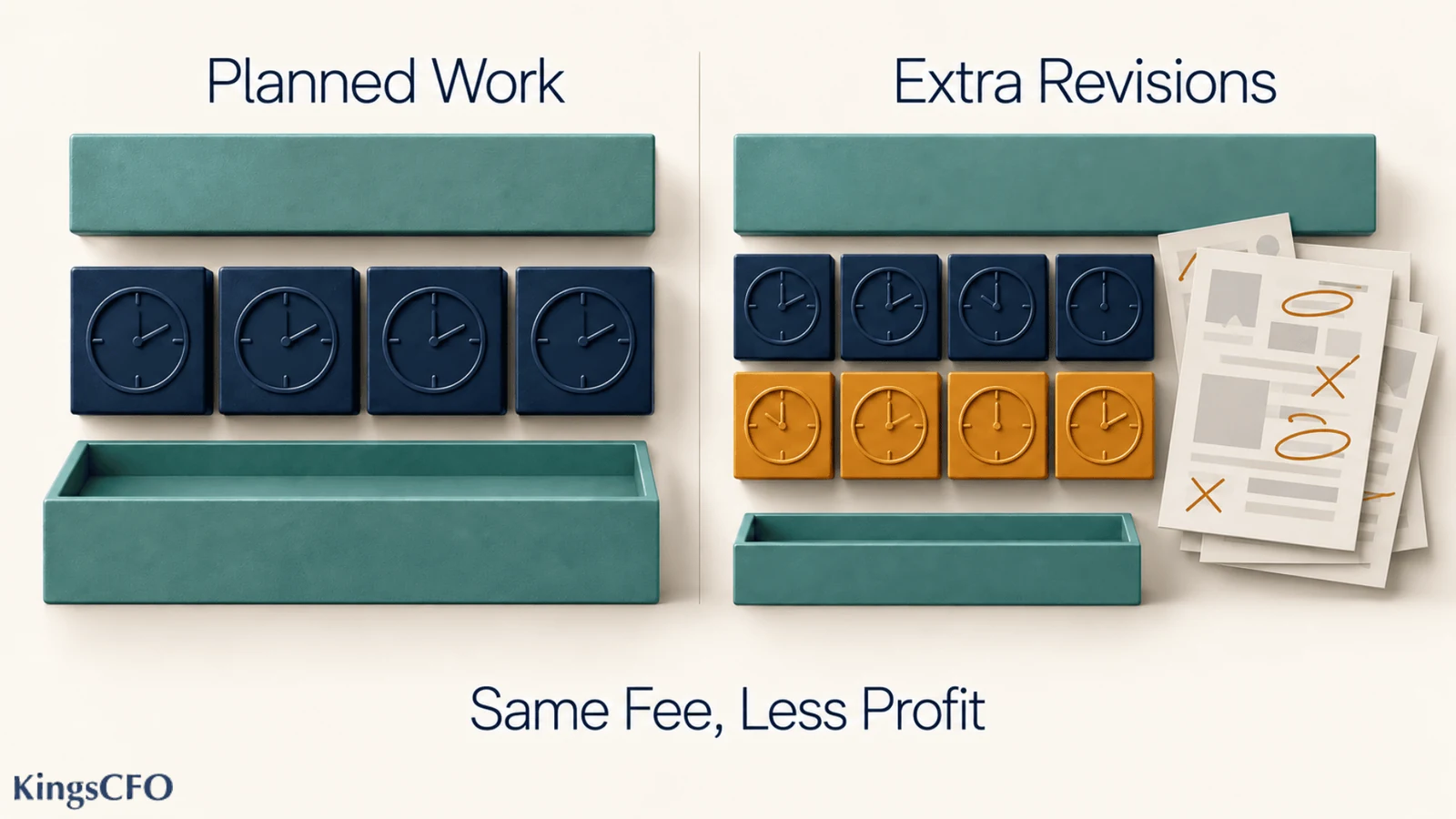
When a client keeps adding requests while paying the same fee, your team can stay busy while the profit from that account shrinks. A virtual CFO helps you see how much the work costs to deliver so you have a sound reason for reviewing the price or project limits.
For a service business, that means looking at staff time and other delivery costs alongside the income from each project or customer. The sales figure alone cannot show how much extra work the team has absorbed.
Our CFO shared an example of a marketing agency that landed a major corporate account. Repeated revisions pushed the team to twice the hours it had allowed for the work, and the labour-cost review revealed the problem.
The agency then introduced hourly billing for work outside the original scope.
You may need a different response, but the review gives you a starting point. If actual hours keep exceeding the hours you priced, you can discuss the fee, limit extra requests, or improve the delivery process before renewing the contract.
4. Test an Expansion Plan Against a Slower Sales Period

Would the business still cover a new loan during a slower month? A virtual CFO can test that question before you borrow, giving you a clearer view of the pressure the repayments could create.
The work involves changing an assumption in the forecast and checking what happens to cash. This is a stress test, and it helps you assess a plan beyond the sales level you expect.
A retail client needed that check before opening a second location with a high-interest, short-term business loan. The owner expected current sales to cover repayments, but the CFO’s model showed a high risk of default during the slow season after a 10% drop in foot traffic.
In other words, the business could fail to make the repayments. After reviewing the figures, the owner delayed expansion by six months and chose to fund the buildout with cash reserves.
Our financial forecasting support helps you examine these decisions before signing. Comparing the main forecast with a weaker-sales case shows how much cash remains after essential payments and gives you a basis for adjusting the timing, size, or funding of the investment.
5. Understand Rising Costs Before Making Cuts
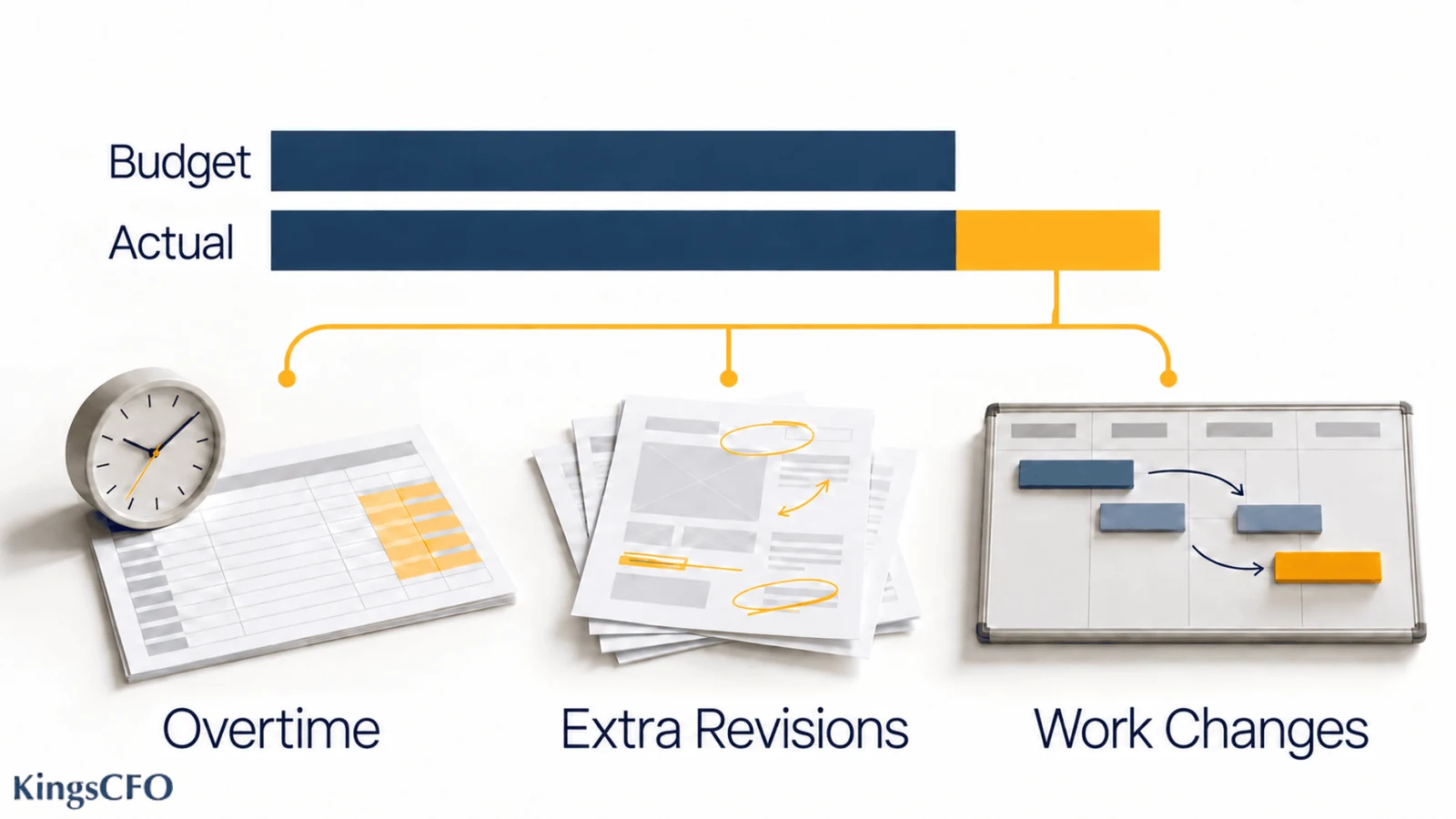
A budget review helps you work out why costs increased, so you can address the cause without cutting something the business still needs.
The CFO compares planned spending with actual spending. This is budget variance analysis, and our CFO includes it in the monthly financial presentation alongside the cash forecast.
A higher staff bill, for example, needs an explanation before you decide what to change.
- Overtime may mean the team handled more work than expected.
- Extra client revisions may point to unclear project limits.
- A change in the type of work may mean the original budget no longer reflects what the team delivers.
The figures identify the increase, while conversations with the relevant department explain what happened. From there, you can adjust the work, spending, or budget to reflect the cause.
Current records make that review possible because missing expenses can give you the wrong picture. Please refer to our accounting and monthly reporting services if you need help keeping those figures up to date.
6. Keep Financial Tasks Moving Without Chasing Everyone Yourself
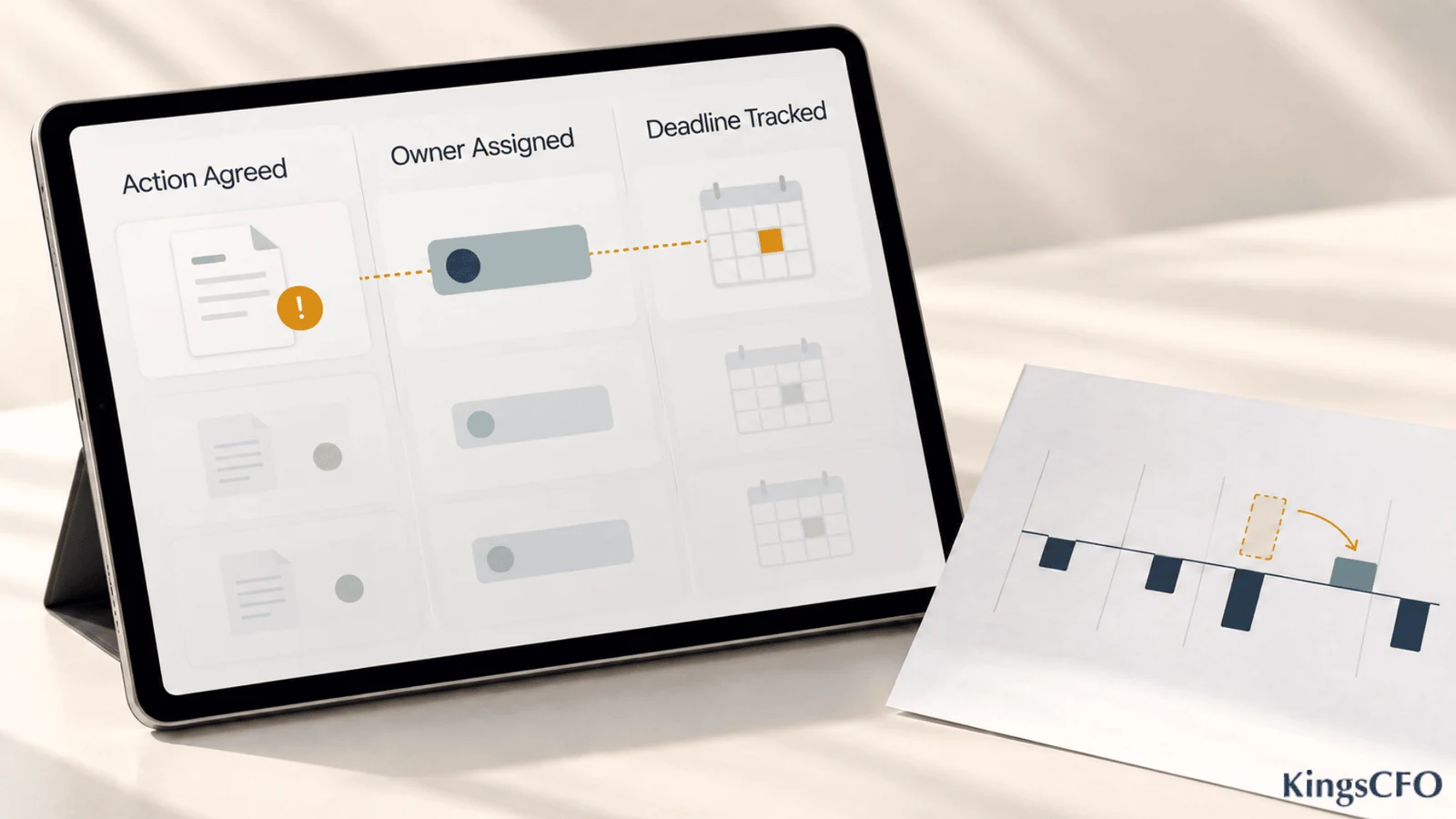
Financial advice gives you more value when the team follows through on it. A virtual CFO can help turn a discussion about late payments or rising costs into agreed tasks with people responsible for completing them.
In the working arrangement our CFO described, weekly video calls with department heads provide updates on the sales pipeline and supply problems. Reviewing the client’s operational software also helps the CFO understand what sits behind the figures.
The owner receives a monthly financial presentation containing the cash forecast and budget comparison, while a shared project board tracks agreed actions between meetings. Each action has a responsible person and a deadline.
You can then see who needs to act and what still needs attention, instead of relying on your memory of the last call.
Remote support also needs a clear route for new information. A delayed customer payment can change the cash plan between monthly reviews, so agree on how your team reports it, how often the CFO updates the forecast, and who answers urgent questions.
Those arrangements help the CFO stay close to the business even when they work outside your office.
7. Get Useful Answers From Finance Software and AI
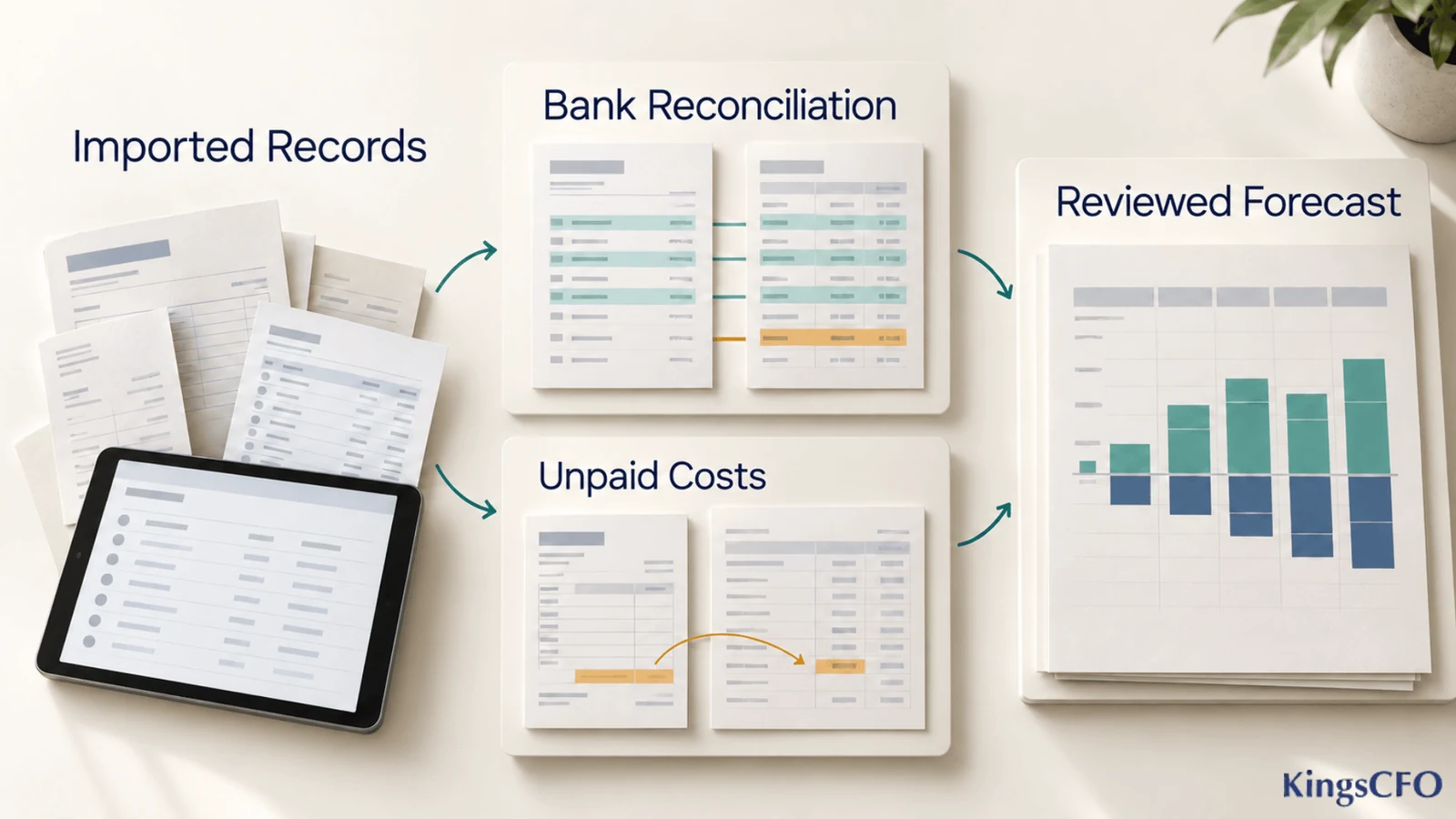
Finance software can save time gathering figures, but you still need to understand what those figures mean for your business. A virtual CFO helps you use the reports to answer questions about cash, costs, and profit.
Cloud accounting tools with automated bank feeds reduce manual entry by importing transactions. Our team also uses Fathom and Spotlight Reporting to organise reports and bring figures from different companies in a business group together.
An automated dashboard can still give you a misleading picture if the bookkeeping misses a payment or expense. Before trusting the forecast, our CFO checks that the team has reconciled the bank accounts and recorded month-end accruals.
Reconciliation means comparing the bank statement with the accounting records and explaining differences, such as missing or duplicate entries. Accruals record costs the business has incurred but has not yet paid, so leaving them out can overstate profit and understate expenses. Keeping these checks monthly also makes year end far easier, as our financial audit checklist shows.
AI now supports parts of this work too. Xero’s August 2026 announcement caught my attention because it describes tools that extract invoice details, match bank transactions, and flag items for review. It also outlines further cash-flow features, with some developments still forthcoming or in early access.
The time saving is useful, but someone still needs to investigate missing information and check the assumptions behind a forecast. Before paying for another tool, discuss which features your product and region support and how the team will check the figures you use for decisions.
8. Plan for UAE Tax and e-Invoicing Work Before It Becomes Urgent
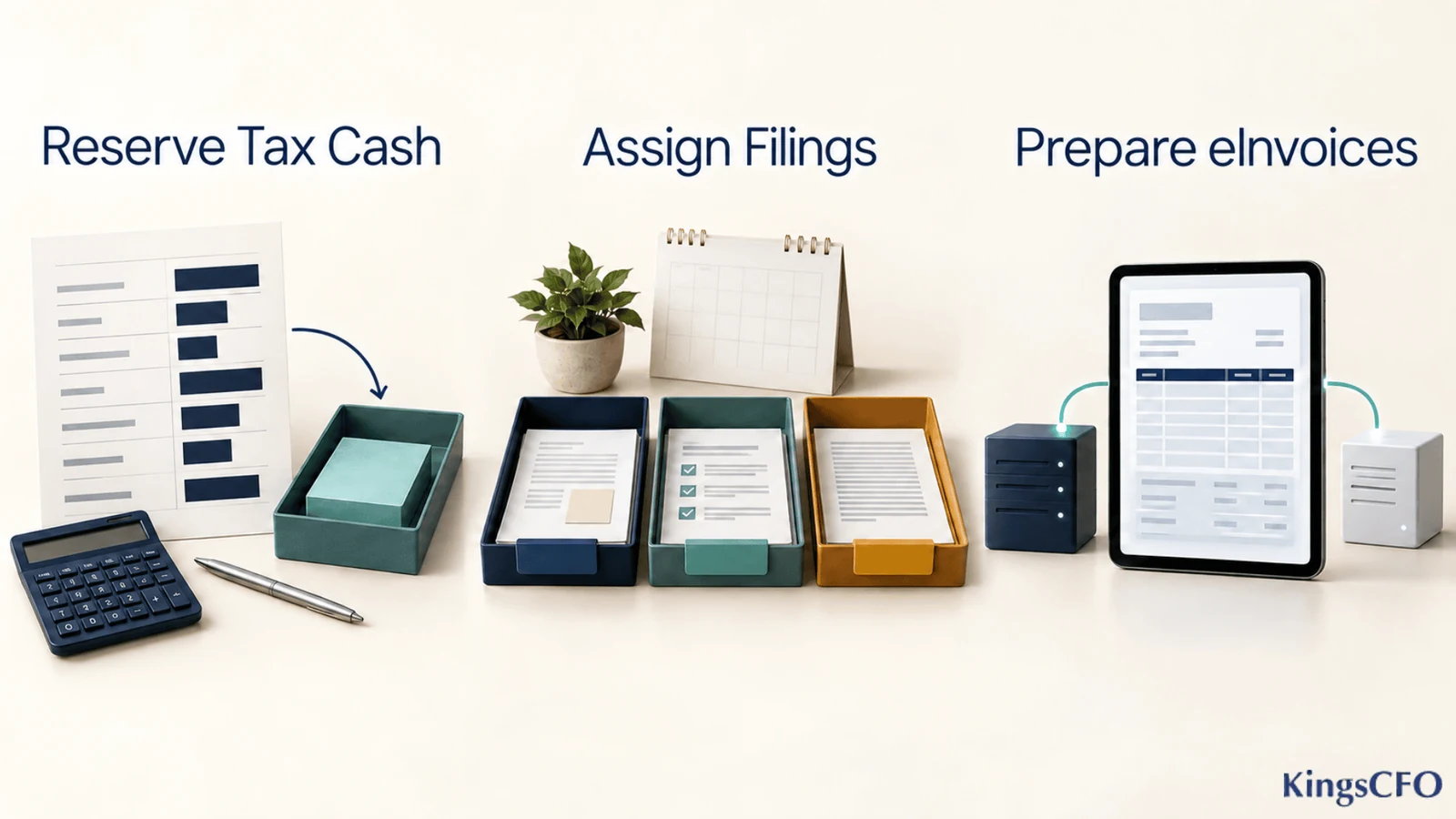
A virtual CFO can help you plan the cash needed for tax and coordinate the financial work with the specialists handling advice and filings. This gives you a clearer view of upcoming commitments and who needs information from your team.
During the UAE Corporate Tax transition, our CFO modelled a client’s effective tax rate, meaning the tax cost as a share of profit, and reworked pricing between related companies.
A dedicated tax lawyer handled the final filings, while the owner supplied historical financial statements and beneficial ownership details. Those details identify the people who ultimately own or control the business.
The lesson for an owner is to include the expected tax cost in the cash plan and agree on who handles Corporate Tax and VAT calculations, advice, and submissions. The CFO’s involvement should fit alongside those responsibilities.
e-Invoicing adds another preparation task, and the dates matter. I checked the Ministry of Finance’s September 2026 update, which confirms that the pilot began in July 2026. Entities subject to the system with annual revenues of AED 50 million or more must appoint an Accredited Service Provider by 30 October 2026 and implement e-Invoicing from 1 January 2027.
Because the rollout follows different phases, confirm the requirements and dates for your business before planning the work. The CFO can then help assess costs and coordinate the financial tasks with your accountant and software provider.
Knowing who checks the invoicing process, supplies information, and tracks progress helps you prepare before the deadline approaches.
9. Explain Your Funding Needs Clearly to Banks and Investors
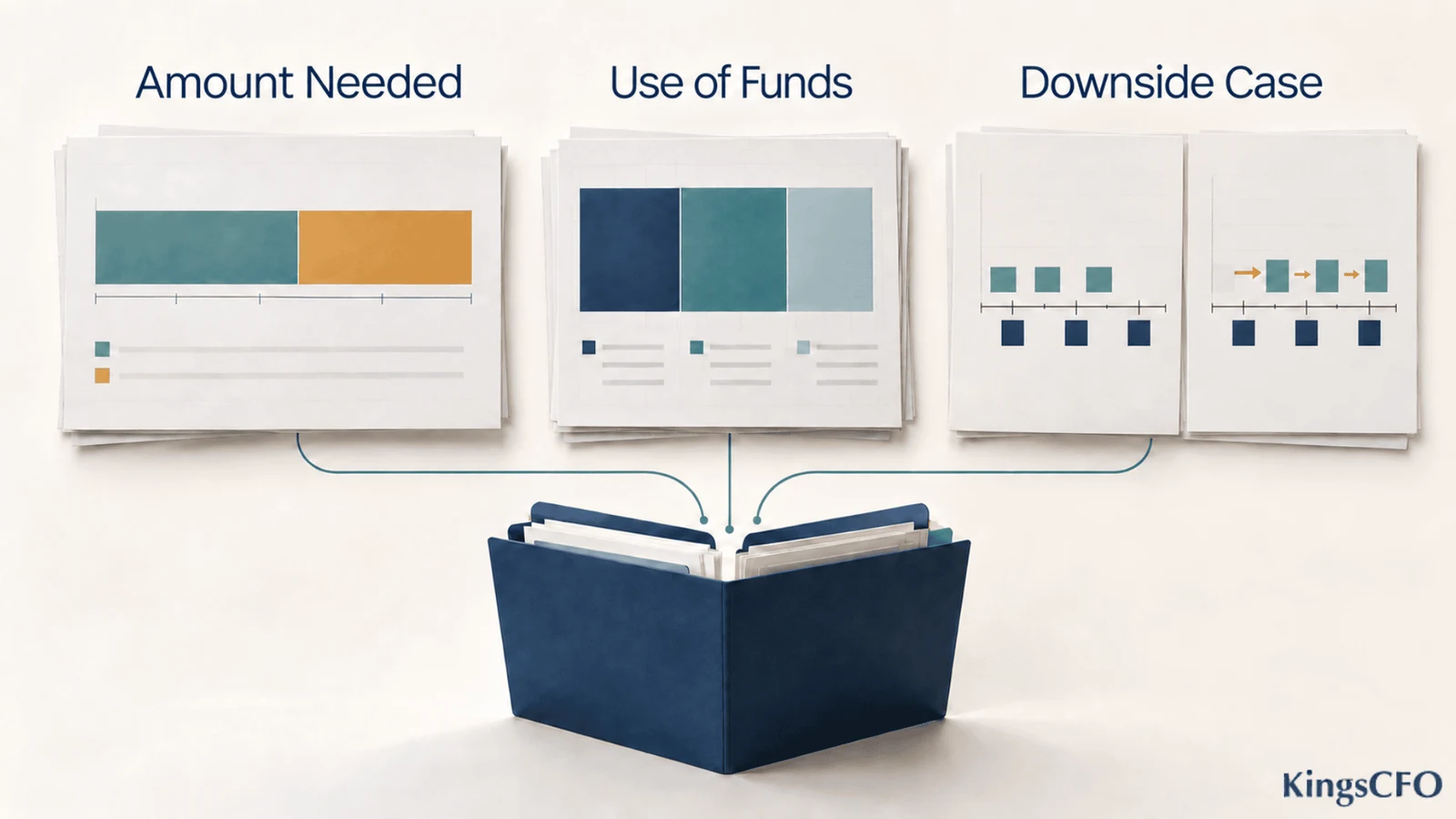
A funding request needs a clear explanation of what the money will do and how the business expects to manage it. Virtual CFO services can help you prepare the figures and understand them well enough to answer questions.
That preparation should help you explain three things.
- How much you need based on planned costs and the cash the business already has.
- How you will use it with spending linked to the business plan.
- How the plan holds up if sales weaken or customers take longer to pay.
Historical accounts show past performance, while forecasts set out the assumptions behind future spending and collections. Together, they help you explain the request with figures that connect to the plan.
If you need help preparing those documents, please refer to our support for investor-ready financial reporting.
The lender or investor still decides on approval, but you can enter the conversation with a clearer understanding of the amount you need and the risks involved. Confirm which documents, analysis, and meeting support the CFO will provide so you know what preparation the fee covers.
How to Judge the Virtual CFO Cost Before You Sign
The virtual CFO cost becomes easier to compare once you know what each quote covers. A monthly profit review and a funding project involving several companies need different levels of work.
Explain your financial priorities, the number of companies involved, and the condition of the accounts when requesting a quote. Inventory, overseas transactions, loans, and funding plans can also add work, so the provider needs those details.
In the arrangement our CFO described, the fee covers strategic forecasting and reports for owners or the board. Daily payroll runs and basic invoice processing cost extra.
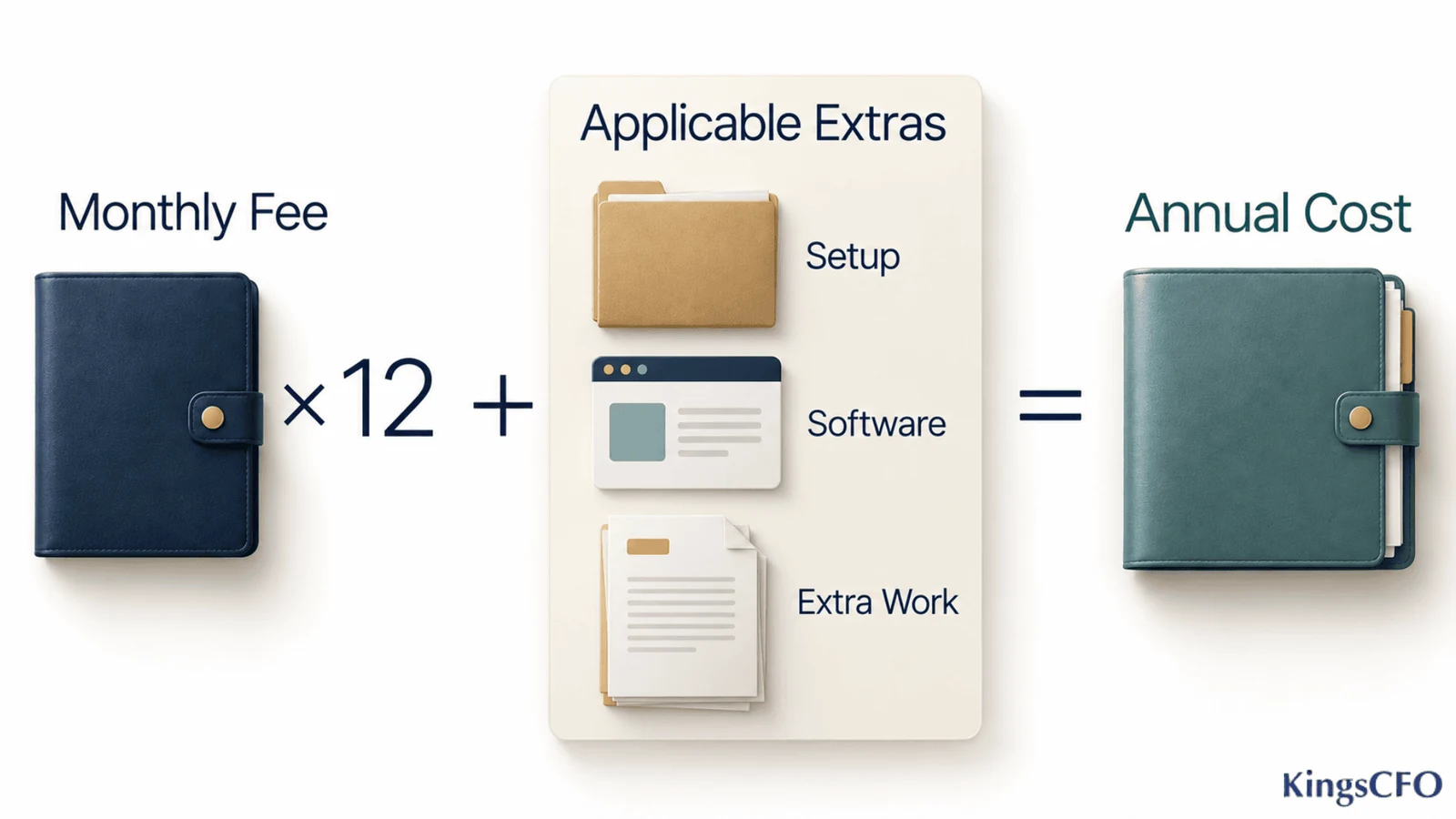
A written quote in AED should separate the monthly fee from setup work, software, and additional requests. Comparing the reports, meeting frequency, and access to advice then shows what each fee buys.
To check the annual commitment, multiply the monthly fee by 12 and add any one-off or expected extra charges. If bookkeeping and tax filing already meet your needs, accounting support may still be enough. To see when CFO-level help tends to earn its fee, read about the importance of CFO services for growth decisions.
Before You Hire a Virtual CFO, Know How the Work Will Start
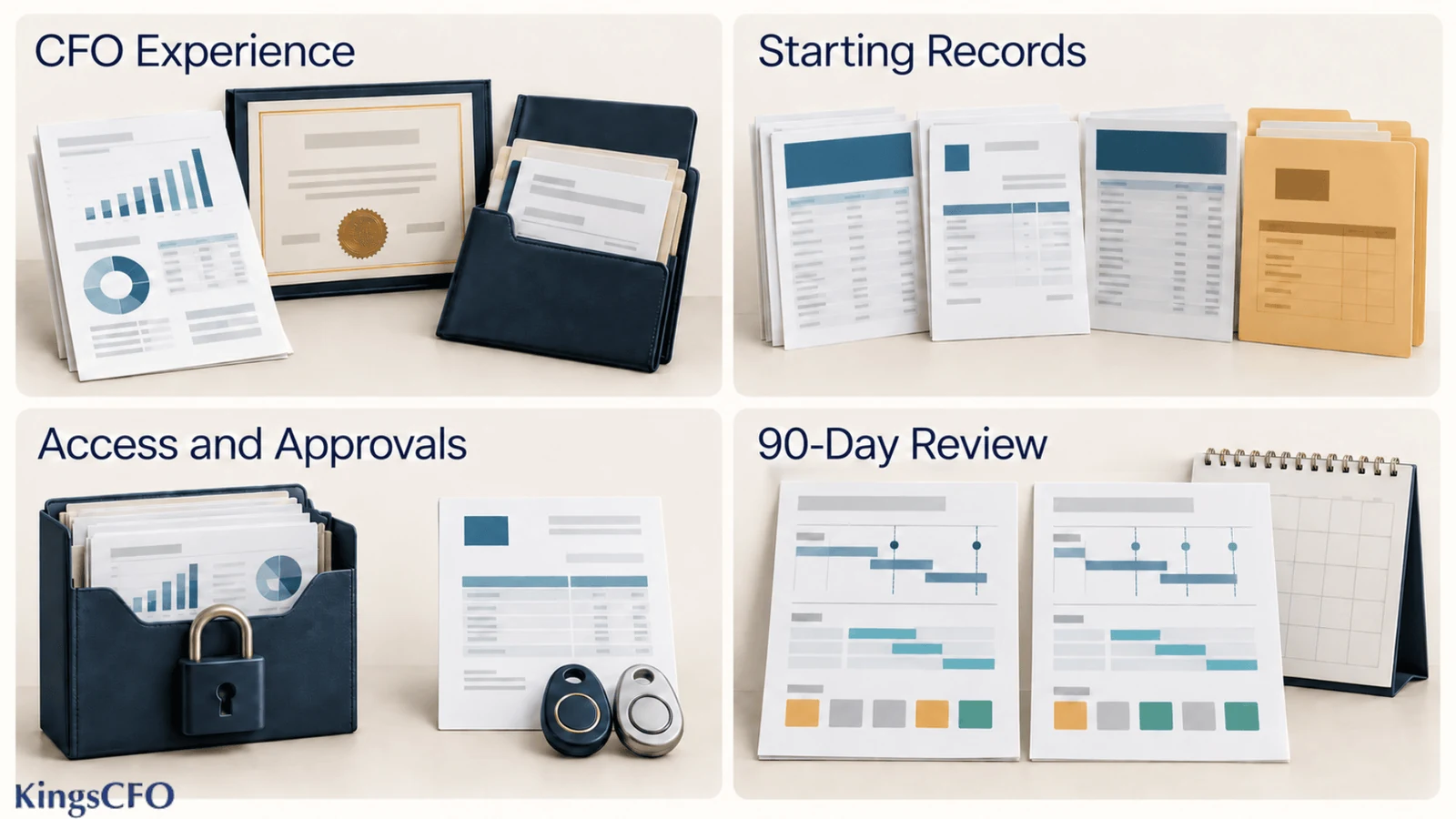
Before you commit, agree on who will do the work, how they will access your records, and what you will review after the first 90 days.
Meet the Person Who Will Handle Your Business
You will discuss financial decisions with this person regularly, so meet the lead CFO and find out who prepares the reports. Relevant qualifications and experience with similar businesses help you assess their background.
An anonymised example and sample report can show how clearly they explain problems. Discuss how you can reach them for advice and who helps when the lead CFO is away.
Prepare the Records That Explain Your Starting Position
Recent profit and loss statements, a balance sheet showing what the business owns and owes, and bank statements give the CFO a starting point.
Unpaid invoices, supplier bills, loan repayments, fixed expenses, and the sales pipeline help explain upcoming cash needs. Tell the CFO about missing or outdated records too, because they can affect the analysis.
Share the information through the agreed secure channel, then discuss the first priorities and any bookkeeping cleanup the team needs to complete before relying on the figures.
Keep Data Access and Payment Responsibilities Clear
Before sharing financial records, establish how the provider stores information, limits access, and lets you export your records if you change providers. You need to understand who can see the data and how you retain access to it.
Give each person the access their work needs, with named people responsible for approving and releasing payments. Reviewing the accounts does not automatically require permission to move money.
Agree on What You Will Review After 90 Days
Our CFO suggests looking for fewer cash-flow surprises and a better understanding of unit economics during the first 90 days. Unit economics means the income and costs linked to a unit of work or sale, such as a project or customer.
To assess progress, agree on your starting figures and a few measures linked to the problem you want to solve.
- For late collections, track overdue balances and the time customers take to pay.
- For project profit, compare delivery hours and costs with the agreed fee.
- For cash planning, compare forecast receipts and payments with what actually happened.
- For follow-through, review completed actions and unresolved tasks.
The review should explain what changed, why it changed, and which decisions the work helped you make, including your own team’s contribution. Use 90 days to assess progress without treating it as a guaranteed return.
Choose CFO Support Around the Problem You Want to Solve
The virtual CFO benefits for SMEs become easier to judge when you name the problem you need help with. It might be late collections, a busy account that leaves little profit, or financial tasks that keep coming back to you.
Start there, then choose the work and level of involvement that would help you manage that problem.
Discuss your financial priorities with our team to define the support your Dubai SME needs and understand the work behind the fee.
FAQs
Can a virtual CFO work with my existing accountant?
Yes, the accountant can keep the records and handle their agreed work, while the CFO uses that information for planning and analysis. Clear responsibilities help the two work together.
When does a virtual CFO for small business owners make sense?
Consider the support when reliable accounts still leave you unsure about cash, profit, pricing, or future spending. If you mainly need bookkeeping and filing, accounting support may meet your needs.
What are the main benefits of a virtual CFO?
The main benefits include cash planning, clearer profit analysis, tested spending plans, and regular financial guidance. Their value depends on your priorities and the agreed work.
What should virtual CFO services include each month?
Confirm the reports, forecast period, update frequency, review meetings, and follow-up support. The agreement should also identify administration or specialist work that costs extra.
Is the virtual CFO cost fixed each month?
A provider may charge a fixed monthly fee for agreed tasks, with additional charges for other work. Check setup costs, software, urgent requests, and funding preparation.
What is the difference between a virtual CFO and a fractional CFO?
“Virtual” describes remote delivery, while “fractional” describes part-time involvement. One CFO can provide both. Our guide to the benefits of hiring a fractional CFO covers the part-time side in more detail. Actual hours, responsibilities, and availability help you judge the arrangement.