Your Dubai business is busier, your team has more work, and the accounts show revenue up but profit down. Now you’re wondering if you should raise prices, cut costs or delay your next hire.
You want to know where the money is going so you can fix the cause without cutting something your business needs. To find that answer, check which profit figure fell, then trace the costs behind the change using accounts you can trust.
Read on to understand what changed, work out what each job leaves, and test how a new price or cost saving could help. You’ll also learn when lower profit reflects a growth plan and when that plan needs a rethink.
Why Are Sales Going Up but Profit Going Down?
Revenue up but profit down usually has a simple cause. Sales can rise while profit falls because the extra costs exceed the extra income. You may spend more to complete each job, add staff before enough work arrives, or pay more to win clients.
An accounting error can also make profit look too low. And if last year included a one-off gain, this year may look worse even though your main business hasn’t changed much.
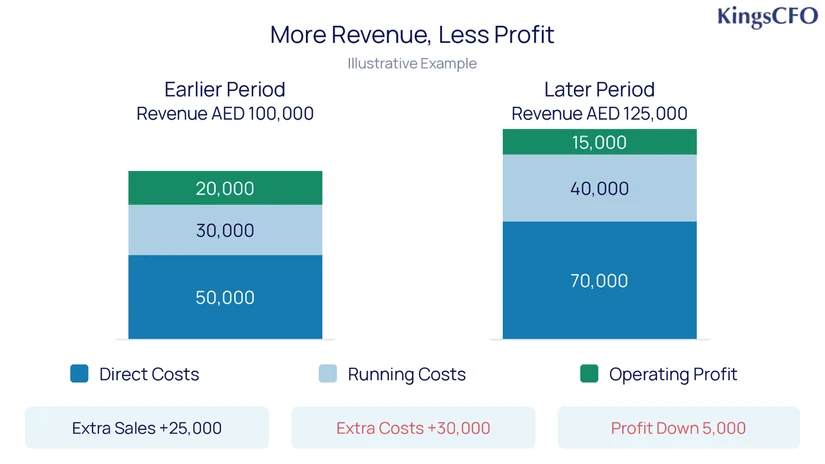
Here’s an illustrative monthly comparison for a Dubai service business.
| Monthly Figures | Earlier Period | Later Period |
|---|---|---|
| Revenue | AED 100,000 | AED 125,000 |
| Direct costs of completing the work | AED 50,000 | AED 70,000 |
| Gross profit | AED 50,000 | AED 55,000 |
| Other running costs | AED 30,000 | AED 40,000 |
| Operating profit | AED 20,000 | AED 15,000 |
Sales grew by AED 25,000, but costs grew by AED 30,000, so the owner earned AED 5,000 less operating profit.
There’s another clue here. Sales rose by 25%, while direct costs rose by 40%. Gross margin fell from 50% to 44%, which means the business kept less from each dirham of sales before other running costs.
Higher total costs can be normal when you do more work. The question is why those costs rose faster than sales. Did each job cost more, did prices fall, or did the business take on a different mix of work?
Find Out Which Profit Figure Has Fallen
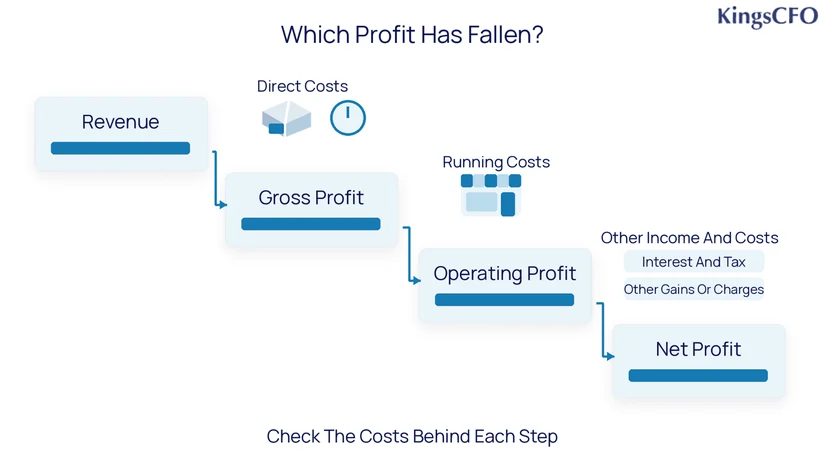
To read revenue up but profit down correctly, start with your reports. Your profit and loss statement, or P&L, shows sales and costs over a set period. It starts with sales and subtracts the cost of the goods or work sold to show gross profit.
After taking off other running costs, it shows operating profit. Net profit includes the remaining income and costs, such as interest and tax. The figure that fell helps you narrow down the cause.
| Profit Figure | What To Check First |
|---|---|
| Gross profit | Prices, discounts, materials and the cost of doing the work |
| Operating profit | Rent, admin, marketing and other running costs |
| Net profit | Interest, tax and other gains or charges |
If gross profit rose but operating profit fell, the rise in other running costs used up that gain. A drop in net profit alone calls for a check of interest, tax or other entries, so ask your accountant to explain them.
Also check the difference between profit and profit margin. Profit is an amount of money, while the margin shows it as a share of sales. Divide profit by sales and multiply by 100 to find the percentage.
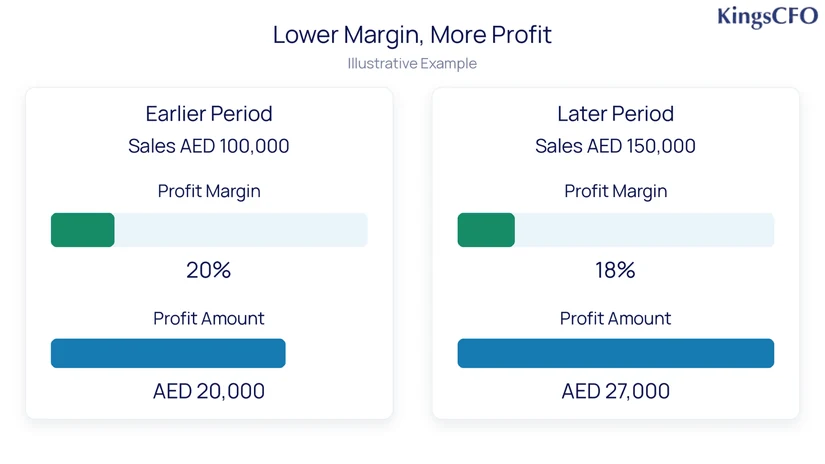
For example, AED 20,000 profit on AED 100,000 sales gives you a 20% margin. With AED 27,000 profit on AED 150,000 sales, the margin falls to 18%, but you earn AED 7,000 more.
So a lower margin doesn’t always mean less total profit. Check both before deciding what needs fixing.
Check That The Reports Tell The Same Story
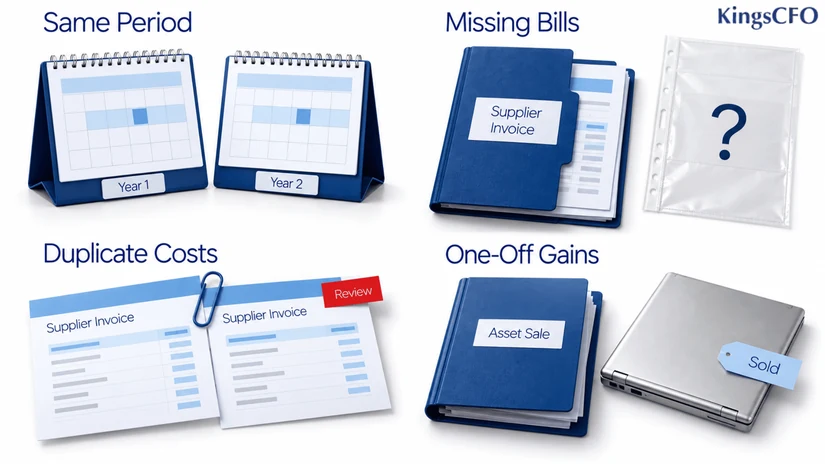
A report error can also show revenue up but profit down. Before looking for a business problem, make sure both reports cover the same length of time. If demand changes with the season, compare the same months across years as well as recent months.
Ask the person who keeps the accounts to check for missing bills, costs entered twice and changes in how they group costs. A bill may arrive after the month it relates to. Putting it into the wrong month can make one month’s profit look too high and the next too low.
Last year’s unusual gains need a check too. Selling an old asset for a profit could have raised net profit. Without that gain this year, the total could fall even if the main business earns more.
Our finance expert raised a concern about Dubai owners treating transaction entry as the whole accounting job. For a profit review, someone still needs to check how each cost affects the accounts and which period it belongs in.
I understood from that point why a complete set of entries can still need review. You need the right treatment of those entries before using the reports to change your business.
These checks form part of our accounting and bookkeeping support. Once the reports show the right sales and costs, you can trace what changed.
Where The Extra Sales Money May Be Going
Once the figures are right, revenue up but profit down points to a real change. With the accounts checked, compare the work and costs behind each period’s results. More than one change may matter, so don’t stop at the first bill that went up.
The Same Job Now Costs More To Finish
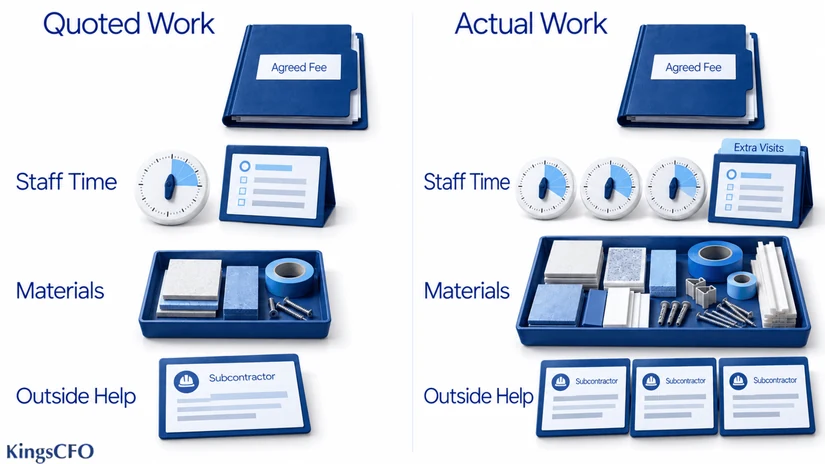
Rising job costs are a common reason for revenue up but profit down. A contract can bring in the same fee while costing more to deliver. Your supplier may charge more, or the client may need extra visits and more of your team’s time.
Take a few recent jobs and compare the costs in the quote with what you spent. Include staff hours, materials and outside help so you can see where the gap starts.
If the client asked for extra work, check how your team agreed the scope and any added fee. When the time estimate was too low, use hours from finished jobs to improve the next quote.
Here’s a simple project example. Assume the business assigns AED 100 of staff cost to each delivery hour.
| Project Figures | Earlier Job | Similar Later Job |
|---|---|---|
| Client fee | AED 10,000 | AED 10,000 |
| Delivery hours | 40 | 60 |
| Staff cost assigned to the job | AED 4,000 | AED 6,000 |
| Materials and outside help | AED 1,000 | AED 1,500 |
| Amount left before other costs | AED 5,000 | AED 2,500 |
The later job leaves AED 2,500 less before shared costs, such as office rent. That shows why a busy team can earn less from similar fees.
Use a staff cost rate that reflects wages and related employment costs. Include meetings, revisions and return visits in the hours. If extra time comes from repeat mistakes, better delivery may help alongside a price review.
Remember that assigned staff costs may include fixed salaries. Finishing a job faster frees time, but the wage bill only falls if you actually reduce paid costs. You may earn more by using those hours for another profitable job.
You’re Taking On Work That Leaves Less

Your sales mix can also cause revenue up but profit down. A firm may win more discounted monthly contracts while its more profitable projects slow down. That change in sales mix can reduce what the business keeps.
Adding lower-margin work can still increase total profit. But profit can fall if it replaces better-paying jobs or creates extra costs greater than what it adds.
A large client may also need frequent meetings, small deliveries or extra support. Include those demands when comparing the fee with the cost of serving them.
Before dropping a client, check which costs would stop. Giving that account a share of the rent in your report doesn’t mean the rent bill will fall when they leave. Also check what other work your team could do with the time freed up.
Your Running Costs Have Grown Too Fast
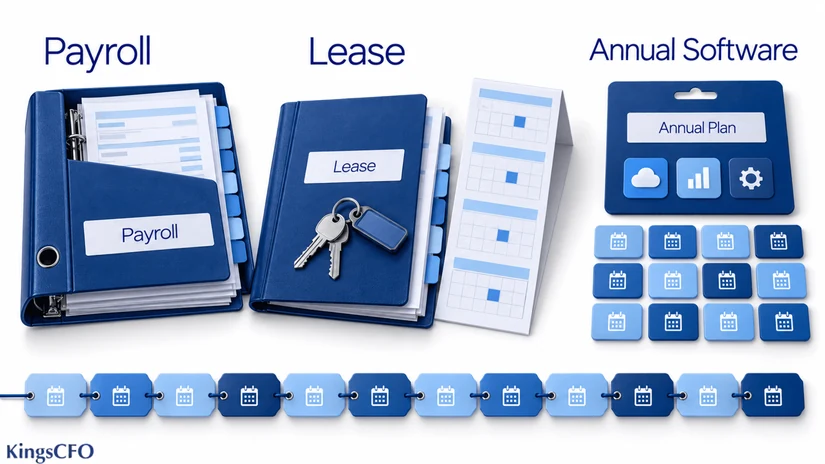
Overheads are another source of revenue up but profit down. A new hire, more space and extra software may use up the gain from sales. Compare the cost rises in dirhams as well as percentages, because a small rise in a large wage bill can matter more than a large rise in a small fee.
While researching these costs, I wanted to understand why cutting back can take longer than adding them. In a 2003 study of 7,629 firms, Mark Anderson and colleagues at the University of Texas at Dallas found that selling and admin costs fell less after a sales decline than they rose after an equal percentage increase.
The study is older and doesn’t set a target for Dubai SMEs. What I take from it is the need to check how long you’re tied to a cost. A lease or yearly software plan may keep costing money after work slows down.
Look at what the spending achieved too. Cutting a role that helps finish profitable work could hurt sales. If the team has spare time, delaying another hire may give demand time to catch up.
New Clients Cost More To Win
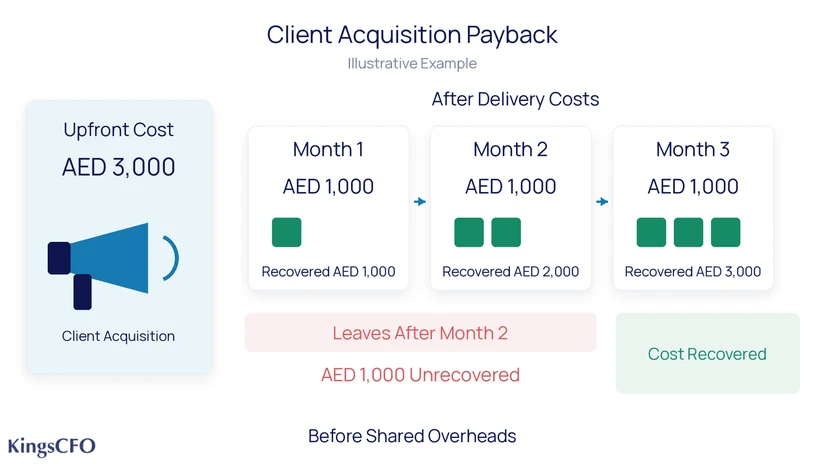
The cost of winning work can leave revenue up but profit down. Ads, sales commissions and discounts reduce what you keep from new business. For a one-off job, deduct delivery costs and the cost of winning it from the fee.
With monthly services, check how long clients stay and what they leave after delivery costs. Suppose you spend AED 3,000 to win a client who leaves AED 1,000 a month after those costs.
It takes three months to recover that spend, before shared overhead. If the client leaves after two months, you haven’t recovered the full cost.
So check the cost of winning clients, the cost of serving them and how long they stay before increasing your marketing budget. More contracts alone won’t tell you how well the campaign pays.
Smaller Losses Can Add Up Across More Orders
Small leaks can also leave revenue up but profit down. If you import, hold stock or pay sales commissions, review these costs too:
- Currency changes. Compare the AED cost of overseas bills across periods. The supplier’s price may stay the same while the cost in dirhams changes.
- Waste and damaged stock. Check losses, returns and work your team had to redo. More orders can increase these costs even when sales look healthy.
- Supplier terms. Review price changes, rush charges, freight and lost bulk discounts. An unchanged product price can hide a higher total purchase cost.
- Discounts and commissions. Check what the business keeps after both. A sales reward based only on revenue may encourage deals that leave too little.
Use purchase records, stock reports and agreed sales terms to test these causes. The aim is to find a cost you can explain and change.
Could An Accounting Error Make Profit Look Worse?
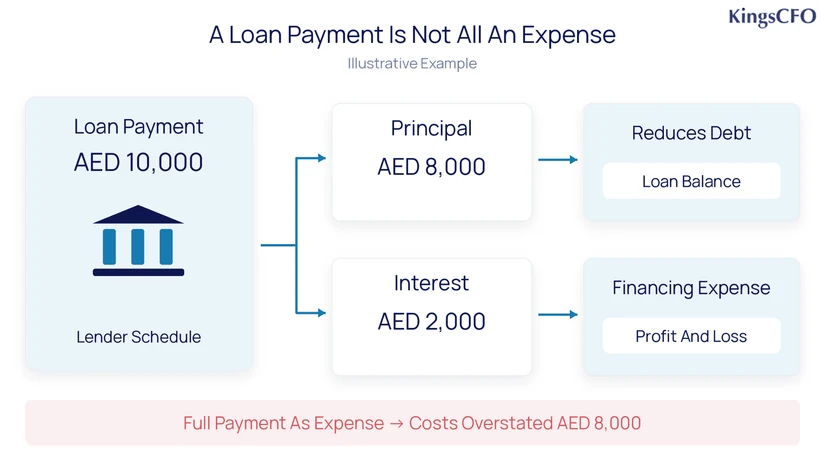
Sometimes revenue up but profit down is only a recording problem. Even when payments match your bank statement, the accounts can show a cost that’s too high. The loan example our finance team at KingsCFO shared helped me understand how that happens.
Suppose a monthly payment of AED 10,000 includes AED 8,000 of loan repayment and AED 2,000 of interest. Paying back the borrowed amount reduces what you owe, while interest is generally an expense.
If the accounts record the whole payment as an expense, costs look AED 8,000 higher than they should. Profit then looks lower, even though the payment matches the bank statement.
What I understood from this is that you need to check the entry behind an unexpected cost before changing the business. In this case, the lender’s repayment schedule shows how much pays back the loan and how much covers interest.
Xero’s bank-rule guidance explains that rules can split payments between account codes. Someone still needs to check the amounts, especially when the split changes.
Correcting the entry gives you a more accurate profit figure. You can then decide if prices or spending need attention.
Is Profit Down, Or Are You Waiting To Get Paid?

When you’re asking “why am I making sales but no profit?”, a low bank balance may be part of the worry. Check the profit report too, because waiting for payment and losing money on a job need different fixes.
Cash timing can feel like revenue up but profit down when it isn’t. Under accrual accounting, you record income when you earn it and costs when you incur them. Your accounts can show a sale before the client pays.
You may need to pay staff and suppliers first, leaving a profitable business short of cash. Unpaid invoices and payment dates help explain that gap.
Loan repayments and equipment purchases can also use cash without reducing that month’s profit by the same amount. For equipment that qualifies as an asset, the accounts normally spread its cost over its useful life through depreciation.
If profit is healthy but cash is tight, review unpaid invoices, stock purchases and upcoming bills. A drop in profit too means prices and costs also need attention.
Late payments may force you to borrow for wages, adding interest costs. Collecting those invoices can ease the pressure, but you’ll still need to fix a job that costs more to finish than you charge.
Is Lower Profit Part Of Your Growth Plan?
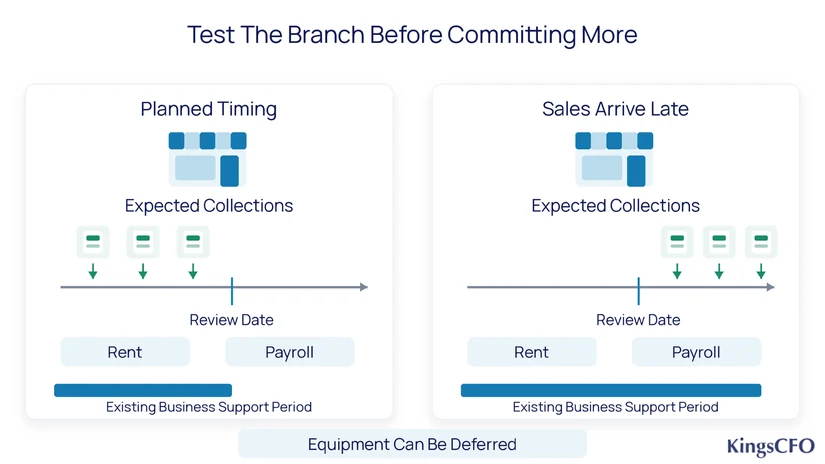
Planned growth can also leave revenue up but profit down for a while. Opening a branch can reduce profit at first because rent and wages begin before enough sales arrive. You need to know how much the existing business can afford to spend during that gap.
Our finance expert described how the team reviews a planned move into Saudi Arabia. They work out the cash needed and test what happens if sales arrive late or costs rise, before the owner signs a lease.
That example made the limit clear to me. Calling lower profit an investment in growth needs a spending limit, a review date and a plan for when the branch should cover its costs.
Before committing more money, ask how much cash the branch needs, what sales the plan assumes and how long the existing business can support it. Also identify spending you can delay if results fall short.
Building and checking forecasts forms part of our financial advisory and systems support. Comparing actual sales and costs with the plan each month helps you decide if you need to slow the rollout, reduce its scope or wait for demand.
Work Out How Much Your Fix Needs To Change
To fix revenue up but profit down, put numbers on the change. Once you’ve found the cause, test a possible response with your figures. A simple break-even calculation shows the sales needed to cover the costs in that calculation.
Suppose each extra job brings in AED 10,000 and adds AED 7,500 in costs that vary with the work. That leaves AED 2,500 towards monthly fixed costs of AED 30,000.
Divide AED 30,000 by AED 2,500, and you need 12 jobs to break even before interest and tax. At ten jobs, you’d be AED 5,000 short.
If the fee rises to AED 10,500 and the costs per job stay at AED 7,500, each job leaves AED 3,000. Ten jobs would then cover those same fixed costs.
This assumes clients accept the price and ten jobs fit within your current capacity. If you need another employee or lose sales, update the calculation. Don’t count a cost in both the per-job amount and fixed costs.
This test turns “we need more profit” into a change you can assess. You can compare a price rise, a saving or more work against what the business needs.
Choose A Fix You Can Check Next Month
Each cause of revenue up but profit down needs its own fix. Focus on the largest cause your figures support, then connect the action to what should improve.
| What You Find | What To Change Or Check |
|---|---|
| Jobs take more time than the quote allows | Review scope and hours before pricing the next job |
| Lower-margin work replaced better-paying jobs | Review prices, client mix and use of staff time |
| Costs rose before enough work arrived | Check spare capacity and commitments you can delay |
| Clients leave before you recover acquisition costs | Review the offer, service and reasons for leaving |
| Errors distort profit | Correct entries before changing the business |
| Expansion costs exceed the plan | Update the forecast and pause spending you can defer |
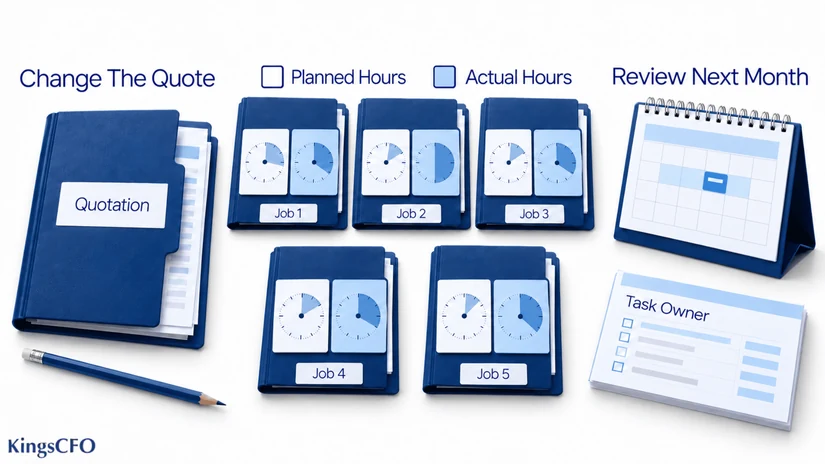
Give the task an owner and a review date. If you change how you quote, compare planned and actual hours on the next five finished jobs.
At the next monthly review, compare the extra money earned with any extra costs the change created. Faster work still needs to meet client needs, and a higher price needs to leave enough profit after any lost sales.
Our financial performance reviews cover this follow-up work. Checking the result helps you decide if you should keep the change, adjust it or try another response.
When You Need Help With The Next Decision
Revenue up but profit down decisions can be hard to make alone. Sound accounts may explain the drop, but choosing a fix can take more work. Raising prices could lose clients, while cutting staff could delay jobs. You need to work out how each choice affects sales, costs and cash.
Our finance expert looks at transaction volume, stock and the currencies used when judging how much support an owner needs. A consultant billing five clients a month may need less routine finance work than a shop with thousands of online orders.
That explains why revenue alone doesn’t show how much help you need. Your accountant may be able to explain the change and help you respond. For forecasts or a closer review of several options, our CFO services in Dubai explain the scope of support.
KingsCFO is a strategic financial advisory and outsourced finance firm based in Dubai, UAE, providing virtual and part-time CFO services to SMEs. Our approach to supporting UAE businesses brings accounts, cash forecasts and plans together to help you assess your next move.
Revenue Up but Profit Down? Find The Cause Before You Cut Costs
Revenue can rise while profit falls because the extra costs exceed the extra income. Higher delivery costs, less profitable work, new overheads or the cost of winning clients can all absorb the gain from sales.
Check that the accounts are right, then trace the biggest cause and test a change that addresses it. This helps you improve what the business keeps without cutting costs that support profitable work.
If you’re unsure where the extra money went, discuss your figures with our team. We can help you understand the drop and work out what to change next.
Frequently Asked Questions
Can Sales Grow While The Business Makes A Loss?
Yes. Sales can rise while costs remain higher than income. A firm can also move from profit to loss if new costs exceed the extra sales and use up its earlier profit.
Should I Raise Prices If Profit Is Falling?
Check the cause first. A higher fee may help if your price no longer covers the work, but it won’t correct a wrong accounting entry. Calculate the gap and test how clients respond.
Is High Revenue With A Low Profit Margin Always Bad?
There’s no single margin that suits every business. Check the amount of profit, cash needs and risks alongside the margin. Use the same profit measure when comparing past periods or similar firms.
Can Buying More Stock Reduce Profit?
Buying stock usually affects inventory and cash first. Its cost generally becomes an expense when you sell it. Damage or a fall in the value you can recover may require a write-down that reduces profit sooner.
Do I Need A Full-Time CFO To Explain Falling Profit?
Your accountant may be able to explain the change and help you act. If the decisions need forecasts or more detailed planning, virtual or part-time CFO support may meet your needs.

Mayur Bardoloi is a content writer with more than four years of experience across writing and proofreading. His content for KingsCFO explains financial topics and CFO services for business owners who may not have a finance background.