You’re looking for help with your Dubai business’s accounts, but bookkeeping and accounting services can sound very similar. How do you know what you need, what you’re paying for and which checks someone might leave out? Knowing the difference between bookkeeping and accounting answers most of that.
You want your records up to date, your tax responsibilities covered and someone who can explain the numbers when you have a decision to make. Knowing who handles each task makes choosing that support easier.
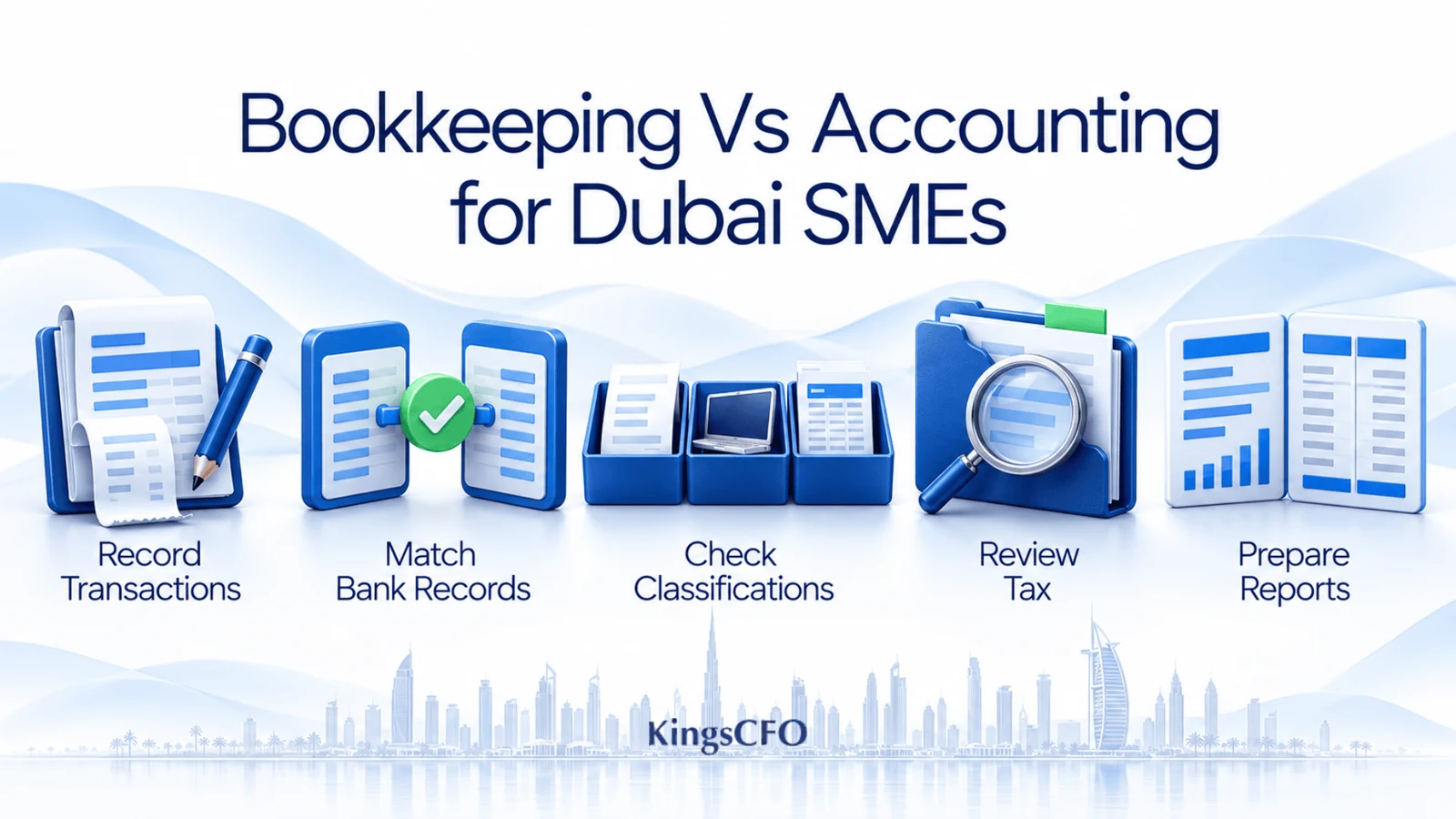
The difference between bookkeeping and accounting starts with the work involved. Bookkeeping records and organises transactions, while accounting also checks how those transactions affect your financial reports and tax calculations.
Read on to see what each service should include, how a bookkeeper and an accountant handle the same purchase, and how to choose the right level of support for your business.
The Difference Between Bookkeeping and Accounting at a Glance
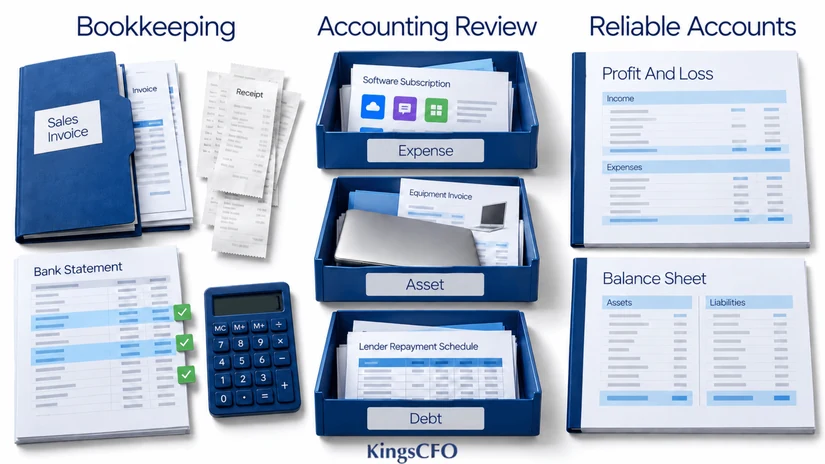
Bookkeeping is part of accounting, and because the duties often overlap, one person or firm can handle both if they have the skills and time to cover the work.
| What you need | Bookkeeping usually covers | Accounting usually adds |
|---|---|---|
| Accurate records | Recording sales, purchases, receipts and payments | Checking entries and correcting how they’ve been recorded |
| Reliable bank figures | Matching bank transactions to the books and investigating differences | Reviewing unresolved items and unusual balances |
| Customer and supplier tracking | Updating unpaid invoices and outstanding bills | Checking overdue debts and their effect on financial reports |
| Financial reports | Producing routine reports from the records | Reviewing the reports and explaining the results |
| Tax support | Keeping invoices and supporting documents organised | Checking tax treatment and preparing or reviewing returns within the agreed service |
| Business decisions | Providing current transaction records | Explaining costs, profit and what the business owns and owes |
If invoices and payments keep falling behind, you need help keeping the books current. If the records are up to date but no one checks stock costs, loan entries or tax treatment, you need accounting review too.
One provider may cover both, so ask what their service includes before assuming you need another hire.
The comparisons I read explained the job titles, but they didn’t fully answer what an accountant checks after someone has recorded a payment correctly. So I asked our finance team to explain the work behind that review.
They pointed out that the payment amount can be correct while the entry puts the money in the wrong place, such as recording a loan repayment entirely as an expense. I could then see why up-to-date records still need checks on how each entry affects profit, debt and tax.
Before choosing accounting and bookkeeping support, establish who records the transactions, who checks them and which reports you’ll receive.
What Your Bookkeeper Should Keep Under Control

This side of the difference between bookkeeping and accounting is about keeping records. Your bookkeeper keeps track of sales invoices, supplier bills, receipts and payments, along with the documents supporting them.
They organise these entries in the general ledger, which is your main transaction record. They also reconcile bank accounts by matching the records with your bank statements and investigating anything that doesn’t agree.
For a Dubai consultancy, this might involve recording client invoices, tracking software subscriptions and showing which customers haven’t paid. A retailer may also need someone to organise records from its sales platform, card processor and suppliers.
With those records current, you should be able to find out what customers owe, which bills need payment and which transactions need more information. Your bookkeeper should flag missing invoices and unexplained payments so you can resolve them while the details are still easy to find.
Agree on how often they’ll update the records and how you’ll send missing documents. That routine gives you a more reliable view of money due in and payments coming up.
Research also supports paying attention to these everyday business practices. In a 2015 study, David McKenzie of the World Bank and Christopher Woodruff of the University of Warwick assessed 26 business practices across seven countries and linked stronger practices, including record-keeping and financial planning, with better business performance. The findings cover several practices together, so they don’t measure the effect of bookkeeping alone.
If sales look healthy but cash feels tight, start with customers who haven’t paid. Your accounts may show a sale before the money reaches your bank, which helps explain why profit and cash flow can differ.
What an Accountant Checks Beyond the Bank Balance
An accountant checks how the records show your business’s income, expenses, assets and debts. They correct entries where needed and prepare or review financial statements using the accounting rules your business needs to follow.
Two reports you’ll often receive are a profit and loss report and a balance sheet. The first shows income, expenses and profit over a period. The second shows what your business owns and owes on a particular date.
The difference between bookkeeping and accounting becomes clearer when you look at what goes into those reports. A payment can match the bank statement perfectly but still sit in the wrong account or carry the wrong tax treatment.
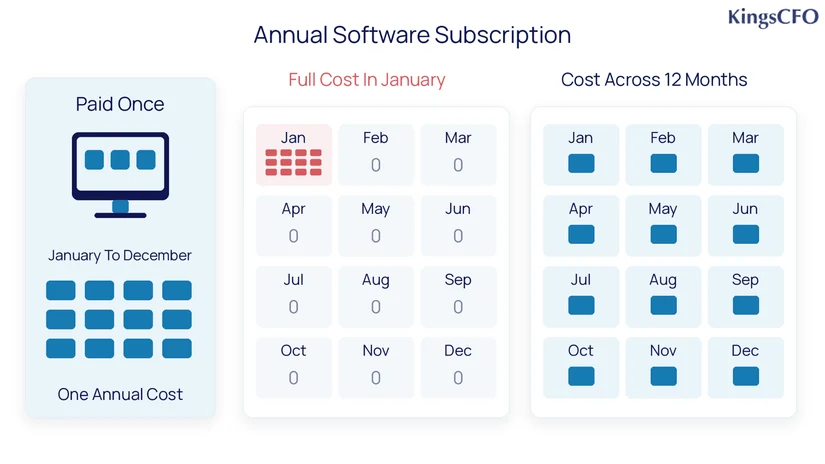
An accountant might check how someone recorded stock costs, split a loan payment or handled an annual software subscription. For the subscription, they may spread the cost across the months it covers. That helps each monthly report reflect the cost of using the software during that month.
Recording the full annual cost in the payment month could make that month look unusually expensive and later months look cheaper than they really were.
If the service includes VAT or Corporate Tax work, confirm who checks the calculations and who handles the return. Keeping invoices organised gives that person the evidence they need, but they also need to understand how the tax rules apply to each type of transaction.
The Agency Whose Records Looked Right
This case shows the difference between bookkeeping and accounting in practice. During my conversation with our finance advisory team, they described a digital marketing agency with reconciled bank accounts and neatly categorised software expenses.
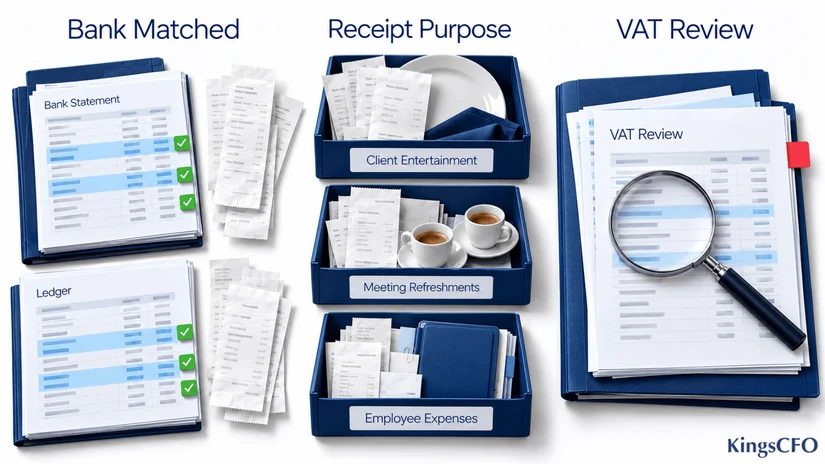
The records looked orderly, but the team’s accounting review found VAT claims on client entertainment and team lunches that weren’t eligible in that case.
Input VAT is the VAT your business pays on purchases and may recover when the relevant conditions apply. The team reversed the incorrect claims and filed a voluntary disclosure to report the error.
Article 53 of the UAE VAT Executive Regulations generally blocks input VAT recovery on entertainment provided to customers and other non-employees. Normal meeting refreshments and certain employee expenses need a separate assessment, so you shouldn’t apply the same rule to every food receipt.
The agency had recorded the payments, but the VAT decision attached to those payments needed correcting. That distinction explains why checking the bank balance alone wouldn’t have caught the problem.
The owner began separating client entertainment receipts from ordinary office purchases. For your own records, keep the invoice and note the purpose of unusual expenses, including who attended a meal, so the reviewer has the information needed to assess it.
One Supplier Invoice Shows How the Roles Work Together
To understand the difference between bookkeeping and accounting beyond tax, I asked our finance expert to walk me through an overseas stock purchase. I wanted to know what an accountant would check after the bookkeeper had recorded the invoice and payment.
The bookkeeper enters the supplier invoice, attaches the documents and matches the bank payment to the amount owed. You can then see what the business bought and that it paid the supplier.
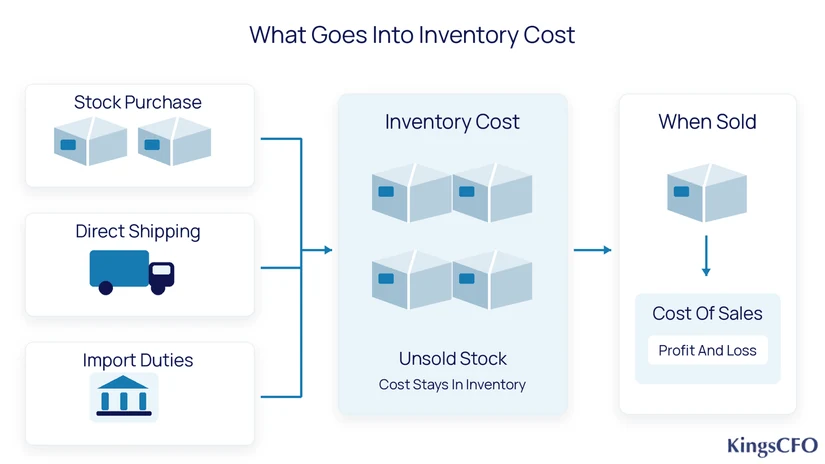
The accountant checks how the purchase affects stock and expenses. In the example our expert described, import duties and directly related shipping costs needed to form part of the stock’s landed cost.
Landed cost means the cost of bringing the goods to their intended location and condition. It includes relevant costs beyond the supplier’s price, so the business can see what it actually spent to obtain the stock.
If the goods remain unsold at month-end but someone has already recorded their shipping costs as a general expense, that can reduce profit too early and leave the recorded stock value too low. Including those costs in inventory allows them to become an expense as the related goods sell.
A skilled bookkeeper may already record these costs correctly, and an accountant may also handle the original entries. Your service needs to cover the work and an appropriate check of it.
If you import goods, send the supplier invoice, shipping documents and customs charges together. That gives the person preparing your accounts the full purchase cost to work with.
Choose Support Around the Work Your Business Creates

Understanding the difference between bookkeeping and accounting doesn’t mean you need to hire two people. One capable provider can handle both functions if your agreement includes the work you need.
Our finance team looks at business complexity before recommending a level of support. They compared a consultancy billing five clients a month with an e-commerce business handling thousands of daily orders.
The online business has many more sales, refunds, fees and incoming payments to check. It could need more frequent reconciliation even if the consultancy earns more revenue.
Stock, foreign currencies, payroll and loans add work too. Reporting deadlines and the decisions you need to make also influence the level of support.
| Your situation | Support worth discussing |
|---|---|
| A few invoices and straightforward expenses | Regular bookkeeping with a scheduled accounting review |
| Many daily sales, refunds and card payments | Frequent reconciliation, connected sales systems and regular review |
| Imported stock or several currencies | Bookkeeping with someone who can check stock costs and currency transactions |
| Hiring, borrowing or opening another location | Reliable accounts plus forecasts to help you assess the decision |
Use these examples to explain your workload to a provider. They should understand how transactions move through your business before recommending a package.
Agree on Updates and Reviews Separately
The difference between bookkeeping and accounting also shows up in timing. Recording transactions and reviewing completed accounts are different activities, so ask about both schedules.
A business with many daily payments may need records updated and reconciled frequently, followed by a monthly accounting review. A business with fewer, simpler transactions may agree on a lighter routine.
The timing should match how you use the information. If you pay suppliers every week, for example, you need current supplier bills and customer payment records before deciding which payments to make.
The accounting review then checks the completed records and the reports for the period. Agree on who handles unusual transactions between reviews too, so a question about a payment or tax entry doesn’t sit unanswered until the next reporting date.
Your Sales, Invoices and Bank Records Need to Agree

Software doesn’t remove the difference between bookkeeping and accounting. Modern accounting tools can bring bank transactions, invoices and sales records into one place. Some also capture receipt details and apply rules to recurring payments, which reduces the information someone enters by hand.
The usefulness of that setup depends on how the records connect. Your sales platform might show individual orders, while your bank receives one payment covering several sales after the card processor deducts its fees.
Someone needs to match that payment to the underlying sales and account for fees or refunds. Otherwise, the bank deposit alone won’t explain how much you sold or what it cost to collect the money.
ACCA’s 2025 Digital Pathways Playbook draws on 1,026 finance professionals working with SMEs and describes how businesses move from basic records to connected systems and more advanced automation. It also highlights the accountant’s role in identifying gaps caused by disconnected systems.
For your own setup, ask someone to walk you through a sale from the customer invoice to the payment in your bank, including any fees or adjustments. You’ll be able to see which records the software connects and where your team needs to check or enter information.
A Loan Payment Shows Why the Setup Matters
Once transactions reach your accounting software, someone also needs to check where each amount belongs. A loan payment shows why, because one withdrawal can contain both repayment of the debt and an interest charge.
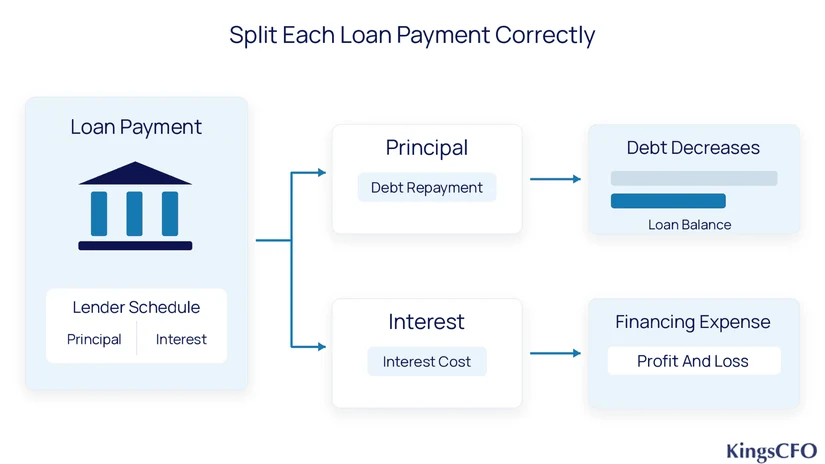
Our finance expert explained that repayment of the amount borrowed, called the principal, reduces what your business owes. The interest needs separate accounting as a financing cost.
If the software records the entire repayment as an expense, it overstates expenses and leaves the recorded loan balance too high because it hasn’t deducted the principal repayment.
Software can handle split entries, but someone needs to set up the allocation and check it against the lender’s repayment schedule so both figures reflect what happened.
The bookkeeping vs accounting difference still applies when software handles more processing. Ask your provider who checks unusual entries and how they correct them, and make sure you retain access to your accounts and supporting documents.
Know What You’ll Receive and Who Will Check It
A service proposal should tell you what the provider will do, when they’ll do it and what you’ll receive. This makes the difference between bookkeeping and accounting easier to assess before you commit.
Make the Monthly Package Clear
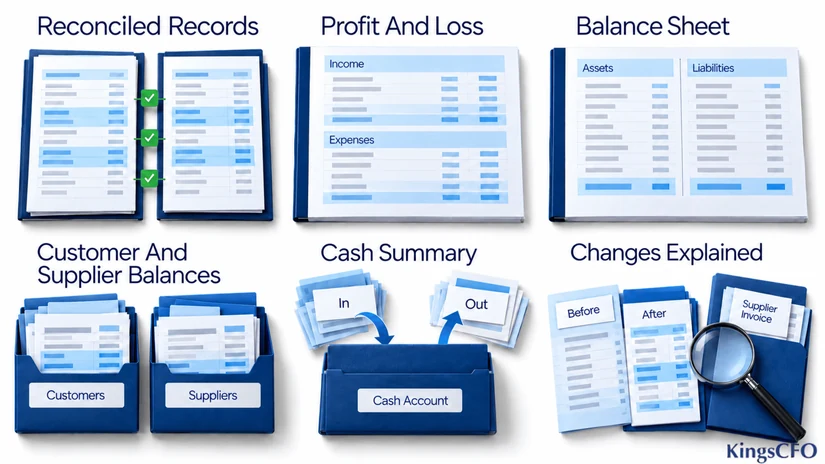
A clear package spells out the difference between bookkeeping and accounting work. Depending on your business, a useful monthly package could include the following.
| Item to agree with the provider | What it should help you understand |
|---|---|
| Updated records and completed reconciliations | Which transactions are recorded and which differences still need attention |
| Reviewed profit and loss report | What you earned, what you spent and the profit or loss for the period |
| Reviewed balance sheet | What the business owns and owes |
| Unpaid customer invoices and supplier bills | What you need to collect and what you need to pay |
| A cash summary | How much cash is available and which known payments are approaching |
| A short explanation of important changes | Why profit, costs, debt or cash moved and what needs follow-up |
Agree separately on the tax work included and the dates for preparing, reviewing and submitting returns. That makes it clear who needs to supply information and who needs to complete each task before the deadline.
A sample report makes the difference between bookkeeping and accounting easy to see. Ask for a sample report with confidential information removed. If profit has dropped, the report or discussion should help you understand the cause, such as lower sales, higher supplier costs or extra overheads.
That explanation helps you use financial information to guide business decisions. For example, rising supplier costs may lead you to review pricing, while falling sales would call for a different response.
Check the Experience Behind the Service
Experience matters on both sides of the difference between bookkeeping and accounting. Ask who will handle your records and who will review the accounts. Find out about their relevant qualifications, UAE accounting and tax experience, and work with businesses that have transactions like yours.
An importer should ask about stock costing and foreign currencies. An online retailer should ask how the provider handles refunds, card fees and payments covering multiple orders.
Their answers should explain the process clearly enough for you to understand who does what. A sample report helps you assess the output, while the discussion shows how they approach transactions that matter to your business.
You should also know who will answer questions after the service begins, particularly if the person preparing the records is different from the person reviewing them.
Compare the Same Work Across Quotes
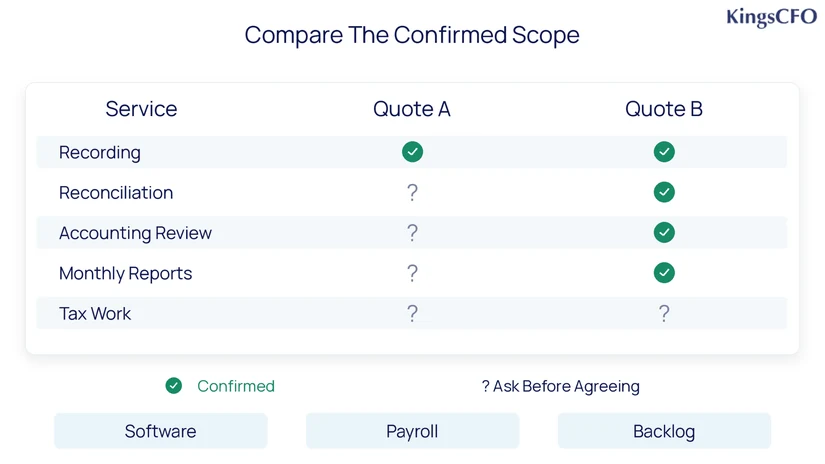
Quotes often blur the difference between bookkeeping and accounting. Two monthly fees may cover different responsibilities. One proposal might include transaction entry, while another also includes reconciliations, accounting review, reports and tax work.
Ask each provider to confirm the following in writing.
- The number of transactions, bank accounts and business entities covered.
- How often they update records, review accounts and deliver reports.
- The tax return preparation, review and filing work included.
- Any separate charges for software, payroll, stock or foreign currencies.
- The cost of clearing old records or correcting an existing backlog.
- What happens to the fee if your workload increases.
This gives you a fairer basis for comparing prices. A lower fee may suit your business, but you need to know which work you’ll still handle or arrange separately before judging the total cost.
When You Need Help With What Comes Next
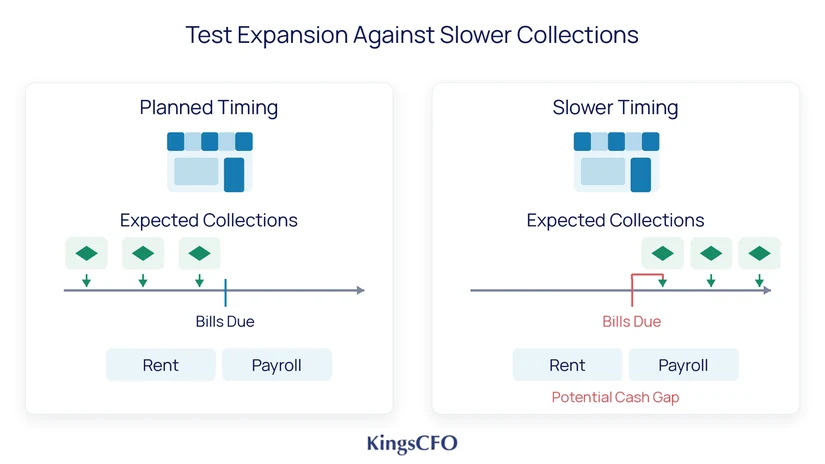
Beyond the difference between bookkeeping and accounting, there is planning. Once your records and reports are reliable, you may have another question. Can the business afford a new hire, a loan or an expansion while still meeting its existing payments?
Our finance team described a founder considering expansion into Saudi Arabia. The accounts showed the business’s recent results, but the owner needed to know if its cash could support the expansion and the new commitments.
The team built a financial model to test different outcomes, including worse-than-expected scenarios. That helped the founder assess the planned lease against future cash needs.
For example, a model can test what happens if a new location’s sales grow more slowly than planned while rent and payroll still fall due. The forecast can then show when cash might run short, giving the owner time to reconsider the spending, timing or funding.
Accountants can provide forecasts too. A CFO engagement usually adds ongoing financial leadership across decisions such as expansion, funding and where to commit money. This guide to financial leadership and CFO services explains how those responsibilities fit together.
If you need that help without a full-time appointment, fractional CFO support gives you access to CFO expertise on a part-time basis. Start with the decision you need to make so the discussion stays focused on the support it requires.
Choose Support That Covers the Work You Need
The difference between bookkeeping and accounting should help you understand what you’re paying for. Bookkeeping keeps your transactions organised, while accounting checks how those entries affect your reports and helps you understand the results.
Start by checking what your current arrangement covers. Who updates the records, who reviews them and who explains the figures? Once those responsibilities are clear, you can identify missing work without assuming you need another full-time employee.
At KingsCFO, our Dubai team provides strategic financial advisory and outsourced finance support, including virtual and part-time CFO services for SMEs. If you’re unsure what your business needs next, you can discuss your financial support needs with our team and work through the responsibilities your service should cover.
FAQs
Bookkeeping or Accounting, What Is the Difference?
Bookkeeping records and organises transactions. Accounting includes that work, checks how transactions affect the accounts and produces financial information you can use. The duties often overlap, so ask what the provider will actually handle.
Can One Person Handle Bookkeeping and Accounting?
Yes, if they have the skills and time for both. Check that your agreement includes regular recording, accounting review and the reports you need. Ask how they check for errors and who handles questions about tax.
Does a Small Dubai Business Need Both Functions?
Your business needs dependable records and correct accounting, but that doesn’t automatically mean hiring two employees. A combined outsourced service or bookkeeping with scheduled professional review may suit a simpler business.
Can a Bookkeeper Handle VAT Returns?
Some bookkeepers have the relevant skills and include VAT work in their service. Ask who checks which purchases qualify for VAT recovery, reviews the return and handles corrections. The job title alone won’t tell you how much tax knowledge they have.
What Is the Bookkeeping vs Accounting Difference in Cost?
Fees depend on the number and complexity of transactions, how often you need reports and what the service includes. Compare written service details and check extra charges for clearing old records, stock, additional currencies and tax work.
Can Accounting Software Replace Professional Support?
Software can automate much of the recording and reconciliation, but someone still needs to manage the setup, check exceptions and review accounting and tax decisions. The complexity of your transactions helps determine how much professional support you need.

Mayur Bardoloi is a content writer with more than four years of experience across writing and proofreading. His content for KingsCFO explains financial topics and CFO services for business owners who may not have a finance background.