Your supplier has sent an invoice, but the courier wants more paperwork. You are unsure who should prepare it, which details must agree, and if a missing document could hold up goods your business needs. For a first import, even knowing whose name belongs on the declaration can feel confusing.
Custom duty clearance starts with the right paperwork. As you collect the documents your courier needs, organise them into a file you can keep after clearance. The Gulf Cooperation Council (GCC) customs procedures guide for 2025 sets a five-calendar-year retention requirement for relevant import records after completing customs procedures.
You want custom duty clearance to move forward with a complete file, clear responsibilities, and records your finance team can follow later. Start by identifying your shipment type, then collect the documents that apply and check the information across them.
This article explains what each document does, who usually provides it, and when extra approvals apply. Keep reading to understand the Dubai and Abu Dhabi routes, decide who will submit the declaration, and prepare the records your business needs before and after release.
Start With The Documents Your Shipment Needs
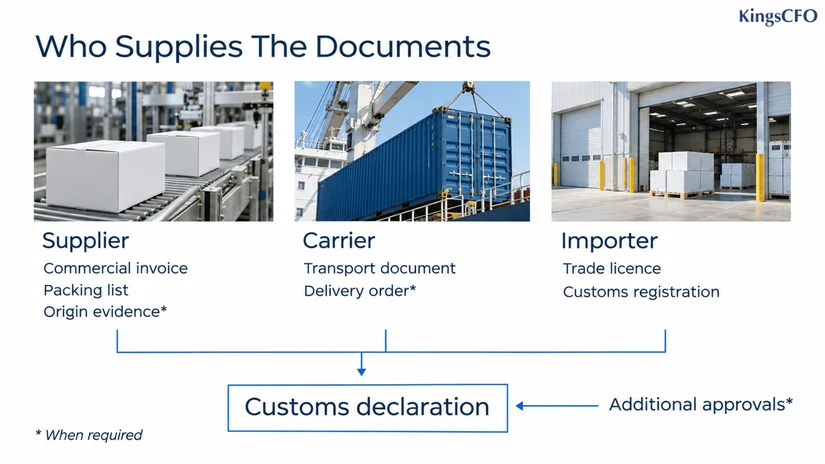
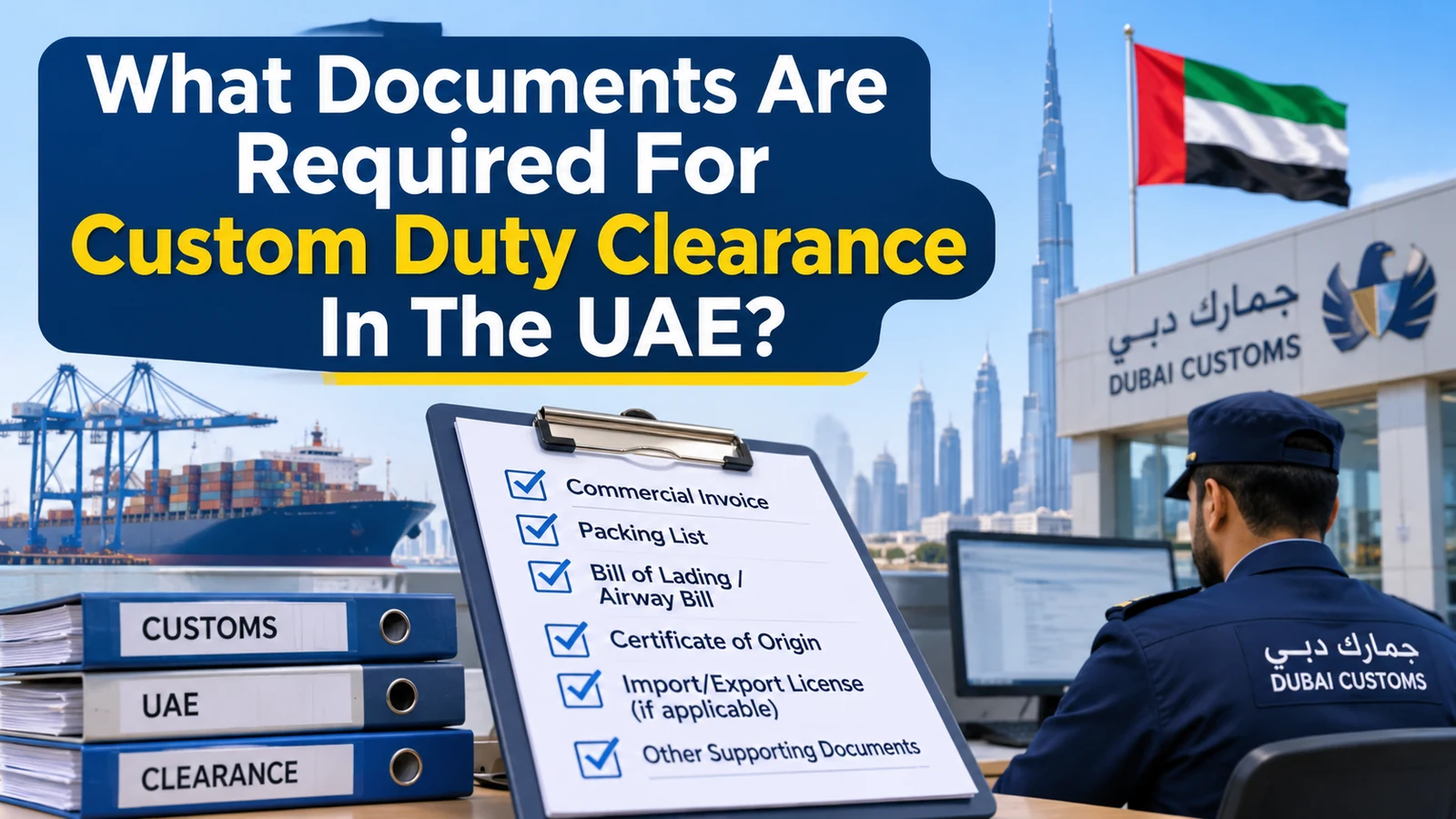
For commercial imports, your custom duty clearance file normally draws on the following documents and registration details. Some apply only to particular goods, routes, or procedures.
| Document or requirement | Usually arranged by | What to confirm |
|---|---|---|
| Commercial invoice | Overseas supplier | Buyer, goods, quantities, value and currency |
| Packing list | Supplier or packer | Contents, packages and weights |
| Bill of lading, air waybill or land transport paperwork | Carrier or forwarder | Correct transport document and shipment reference |
| Certificate of origin where required | Exporter through the applicable issuing body | Origin evidence accepted for the procedure |
| Delivery order where required | Carrier or its agent | Cargo-release arrangements |
| Trade licence and customs registration | Importing business | Correct entity, activity and active customs code |
| Customs declaration | Importer or authorised representative | Correct procedure and supporting shipment information |
| Additional permits or certificates | Relevant applicant and approving authority | Requirements for the specific goods |
I found the checklist easier to understand once I separated the supplier’s paperwork from the importer’s registration. The invoice describes the purchase, while the registration identifies the business using the customs service. Receiving the supplier’s documents still leaves the importer’s own requirements to check.
Begin with the entry point, shipping method, and purpose of the import. Then give the checklist to the person handling the declaration. Our accounting and bookkeeping support can help organise the purchase records and related costs for your books.
What To Check In Each Clearance Document
Each document answers a different question. Reviewing them together helps you prepare for custom duty clearance without assuming that one invoice explains everything.
1. Commercial Invoice And Buyer Details
The commercial invoice records the supplier’s sale. Check the seller and buyer details, invoice reference, goods description, quantity, price, total value, and currency.
A description such as “goods” gives the person preparing the declaration little to work with. Request a description that identifies the actual products, with model or material details where relevant.
For a company purchase, confirm the intended buyer before the supplier issues the final invoice. If shipping instructions identify the owner personally, resolve the arrangement with the courier and finance team before filing.
2. Packing List And Shipment Quantities
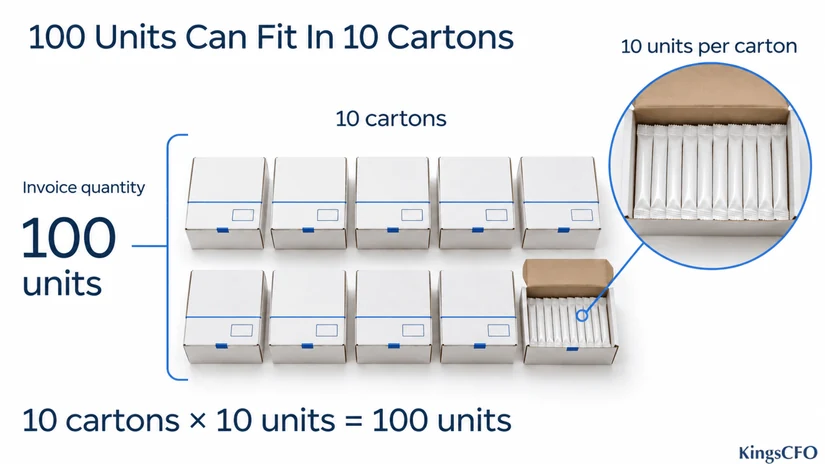
The packing list explains how the goods sit within the shipment. Review package counts, contents, and weights alongside the invoice.
Different units can describe the same quantity. For example, an invoice showing 100 units can agree with a packing list showing 10 cartons containing 10 units each. Write that relationship clearly so nobody has to guess.
Have the supplier explain any remaining difference before approving the custom duty clearance documents.
3. Transport Documents For Sea, Air And Land
A bill of lading relates to sea transport, while an air waybill relates to air freight. Land shipments use the applicable road transport and manifest records.
Confirm the shipment reference, consignee details, and destination with the carrier. The consignee is the party identified to receive the goods under the transport arrangements.
You generally need the document appropriate to your shipping method. Ask the forwarder to identify it by name when requesting the paperwork for custom duty clearance.
4. Certificate Of Origin And Applicable Requirements
A certificate of origin establishes origin information for the goods. The applicable customs procedure or tariff claim determines the evidence you need.
When I read the GCC guide, I noticed that it lists the detailed invoice and certificate of origin separately, with the certificate required if customs requests it. That helped me understand why receiving an invoice does not settle every question about origin.
If your shipment contains goods from different origins, ask the exporter and your authorised customs clearance agent to explain how the invoice and origin evidence connect. Confirm the required documents before dispatch, particularly if you intend to claim preferential customs treatment under a trade agreement.
5. Delivery Orders And Cargo Release
Where required, the delivery order forms part of the carrier’s cargo-release arrangements. Confirm who will obtain it and which carrier charges remain outstanding.
A delivery order and a customs declaration serve different purposes. Have the forwarder explain the remaining carrier, customs, and port steps so you know what still stands between approval and collection.
6. Importer Registration And The Customs Declaration
Your trade licence and customs registration concern the business importing the goods. The declaration records the shipment under the relevant customs procedure.
Before arranging custom duty clearance, confirm the importing entity, customs code, and proposed activity. If you are setting up a trading business, our business setup and licence guidance can help you review the business structure and activity requirements.
The declaration also uses a Harmonized System (HS) code to classify the goods for customs purposes.
Give the person classifying the goods their actual specifications. A code copied from an unrelated product listing needs checking before submission.
When Your Goods Need Extra Approvals
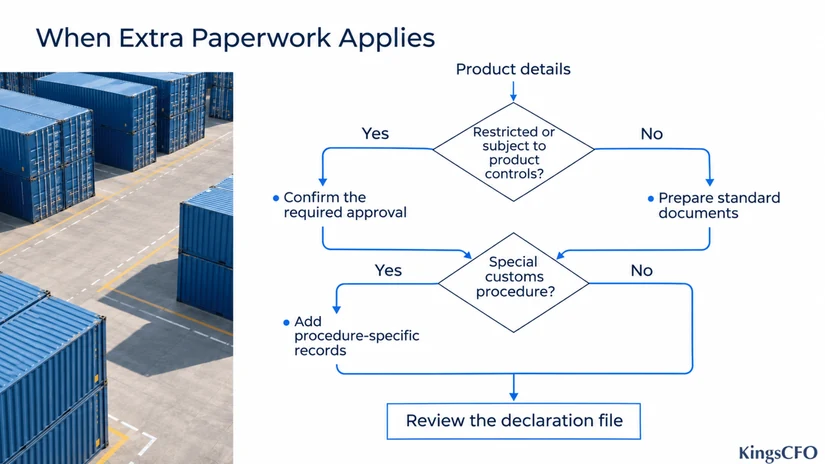
The GCC guide helped me understand why the document list changes between shipments. It lists different transport records for air, sea, and land imports, and requires relevant approvals for restricted goods. Start with your shipping method, customs procedure, and product details to confirm which paperwork applies.
Those checks identify the additional paperwork for custom duty clearance. The GCC guide requires relevant approvals for restricted goods and allows customs to request conformity evidence.
| Shipment situation | What to establish before dispatch |
|---|---|
| Restricted products | Required approval, responsible authority and applicant |
| Products subject to conformity controls | Evidence applying to the specific product |
| Preferential tariff claim | Origin rules and supporting documents |
| Temporary admission or re-export | Correct procedure and evidence connecting the movement |
| Personal belongings | Personal-import documents and any exemption conditions |
Food, medical products, and communications equipment can involve different controls. Send the product details to the responsible specialist and request the exact approval name. A general instruction to obtain “a certificate” leaves too much unresolved.
Keep the response with the shipment file, including who will apply and when the approval must be available.
When Originals And Document Attestation Apply
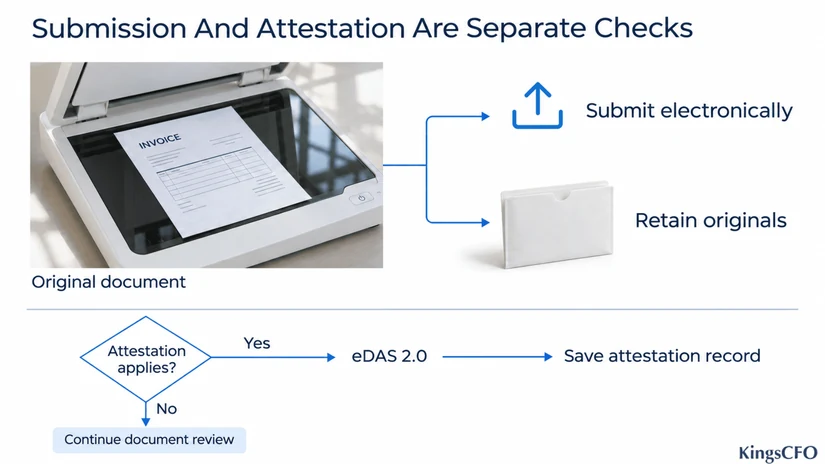
When I read the submission guidance alongside the attestation rules, I found three separate questions to resolve for custom duty clearance. How do you submit the document, which original must you retain, and does attestation apply? Keeping those questions separate makes it easier to assign each task.
The GCC guide permits electronic submission while requiring retention of originals for production when requested. Do not assume that uploading a scan removes every original-document requirement.
If your imported goods are worth AED 10,000 or more, check the electronic attestation requirements and any exemptions in the UAE Ministry of Foreign Affairs (MoFA) eDAS 2.0 guidance. You have a 14-day grace period from the Bill of Entry date to pay the invoice-attestation fees, so agree who will handle the payment and keep the confirmation with your shipment records.
Check attestation completion separately from release, and save the attested document with the payment confirmation.
The broader move towards electronic records has research behind it. In a 2025 paper from the Organisation for Economic Co-operation and Development (OECD), Javier López González and Silvia Sorescu estimated that a 10% improvement in border automation, combined with simpler documentation and stronger agency cooperation, could increase global goods exports by up to 18%.
That estimate concerns combined reforms across trading economies. For your own file, start with a manageable check. Keep the approved document version clearly identified so the supplier, forwarder, and finance team use the same information.
How Customs Clearance Works In Dubai And Abu Dhabi
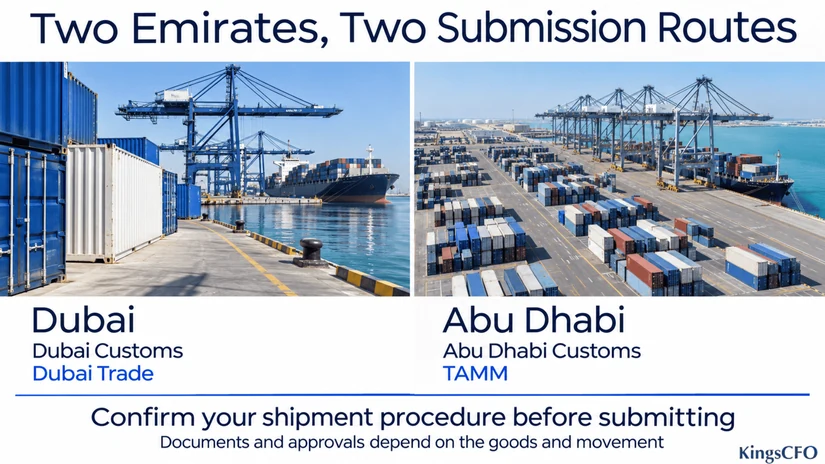
The entry authority determines the local submission route for custom duty clearance. Confirm which authority will handle your declaration before following instructions for another emirate.
Dubai Customs Clearance And Online Submission
For custom clearance in Dubai, the business or its authorised representative submits the declaration through the applicable Dubai Trade service. Check the registration and access requirements before arranging who will file it.
The customs clearance Dubai importers arrange must also follow the correct procedure, such as an import for local use or a different authorised movement.
Keep the application reference and identify who will answer any document request. If a forwarder submits the declaration, request a copy for your own file.
Abu Dhabi Customs Clearance Through The Relevant Service
Abu Dhabi Customs identifies its Clearance of Goods service through TAMM for the applicable entry or exit procedure. Confirm the required access and shipment details with the applicant or representative handling it.
If you appoint a customs clearance agent in Abu Dhabi, agree who will submit the application, obtain approvals, respond to inspection requests, and arrange collection.
For either emirate, use this sequence to track the work.
- Confirm the importer and customs procedure.
- Collect the applicable documents and approvals.
- Submit the declaration through the relevant channel.
- Address assessments, payments, and inspection requirements.
- Obtain release and retain the completed records.
Avoid planning collection around a general promise of same-day clearance. Get an update on your actual application and any outstanding requirement.
Can You Handle Customs Clearance Yourself?
Self-clearance depends on registration, access, and the procedure. Dubai Customs states that a company holding a customs business code can submit a declaration, and its FAQ also describes the conditions for agents acting for consignees.
If you intend to handle custom duty clearance internally, confirm that your team can prepare the declaration, support the classification and value, and respond to follow-up requests.
When comparing custom clearance agents in Dubai, request a written scope and an itemised quote. Ask the agent to separate its service fees from government, carrier, and port charges.
The same check helps when reviewing other custom clearance agents. Establish who authorises the submission and which documents you will receive afterwards.
Choose the arrangement your team can manage accurately. Price alone does not explain the tasks included in an agent’s quote.
Which Customs Clearance Certificate Do You Need?
If someone requests a customs clearance certificate, ask for the exact service name and purpose.
Dubai Customs lists separate services for goods landing certificates, vehicle clearance certificates, and client clearance certificates. Because each certificate serves a different purpose, ask the person requesting it for the exact name before you apply.
If your accountant or customer wants evidence that a shipment cleared, confirm the record they need. It may concern the declaration, release, or another specific certificate.
Check the request before adding certificate fees to your custom duty clearance budget.
Check Names, Quantities And Values Before Filing
Before approving custom duty clearance, read the file across documents. An invoice can look complete on its own while leaving a question when compared with the transport instructions.
The finance team’s explanation helped me understand why the declaration belongs beside the supplier’s invoice in the purchase file. Reading them together helps the team follow the importing arrangement and connect the shipment with the accounting entry.
| Detail to check | Records to compare | Question to resolve |
|---|---|---|
| Business identity | Invoice, shipping instructions and draft declaration | Do they describe the intended importing arrangement? |
| Description and quantity | Invoice, packing list and transport information | Can someone connect the products and units? |
| Value and currency | Invoice and declaration workings | Can the preparer explain the declared amount? |
| Shipment reference | Transport and customs records | Do they concern the same movement? |
| Charges | Official assessments, receipts and agent invoices | What does each amount cover? |
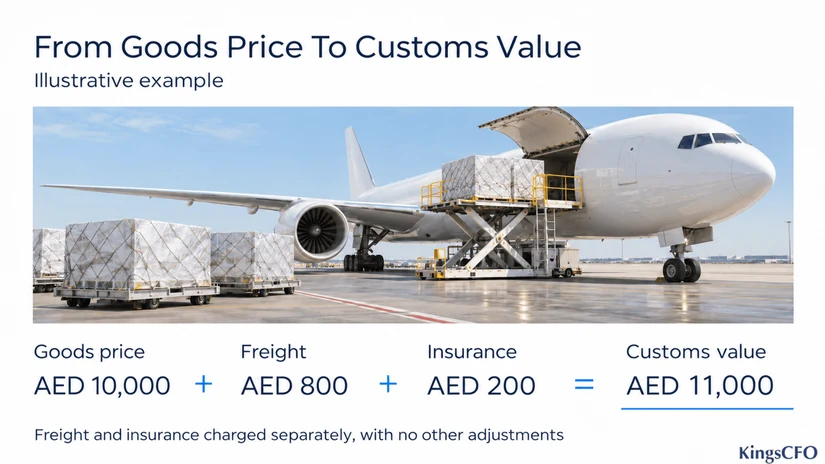
When I compared the document checks with Dubai Customs’ valuation guidance, I understood why the supplier’s goods price and the customs value might differ. Because the customs value can include freight, insurance, and other applicable costs, you need to check the calculation before treating the difference as an error.
Keep that calculation with the declaration so your finance team can follow it later. Do not change a figure simply to make two records agree.
For budgeting, have your team show the goods price and each associated cost separately. Our financial advisory service can help you assess the complete purchase cost and its effect on planned spending.
Keep The Records Your Finance Team Needs
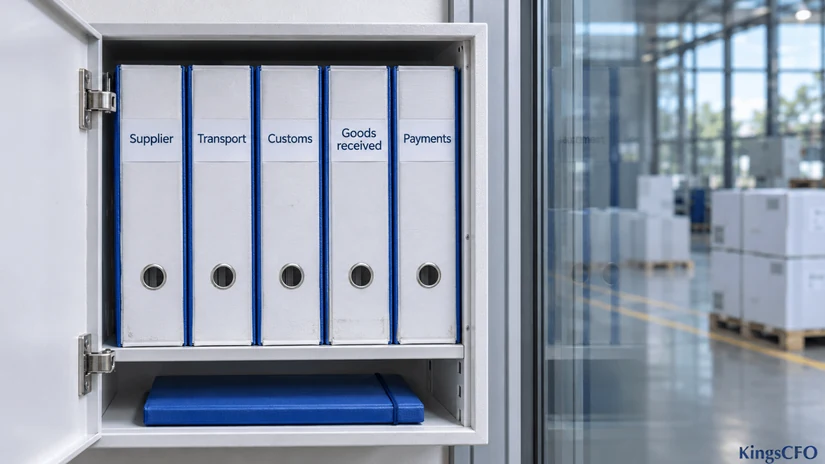
After custom duty clearance, pass the completed file to the person responsible for the accounts.
What stood out to me in the finance specialist’s explanation was how each record answers a different question. The supplier invoice describes the purchase, the transport document identifies the shipment, and the goods-received record shows what arrived. Keeping them with the customs declaration and related charges gives the finance team a purchase it can trace.
Add the permits, origin evidence, attestation records, and payment documents that apply to your shipment. When the business receives the goods, ask the receiving team to record any shortage or damage, and keep the supporting correspondence alongside the final documents.
If some records identify the owner personally, flag the issue before the finance team relies on them. Have the adviser review the importing arrangement, supporting evidence, and any necessary correction. Do not assume that a company payment alone settles the accounting or value added tax (VAT) treatment.
Businesses reviewing their registration position can use our VAT registration support. The finance team should assess any VAT recovery separately against the applicable conditions.
Our financial audit preparation guide explains how to connect accounting balances with supporting records. Try one simple test now. Can a colleague trace an imported purchase from invoice to payment and receipt without asking the person who saved the files?
For your next order, use those cost records when planning the cash needed for shipping, release, and supplier payments. Our guide to strategic finance for growing businesses explains how forecasts support spending decisions.
Prepare Your Custom Duty Clearance Documents Before Dispatch
Start with the importing entity, entry point, and customs procedure, then confirm the documents and approvals for your goods. Review the file with the person submitting it and resolve unexplained differences before approval.
Good preparation for custom duty clearance also leaves your finance team with records it can follow after release.
At KingsCFO, we help UAE businesses organise their accounts, supporting records, and financial decisions. If import costs or incomplete purchase files are making your numbers harder to explain, speak with our finance team about the support your business needs.
Frequently Asked Questions
What Is Needed For Custom Clearance?
Commercial imports commonly need an invoice, packing and transport records, importer registration, and a declaration, with origin evidence, delivery orders, and permits as applicable.
Can I Do My Own Customs Clearance?
Eligible businesses can submit declarations through the relevant customs system after meeting its registration and access requirements.
How To Get A Custom Clearance?
Confirm your procedure, prepare the applicable documents, submit the declaration, meet payment and inspection requirements, and obtain release.
Do Personal Belongings Need The Same Documents As Business Imports?
Personal shipments follow their applicable identification, transport, and goods-list requirements, with separate conditions for any exemption.
Can I Submit Copies For Custom Duty Clearance?
Electronic submission may apply, but confirm original-document requirements and any conditions for accepting copies with the relevant customs authority.
Is A Customs Clearance Certificate Required For Every Shipment?
There is no single certificate to assume applies to every shipment, so confirm the exact record the requesting party needs.
What If Customs Documents Show My Personal Name?
Ask the courier or authorised customs clearance agent and your finance adviser to review the declaration, purchasing arrangement, and correction options before relying on the records.

Mayur Bardoloi is a content writer with more than four years of experience across writing and proofreading. His content for KingsCFO explains financial topics and CFO services for business owners who may not have a finance background.