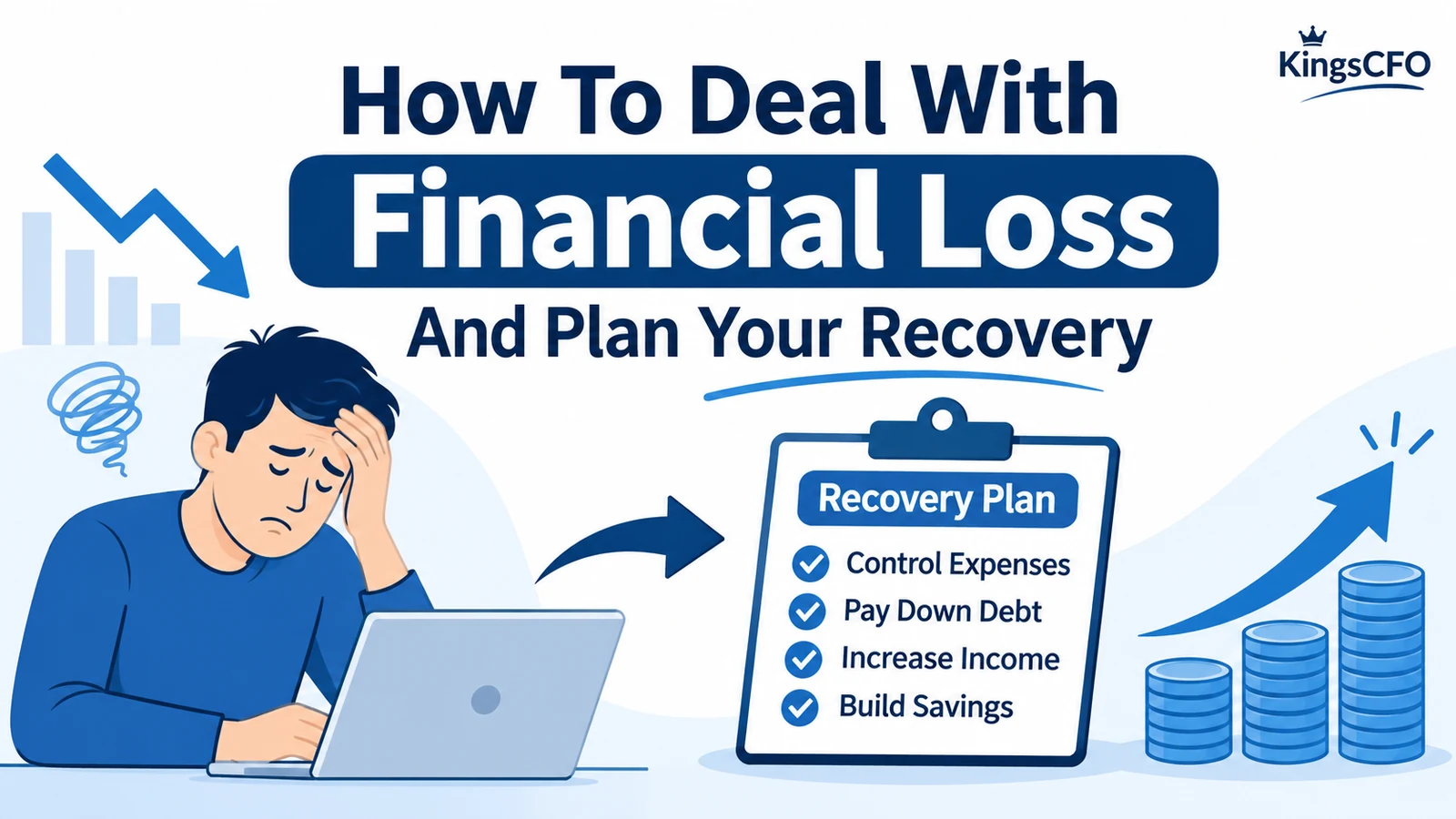
Payroll is due next week, your business has made another loss, and you are wondering how much more of your savings you can put in. Working out how to deal with financial loss feels harder when staff and family depend on your next decision.
In Dubai DET’s Q1 2025 Business Survey, 39% of SME respondents reported a decrease in profits. A decline does not necessarily mean a business made a loss, but the finding gives local context to the pressure owners face.
You want to understand what went wrong, cover the payments ahead, and assess your options while protecting the money your household needs.
I’ve drawn on UAE business evidence and published accounting guidance to explain the checks below, alongside the planning covered by KingsCFO’s CFO support for UAE SMEs.
Read on to assess the loss, examine which work earns money and build a payment forecast before committing more funds.
What Should You Do First After A Business Loss?
To work out how to deal with financial loss, begin with the figures that affect your next decision.
- Confirm the loss using current accounts, with missing sales and costs included.
- List available cash, expected customer receipts and payments due, with dates.
- Identify any work or spending that continues to add to the loss.
- Review the cause and funding options before transferring more personal money.
If payroll, a creditor demand or another deadline needs urgent attention, tell your adviser at the start so you can address the immediate problem while investigating the wider results.
Understand What The Loss Figure Is Telling You

Before deciding how to deal with financial loss, check what kind of loss you have. A trading loss means expenses exceed income over the period you are reviewing, while a cash shortage concerns the money available when payments fall due.
If your business uses accrual accounting, a sale can appear in your accounts before the customer pays you. The UAE Federal Tax Authority’s accounting guide explains that income and expenses follow when they are earned or incurred, which can differ from the payment dates.
An overdue invoice therefore calls for a collection check, while a service that costs more to deliver than it earns needs a review of pricing and costs. Your business could face both problems, so please check the accounts alongside the bank balance.
If you also face a direct financial loss from a particular incident, keep the evidence separate. For example, an unrecovered supplier advance needs its payment record, purchase order and correspondence so your accountant can assess how to record it.
Keep estimates of possible future missed sales separate from money you have already paid or lost, because the amounts describe different events.
How To Deal With Financial Loss In 8 Practical Steps
Start with the most urgent payment or ongoing loss, then work through the records. You can prepare the first cash check while your accountant investigates the wider results.
1. Start With The Payments That Need Attention
If opening the bank app or answering a supplier message feels overwhelming, you could sit with your accountant, business partner or someone you trust while you review the figures.
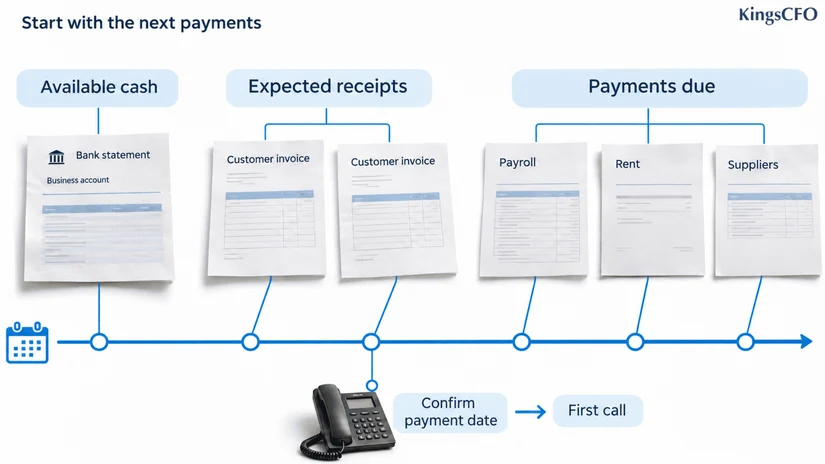
For the first check, gather three things.
- Cash the business can use today.
- Customer payments you reasonably expect to receive soon.
- Bills and other commitments approaching their due dates.
You could begin with the dates of your next payroll, rent and major supplier payments, then enter the customer receipts expected before each deadline. Please include any large payment just beyond the first review period, so you can see the cash needed for the following weeks as well.
From there, choose a specific action you can complete, such as calling a customer to confirm payment or asking a supplier to discuss an invoice. Record the answer so the forecast reflects the conversation.
While you work through the financial decisions, make room for regular meals, rest and contact with someone you trust. Abu Dhabi’s Department of Health encourages people to maintain regular routines, stay connected with loved ones and seek support when they feel overwhelmed.
If anxiety, panic or sleep problems persist or affect daily life, please speak with a qualified doctor or mental health professional. If you feel unable to stay safe or have thoughts of harming yourself, seek urgent medical help and ask someone you trust to stay with you.
2. Find Which Products Or Services Are Losing Money

Part of how to deal with financial loss is finding where it comes from. Bring your profit and loss statement for the previous financial year alongside the current figures, then compare the same months where possible.
I’d look at sales and variable delivery costs together because ACCA’s contribution calculation subtracts costs that change with the work delivered, such as materials and job-based commissions, from sales revenue. The amount left helps cover fixed expenses such as rent and admin, with any surplus after those expenses contributing to profit.
When reviewing each financial statement, profit and loss figures should connect with the sales and cost records behind them. If invoices, expenses or bank entries do not match, accounting and reporting support can help you investigate before you base a decision on incomplete figures.
Next, separate the results by product, service or project so you can examine what each activity contributes.
Okay, let me give you an example of a Dubai fit-out and maintenance business using assumed monthly figures, all in AED. I’ll separate maintenance from carpentry so you can follow what each service earns and costs before shared overhead.
To keep the calculation simple, assume the delivery costs disappear if the business stops the matching service, while office rent and admin costs stay unchanged.
| Monthly figure | Maintenance | Carpentry |
|---|---|---|
| Sales | 150,000 | 150,000 |
| Variable delivery costs | 60,000 | 170,000 |
| Contribution towards shared overhead | 90,000 | −20,000 |
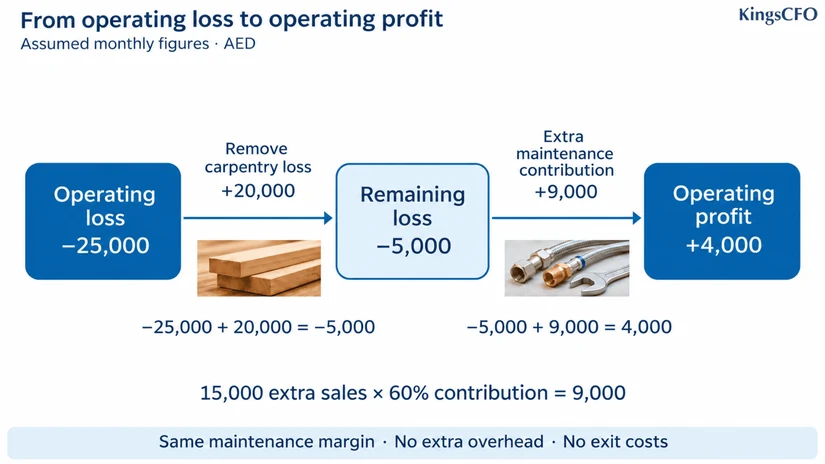
Together, the services contribute AED 70,000. With assumed shared overhead of AED 95,000, the business makes an operating loss of AED 25,000 before interest and tax.
Deciding how to deal with the financial loss here requires looking beyond the AED 300,000 sales total, because maintenance contributes towards overhead while carpentry loses AED 20,000 before contributing anything.
Under the example’s assumptions, stopping carpentry removes its AED 20,000 negative contribution and reduces the operating loss to AED 5,000.
Maintenance has a 60% contribution margin, calculated as AED 90,000 divided by AED 150,000. Another AED 15,000 of maintenance sales at the same margin would contribute AED 9,000, producing an operating profit of AED 4,000.
The AED 4,000 result depends on the business taking on the extra maintenance work without adding shared overhead or paying exit costs. Before applying the example to your own business, please check the wages, leases and unfinished jobs that would still need payment after a service stops.
3. Forecast Cash Against Actual Payment Dates
A cash forecast is a core part of how to deal with financial loss. Your accounts explain past results, but a dated cash forecast helps you examine the money available when bills fall due.
You can begin with a spreadsheet that places expected receipts and payments against their dates.
| Forecast item | What to enter |
|---|---|
| Opening cash | Available cash at the start of the period |
| Expected receipts | Customer payments and other expected inflows, with dates |
| Payments due | Payroll, suppliers, rent, loans, tax and other commitments |
| Forecast balance | Opening cash plus receipts, minus payments |
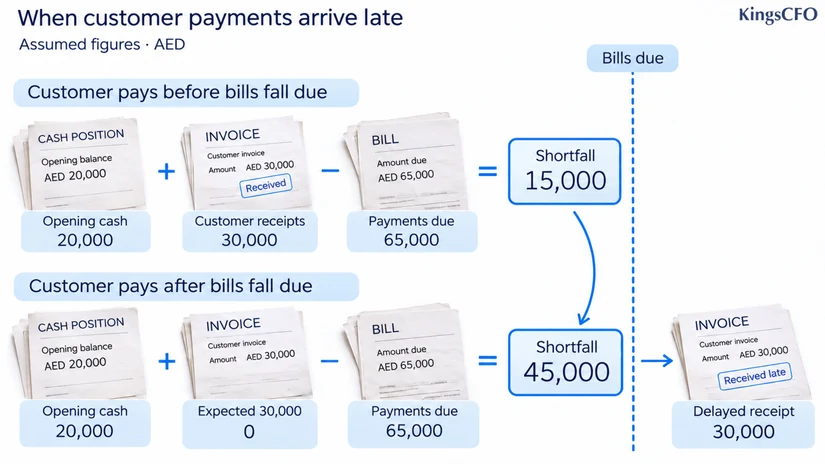
Suppose the business has AED 20,000 available, expects AED 30,000 from customers and needs to pay AED 65,000 over the period.
The forecast would show a potential shortage of AED 15,000, calculated as AED 20,000 plus AED 30,000 minus AED 65,000.
Before approaching a lender or using personal savings, I’d compare the expected payment dates with a second forecast in which customers pay late, following the scenario-testing method described on HSBC UAE’s forecasting page. In our assumed example, if the full AED 30,000 arrives after the bills fall due, the potential shortage increases from AED 15,000 to AED 45,000. Comparing both forecasts helps you assess how much additional cash the business might need if customers miss their payment dates.
As you work out how to deal with financial loss, carry the forecast through the next rent, loan and tax deadlines, alongside other large bills, so the recovery plan accounts for the payments ahead.
If several payment scenarios make the figures difficult to assess, financial advisory support can help you compare the options and review actual results against the forecast.
4. Count Only The Savings You Can Make

Before reducing an expense, check how much cash the change would save, when the saving would begin and any costs of making it.
The relevant-cost method focuses on the future cash flows a decision changes. A cost that continues after a decision does not become a saving simply because you move it elsewhere in the accounts.
For example, pausing a service might reduce material purchases, but the workshop lease could remain payable. Reallocating the lease expense to another department would change the report without reducing the payment.
When considering a cut, note the expected saving, its start date, any exit cost and the effect on customer delivery.
For a change such as requiring approval before material purchases, agree who will check the requests and when lower spending should appear, then include only the saving you can support in the forecast.
Understanding how to deal with financial loss includes checking the consequences of a cut, especially if the change could affect work you have already promised customers.
5. Give Overdue Invoices A Clear Follow-Up Plan
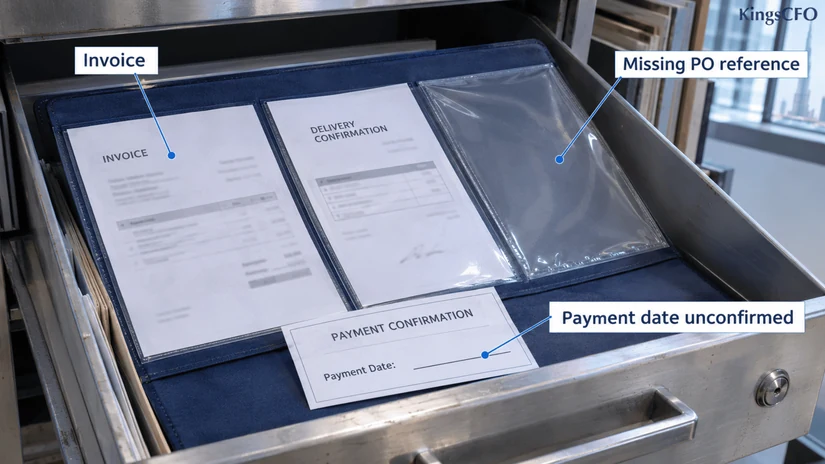
Collecting what you are owed is part of how to deal with financial loss. Before chasing an overdue invoice, check the agreed terms, purchase-order reference and any unresolved query.
ACCA’s cash-flow guidance recommends accurate invoices, clear payment dates and prompt handling of disputes. When you contact the customer, ask what remains outstanding for approval and record the payment date they confirm.
If a customer disputes part of the bill, identify the disputed amount and supporting documents so you can discuss the issue specifically. Give one person responsibility for following up and recording the response.
For future work, you could discuss a deposit or payments at agreed delivery stages, with the terms written into the contract before work begins.
Any proposed discount also needs a margin check, because collecting sooner would give you less cash from the sale.
Collecting old invoices addresses the timing of cash receipts, so continue reviewing the costs of new work to prevent the service losses identified earlier from building again.
6. Check What Personal Savings Or Borrowing Would Achieve
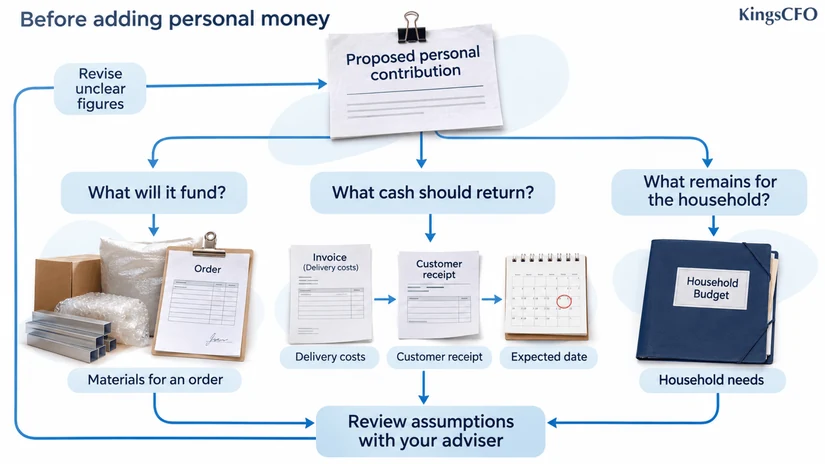
If you are considering how to deal with financial loss using personal savings, write down what the money must achieve before transferring it.
Three questions can help you prepare for a review with your adviser.
What will the money pay for?
Funding inventory for a signed order needs a check of the order’s margin, delivery costs and payment terms. Covering another month of routine expenses needs an explanation of what will change before the next month begins.
What supports the route back to break-even?
Review the contribution from existing orders, expected costs and cash collection dates. A sales target needs supporting assumptions, including the work you can deliver and the costs of delivering it.
What would remain for your household if recovery falls short?
Include living costs, personal debts and any guarantees in the discussion. Ask your adviser to explain how the contribution would be recorded and the risks to recovering it.
I’d apply ACCA’s guidance on assessing future cash flows by recording which payments your personal contribution would fund and which customer receipts or savings you expect it to enable. For example, if your money buys materials for a signed order, note the remaining delivery costs, the customer payment expected, and its due date. You can then review the order’s expected cash return before deciding how much personal money to commit.
Borrowing needs a similar check, with the proposed repayments entered into the cash forecast.
Before signing, ask the lender to explain the interest or profit rate, fees, security, and any personal guarantee. The Central Bank of the UAE’s SME customer protection regulation includes providing customers with a Key Facts Statement before supplying a financial product or service.
Please review the statement alongside the full agreement and discuss any unclear personal exposure with a qualified adviser. Virtual CFO support can also help you examine the forecast behind a proposed funding decision.
7. Discuss Payment Difficulties With A Realistic Proposal
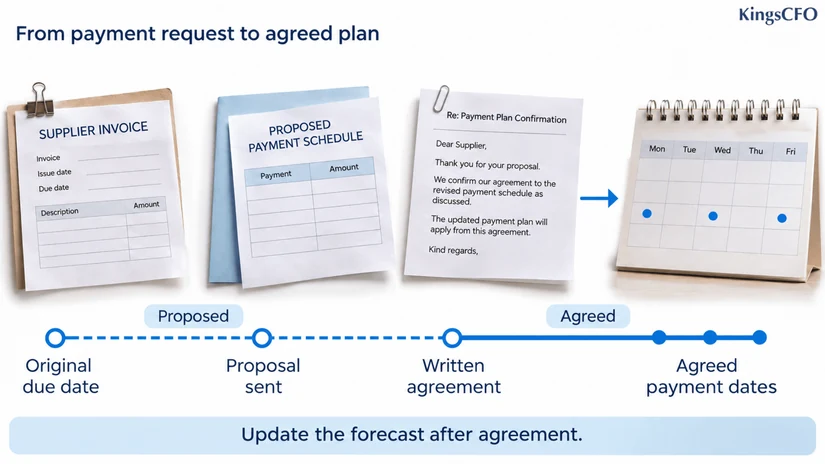
Talking to creditors early is another part of how to deal with financial loss. When you approach a supplier or lender about a payment difficulty, prepare the amount you can offer, the proposed dates and the receipts supporting your proposal.
You might request a payment plan or revised terms, but the other party needs to agree to the arrangement. Please confirm any accepted changes in writing before relying on them in your forecast.
Avoid choosing a repayment date solely because it gives you more time. If the proposal depends on a customer receipt, explain the assumption to your adviser and consider the effect of a delay.
Tax deadlines also need attention during a loss-making period.
The FTA’s filing reminder confirms that Corporate Taxable Persons must file returns regardless of income level, with returns generally due within nine months of the tax period ending. A business loss therefore does not, by itself, remove the filing obligation.
If you need help checking the relevant period, records or return, corporate tax support in Dubai can help you assess the requirements.
For overdue wages, formal creditor demands or concerns about continuing to trade, seek advice from an appropriately qualified UAE professional before deciding which payments to delay.
8. Measure Progress And Decide When To Change The Plan

Agree a review schedule with your adviser and assign responsibility for updating the figures, so you can compare the recovery plan with what actually happens.
A useful review can cover the following.
- Available cash compared with the forecast.
- Customer receipts collected and delayed.
- Contribution from each main service or product.
- The latest operating profit or loss.
- Savings achieved and costs still payable.
- Personal funds added since the previous review.
Record the reason for each important difference. A customer paying late needs a different response from a service continuing to lose money on delivery.
If collections keep falling short or the business needs another personal transfer, take the revised forecast to your adviser before committing more money and agree which part of the recovery plan needs to change.
As you learn how to deal with financial loss, use the review to make a specific decision, such as revising a price, resolving an invoice dispute or reconsidering a funding request. Give the action an owner and a date so you can follow its progress.
When Should You Bring In Another Specialist?
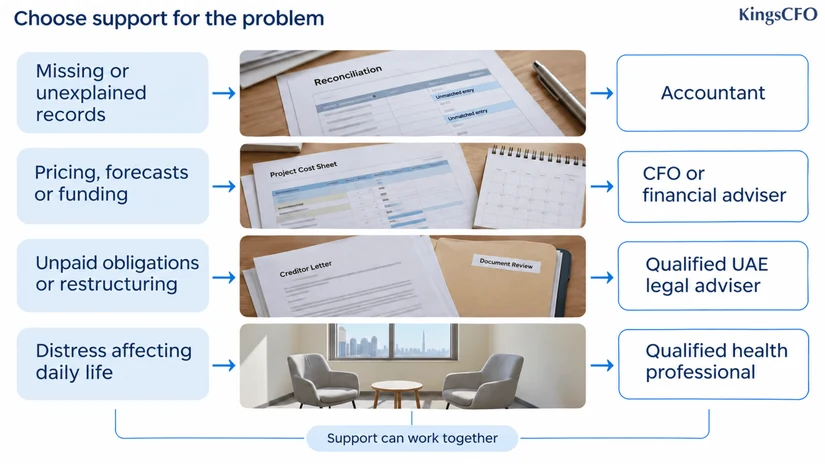
Knowing who to call is part of how to deal with financial loss. Missing records and unexplained balances call for accounting work, while questions about pricing, forecasts and funding need a review of the business’s financial options.
If the business cannot meet obligations as they fall due, or you are considering restructuring or closure, bring in a suitably qualified UAE legal or restructuring adviser to assess the circumstances.
When choosing support, explain the decision you need help with and ask for the scope, fees and expected work in writing.
KingsCFO’s work with UAE founders includes accounting, financial structure and CFO guidance. You can discuss the records available and agree which support fits the problem you are trying to solve.
Please continue seeking health support alongside financial advice if distress affects your daily life, because a finance adviser cannot assess or treat a mental health condition.
Take One Financial Decision Forward
Learning how to deal with financial loss starts with understanding what happened and choosing the next action the figures support.
You can begin by gathering the bank balance, upcoming bills and results from your main services, then use the records to identify the question that needs attention first.
When you contact KingsCFO about your business finances, bring the latest accounts and payment dates so you can discuss the immediate cash shortage and the information needed to assess a recovery plan.
FAQs
How To Deal With Financial Loss When Payroll Is Due?
Confirm available cash and receipts expected before payday, then seek prompt financial and UAE employment advice if you expect a shortfall.
Can A Business Make A Profit And Still Run Short Of Cash?
Yes, because income recorded under accrual accounting can arrive in cash after the business needs to make its own payments.
Should I Use Personal Savings To Cover A Business Loss?
Review what the money would fund, the evidence supporting recovery and the amount your household needs before deciding with your adviser.
How Long Does Recovery From A Business Loss Take?
The timeline depends on the cause, margins, payment cycle and funding position, so assess progress against a forecast built from your own figures.
Can A Loan Solve A Business Loss?
A loan adds cash and repayment commitments, so review the underlying loss and repayment capacity before accepting funding.

Mayur Bardoloi is a content writer with more than four years of experience across writing and proofreading. His content for KingsCFO explains financial topics and CFO services for business owners who may not have a finance background.